Succulents: Lots of Light, Little Water, Sharp Drainage
Succulent care: how much light and water they need, which soil and pot, how to propagate from leaves, and why they stretch. The guide to keep them pretty.
In this article
Succulents have a reputation for being indestructible, but most die from two opposite mistakes: too much water and too little light. I see it constantly: people who water them "to take care of them" and keep them in a sunless corner. Understand those two points and you'll have compact, colorful rosettes for years. Since I'm into outdoor plants and sun, succulents are among my favorites for windowsills and balconies.
How they think: desert plants
They come from arid regions and store water in their fleshy leaves and stems. Many use CAM photosynthesis: they open their pores at night to lose less water. Everything about them is built to survive drought and strong sun, not the humid shade of a living room. Internalize that and their care becomes obvious: lots of light, little water, soil that dries fast.
Is your plant looking off and you are not sure why?
Free AI diagnosisBasic care, point by point
Light: the factor almost everyone gets wrong
Succulents want lots of light: several hours of gentle direct sun or a very bright south-facing sill. In low light they stretch (etiolation): the stem lengthens, the leaves spread apart and the rosette loses color and compact shape. If your succulent "grows upward" reaching for the window, it needs more light — and there's no undo (the stretched part stays that way). Details in leggy plants.
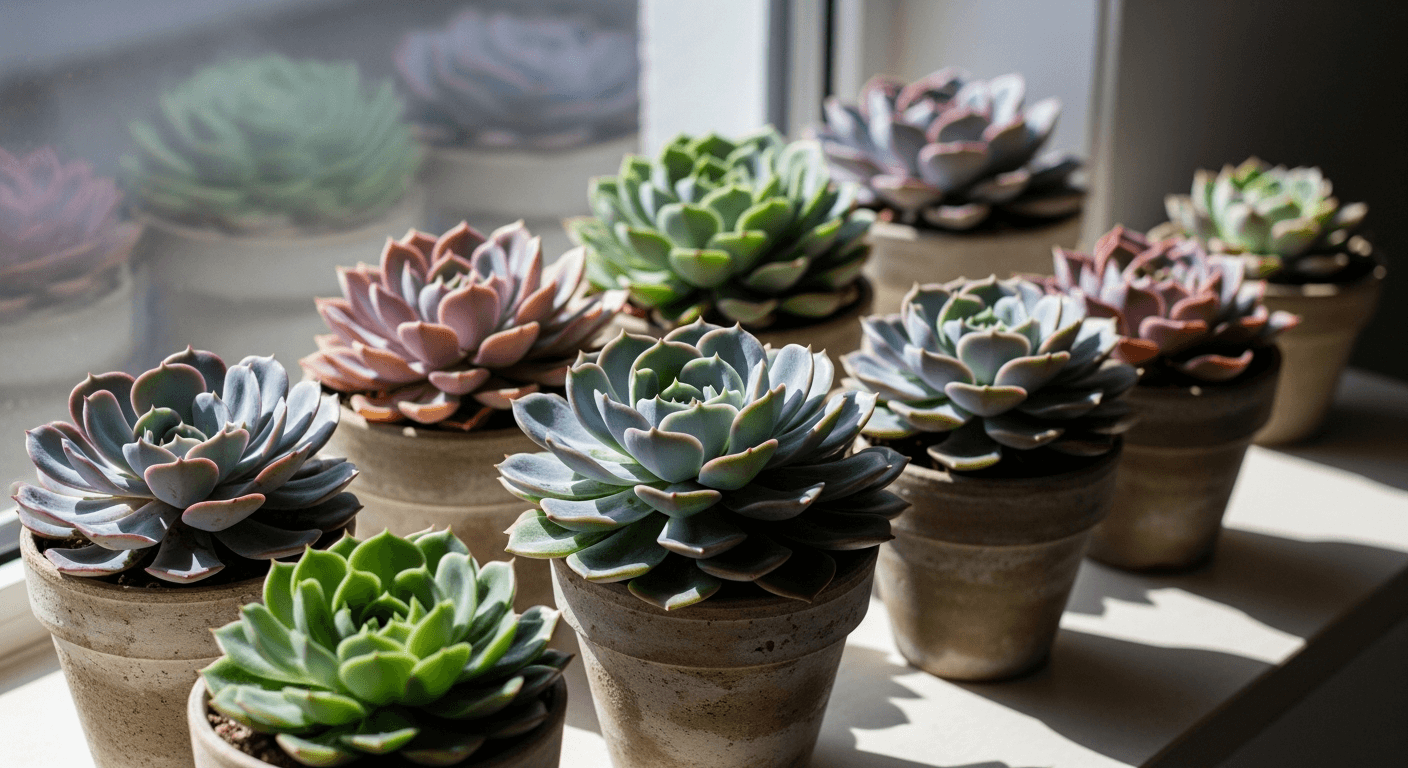
The ones that turn red, pink or purple do so with lots of light: it's how they protect themselves from the sun, and a sign they're getting what they need.
Indoors, a south sill is the minimum; in dark spots, a grow light makes the difference.
Watering: soak and forget
The "soak and dry" method is the secret, and it's the opposite of most plants:
- Water thoroughly only when the soil is completely dry.
- Let the water run out the drainage holes and empty the saucer; never "little sips."
- Wait until it dries out fully again: every 1-2 weeks in summer, every 3-4 (or less) in winter.
Soft, translucent, yellow leaves from the bottom = overwatering, heading toward rot. Wrinkled, soft leaves curling inward = thirst (much rarer and easy to fix). More method in the watering guide.
Soil and pot
Use cactus and succulent soil (or all-purpose + lots of perlite/coarse sand). The goal is for it to drain in seconds. A terracotta pot with holes: terracotta breathes, dries faster and prevents waterlogging. See how to choose a pot and the right potting soil. Avoid closed glass containers with no drainage, however pretty: they're a death trap for succulents.
Popular types
- Echeveria: the classic rosettes, many in pastel tones.
- Haworthia: small, tolerate a bit less light (good indoors).
- Crassula (jade plant): shrubby, very long-lived.
- Sedum and Sempervivum: very tough, ideal outdoors.
- String of pearls: trailing, with bead-like leaves.
- Lithops ("living stones"): fascinating, with very particular watering.
Propagation: it almost does itself
- From a leaf (the most magical): remove a healthy leaf by twisting it off whole (with its base), let it callus for 1-2 days, and set it on dry soil in indirect light. In weeks it grows little roots and a mini rosette.
- From a stem cutting: cut a rosette with stem, let it callus, and plant.
- From offsets: many push out "babies" at the base you can separate.
More methods in how to propagate plants.
Quick care table
| Care | Succulents |
|---|---|
| Light | Lots; gentle direct sun |
| Water | Only when soil is bone dry |
| Soil | Cactus/very free-draining |
| Difficulty | Easy (with light) |
| Pets | Varies by species |
Common problems
| Symptom | Likely cause | Fix |
|---|---|---|
| Stretches and loses shape | Too little light (etiolation) | More light; stretched part won't revert |
| Soft, translucent, drooping leaves | Overwatering/rot | Let it dry; replant healthy parts |
| Dry brown patches | Sunburn from sudden sun | Acclimate to sun gradually |
| Leaves fall off when touched | Stress from watering or repotting | Adjust watering; let it recover |
| Black stem at the base | Advanced rot | Cut above it and re-root the rosette |
Are they toxic?
It depends on the species. Many (echeverias, haworthias, sedums) are harmless, but some (like aloe or certain euphorbias) are irritating or have caustic sap. When in doubt, keep them out of reach of pets and children, and wash your hands if you handle euphorbias.
Give them sun, free-draining soil and sparse watering, and your succulents will stay compact and colorful with very little work. They're actually among the best plants for beginners if you have a bright window. Yours looking off? Try the AI diagnosis tool.
Related articles
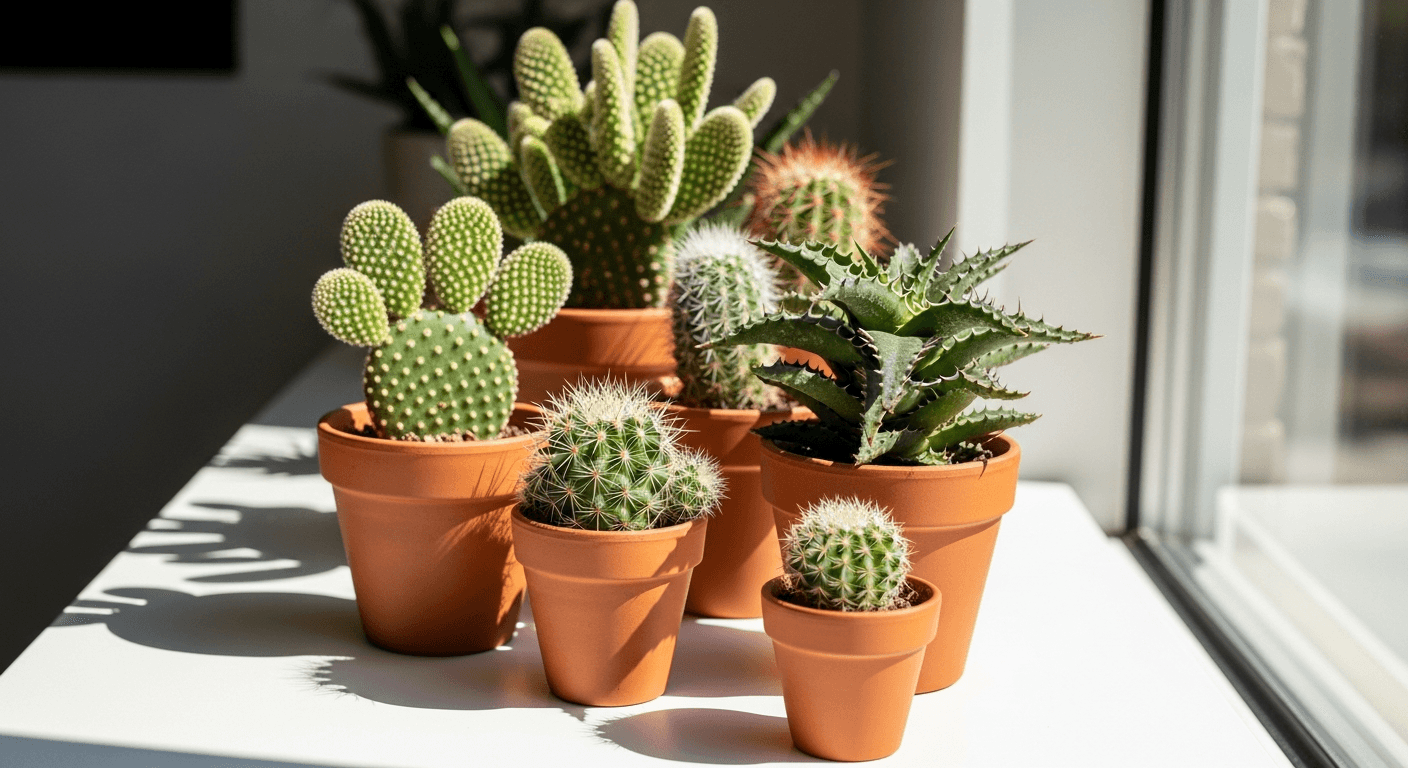
Indoor Cactus Care: How to Get Blooms (and Avoid Rot)
Indoor cactus care: how much light and water it needs, which soil, the winter rest that triggers flowering, and the mistakes that rot it. Easy and tough.
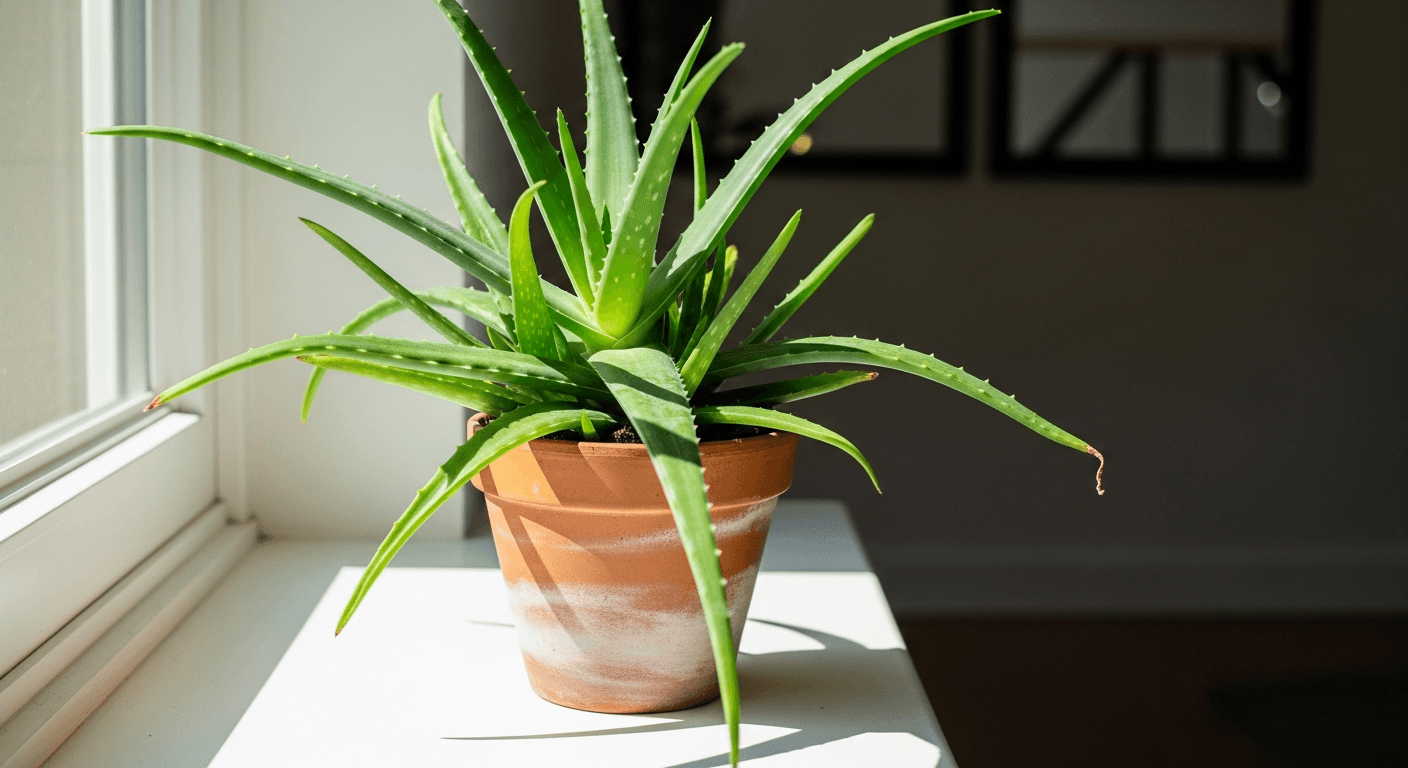
Aloe Vera: Care, Watering and How to Use Its Gel at Home
Aloe vera care: how much light and water it needs, which pot and soil, how to propagate it from pups and how to extract its gel. The most useful succulent.
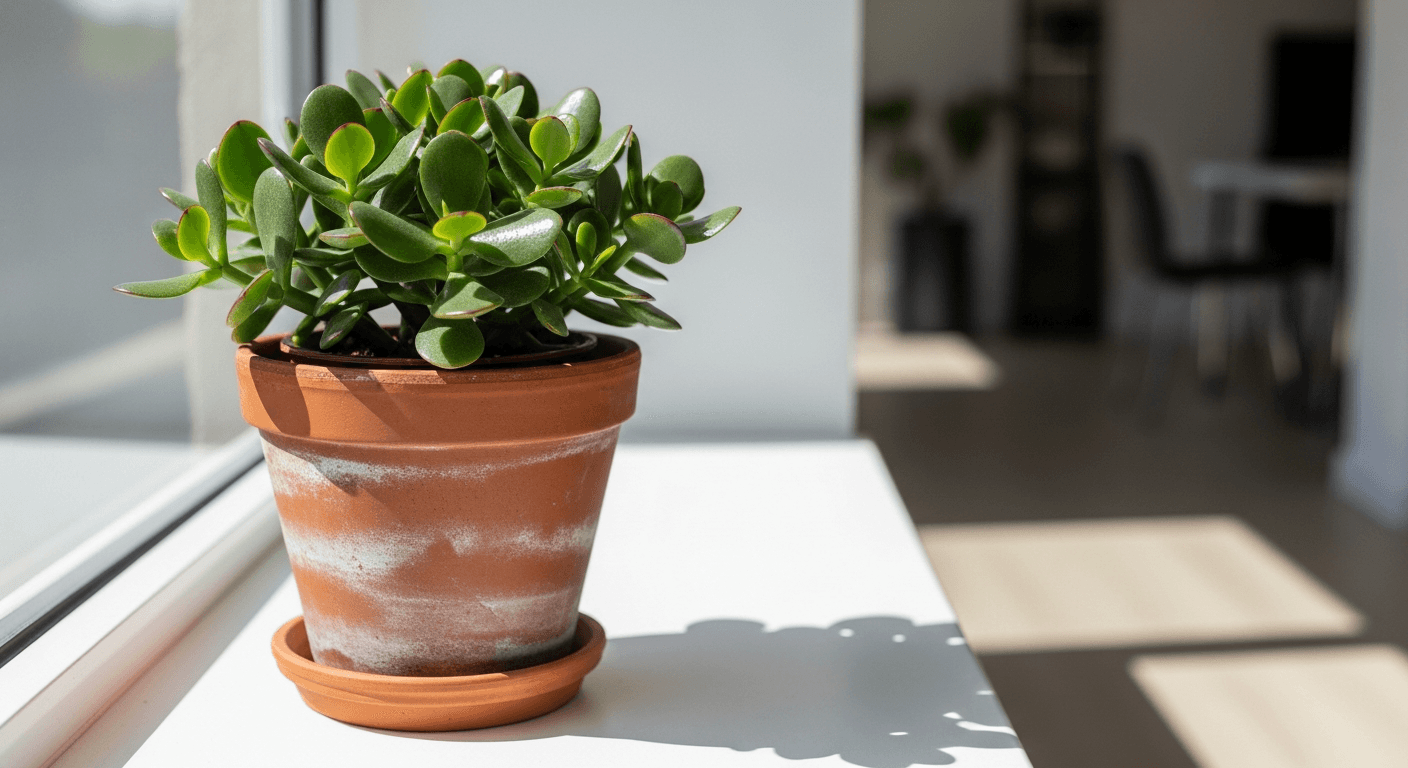
Jade Plant (Crassula ovata): Care Guide
How to care for the jade plant (Crassula ovata): lots of light, soak-and-dry watering, succulent soil, easy leaf and stem propagation, and toxicity to pets.
Trouble with your plant?
AI diagnosis