What Pot to Buy: Size, Drainage and Material Explained
How to choose a pot: why drainage is essential, what size to use (not too big, not too small), and the pros and cons of terracotta, plastic, ceramic and fabric.
In this article
- Drainage is not optional
- What to do with a pot that has no holes
- The myth of stones in the bottom
- The right size: not too big, not too small
- What goes wrong at each extreme
- The rule when you size up
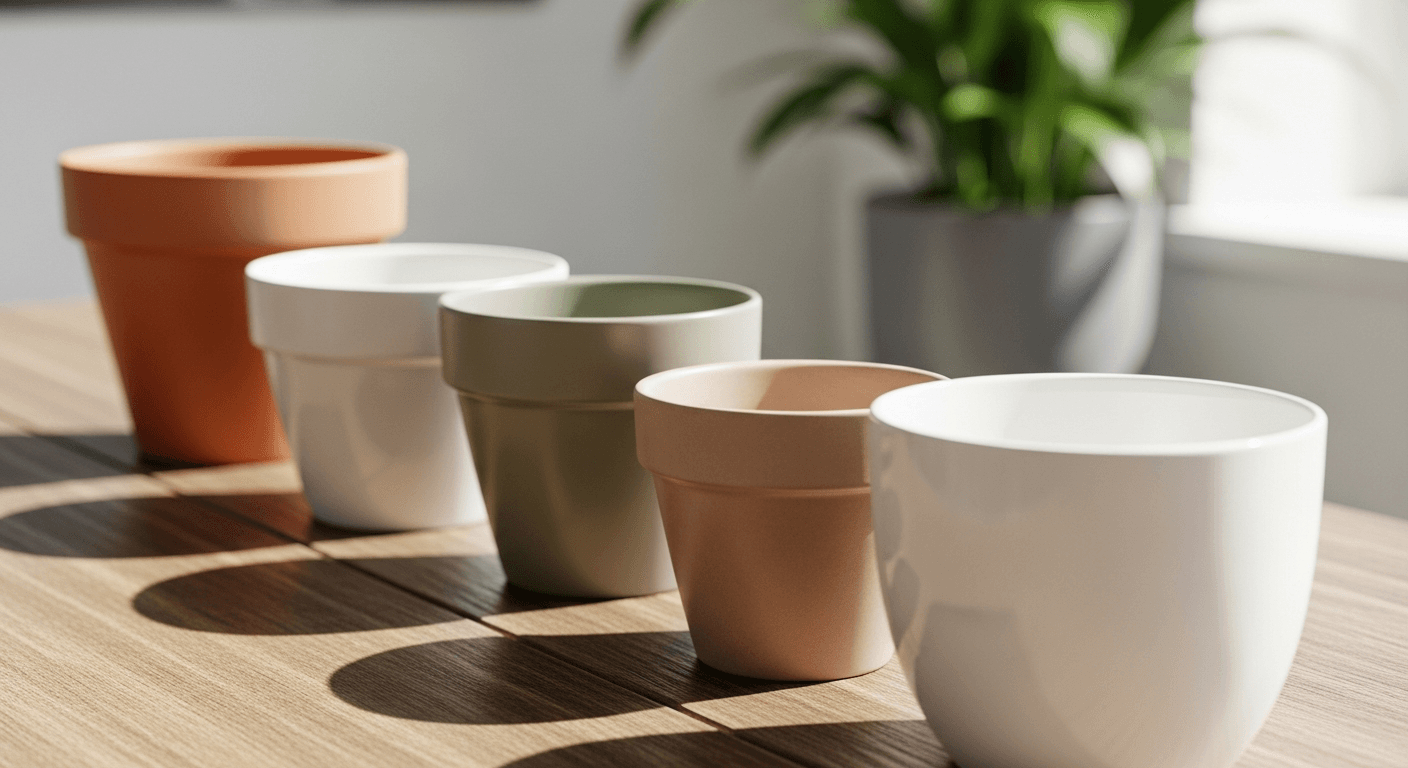
- Materials: pros and cons
- Clay or terracotta
- Plastic
- Glazed ceramic
- Fabric pots
- Quick decision table
- Shape and details that matter
- When to change pots
- Reusing an old pot
Always pick a pot with drainage holes and only 1-2 inches wider than the current one: terracotta if you tend to overwater, plastic if you tend to forget. Get those three calls right and you've solved 90% of the problem. And this is no decorating detail — the pot decides how much water the soil holds, how much air reaches the roots and, to a large extent, whether your plant lives or dies.
Drainage is not optional
If you take away one idea, make it this: a pot needs drainage holes. Without them, water pools at the bottom, the roots suffocate and you get the dreaded root rot.
What to do with a pot that has no holes
Fell in love with a gorgeous pot with no holes? Use it as a cachepot: plant in a plastic pot with drainage and slip it inside. The one non-negotiable is to always empty any water left in the saucer or in the bottom of the cachepot after watering, because a base sitting in a puddle rots roots just as surely as no holes at all.
The myth of stones in the bottom
A layer of stones, gravel or broken crocks "for drainage" is a stubborn myth. It's no substitute for a proper hole and it actually lifts the zone of standing water closer to the roots. What really drains is the hole in the base combined with the right mix; our guide on which potting soil to use for each plant shows how to aerate the soil without resorting to those layers.
Is your plant looking off and you are not sure why?
Free AI diagnosisThe right size: not too big, not too small
The most common mistake is trying to "save on repotting" by putting the plant in a huge pot. It backfires.
What goes wrong at each extreme
- Too big: lots of soil with no roots to dry it out holds water for days and rots the plant.
- Too small: roots circle, the plant gets pot-bound and dries out constantly.
The rule when you size up
When repotting, go up only 1-2 inches in diameter from the previous pot; for big plants you can stretch to 2-3 inches. If your watering schedule is unreliable, self-watering pots are an alternative that cushions that margin without waterlogging the soil.
A healthy plant would rather be a little snug than swimming in soggy soil.
Materials: pros and cons
Clay or terracotta
- Pros: porous, lets roots breathe and evaporates excess water. Ideal for succulents, cacti and anyone who tends to overwater.
- Cons: dries out fast (you water more often), heavy and can crack.
Plastic
- Pros: light, cheap, holds moisture longer. Perfect for thirsty tropicals and for hanging.
- Cons: less breathable; with overwatering it gets soggy easily.
Glazed ceramic
- Pros: beautiful, stable and comes in countless designs. Holds moisture similarly to plastic.
- Cons: heavy, pricier and sometimes comes without holes (check first).
Fabric pots
- Pros: excellent aeration and drainage, roots "air-prune" when they reach the edge. Widely used for veg and big plants.
- Cons: dries out fast and isn't the most decorative for indoors.
Quick decision table
| Your situation | Recommended pot |
|---|---|
| You overwater | Clay/terracotta |
| You forget to water | Plastic or ceramic |
| Succulents and cacti | Clay with good drainage |
| Thirsty tropicals | Plastic |
| Balcony veg garden | Fabric or large plastic |
Shape and details that matter
- Tall, narrow pots pool water at the bottom; watch your watering.
- Mouths narrower than the body make future repotting awkward.
- Dark colours outside heat up in the sun and can cook the roots in summer.
When to change pots
It's time to repot when roots poke out of the drainage holes, water runs straight through without wetting the soil, or the plant dries out every other day. Do it preferably in spring, the season when plants bounce back fastest according to our seasonal houseplant care calendar. If you've never done it, follow the step-by-step repotting guide.
Reusing an old pot
Reusing a pot you already had is great, but clean it first: leftover soil and salts can carry fungus or pests to your new plant. Scrub it with water and a little soap, and if the previous plant was sick, disinfect it with a diluted bleach solution and rinse well. Terracotta builds up a white crust of lime and salts over time; soak it and brush it to restore its porosity.
Always pick drainage, a sensible size and the material that suits your watering habits, and you've got half of plant care sorted. Is your plant looking off and you suspect the pot or the watering? Try it in our AI diagnosis.
Related articles
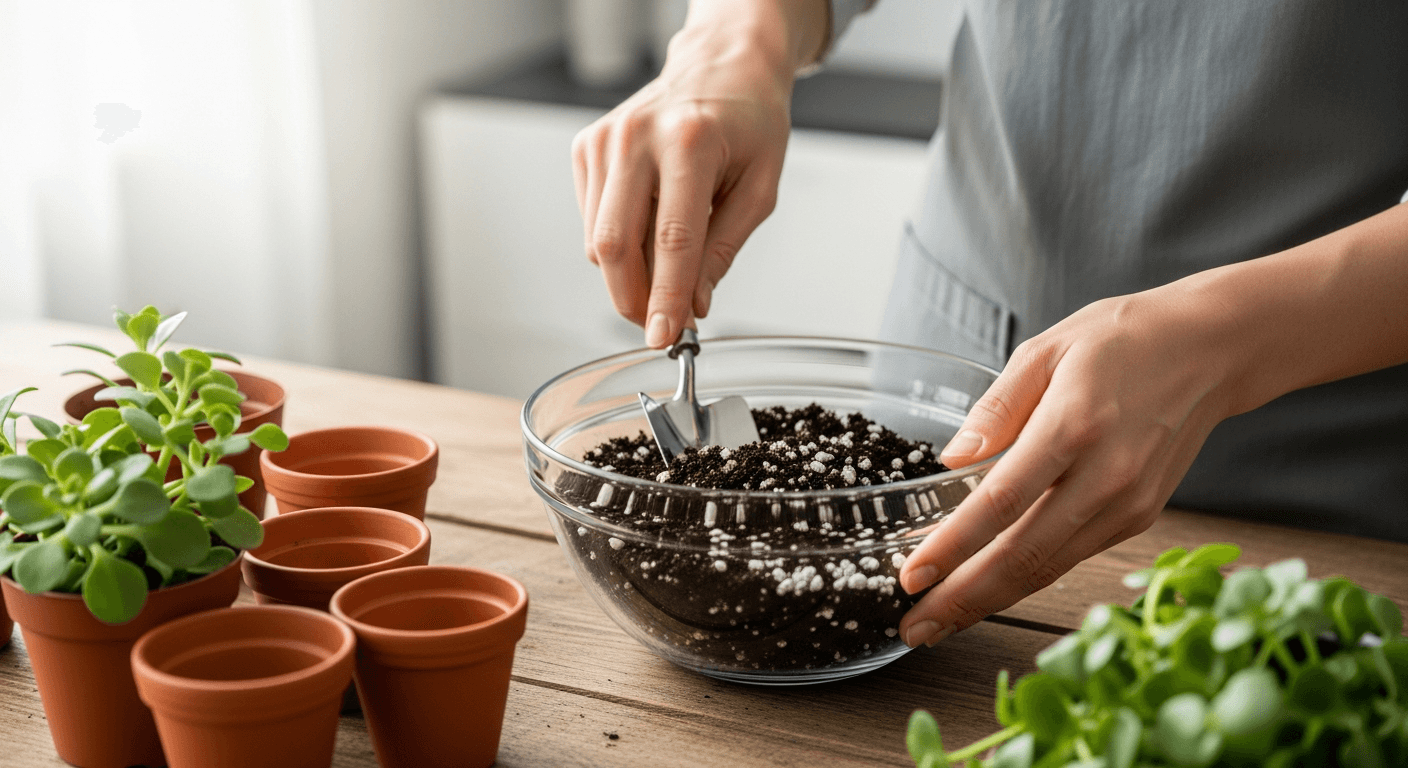
Which Potting Soil to Use for Each Plant (and Why It Matters)
The right soil prevents half your problems. Learn which mix to use for succulents, tropicals, orchids and the garden, and the ingredients that improve any soil.
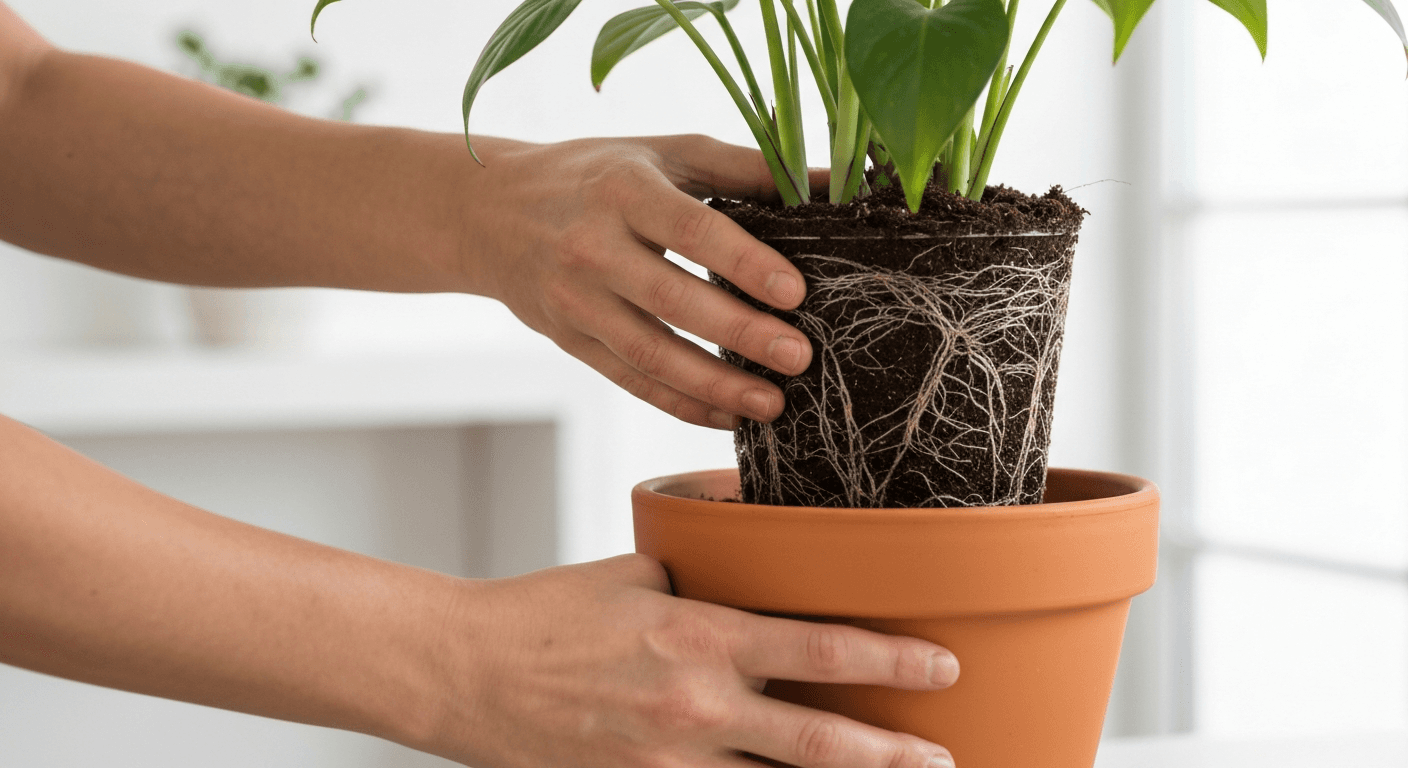
How to Repot a Plant Step by Step (Without Stressing It)
Learn when and how to repot a houseplant: signs it needs a new pot, what size to choose, the step-by-step, and the aftercare to help it bounce back.
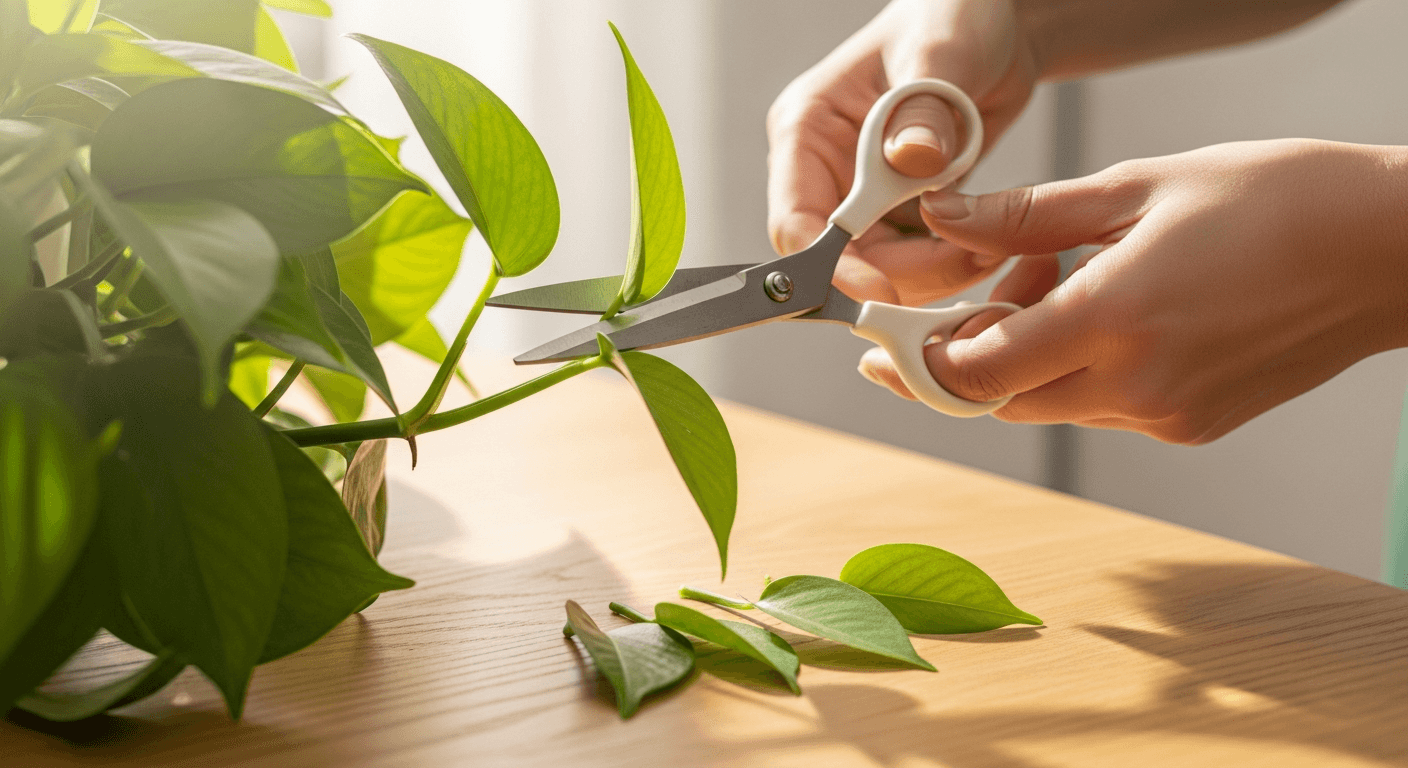
How to Prune Houseplants Step by Step
Learn how to prune houseplants: when and where to cut, the right tools to use, pinching for bushier growth and the common mistakes to avoid when pruning.
Trouble with your plant?
AI diagnosis