Nearly Unkillable Houseplants to Start Your Collection
Starting out with plants? These 12 are nearly impossible to kill: tough, forgiving and pretty. With light, water, toxicity and the habits that actually kill them.
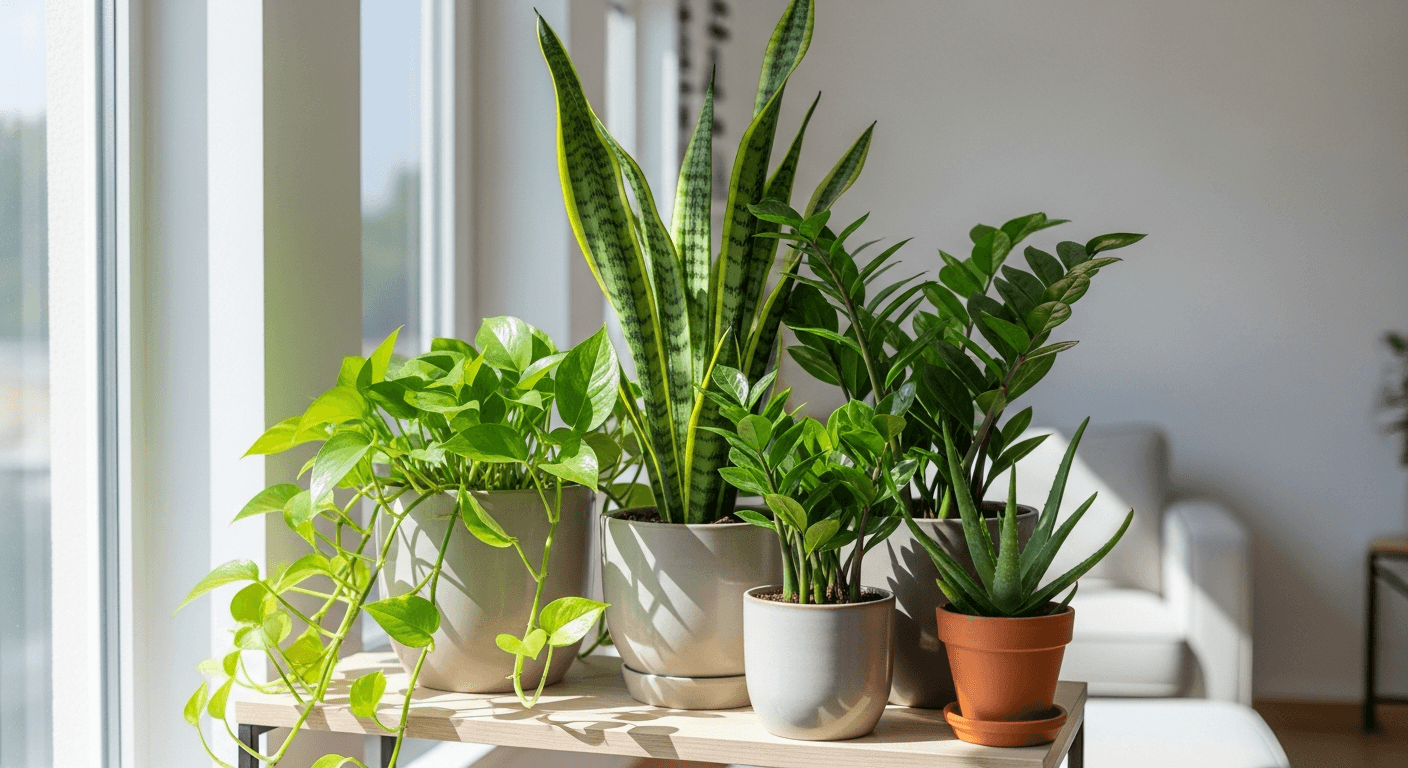
In this article
- Before you choose: read your home, not the catalog
- How much light do you really have?
- How often will you actually remember it?
- Do you have pets?
- Tier 1: nearly indestructible
- Pothos (Epipremnum aureum)
- Snake plant (Dracaena trifasciata)
- ZZ plant (Zamioculcas zamiifolia)
- Spider plant (Chlorophytum comosum)
- Tier 2: easy and very decorative
- Tier 3: easy and pet-friendly
- Quick comparison table
- The 5 habits that kill beginner plants
- Your first 4-week routine
- Is your plant happy? Signs to read
If you've killed a plant and decided you have a "black thumb," the problem almost certainly isn't you: it's picking the wrong plant to start with and repeating two or three very specific mistakes. The good news is that there's a group of plants so tough they forgive neglect, low light and clumsy watering. Start with one from this list, avoid the five mistakes at the end, and within a few months you'll be growing plants that look "difficult" today.
This isn't just a list: I'll show you how to choose based on your home, a mini profile of each plant (light, water, toxicity and its trick), a comparison table and the exact routine for your first weeks.
Before you choose: read your home, not the catalog
Most people fall for a photo and buy the plant without thinking about where it'll live. Do the opposite: look at your space first.
How much light do you really have?
Light is the number-one factor, and almost everyone overestimates it. A quick read based on your nearest window:
- South-facing (lots of light): great for succulents, cacti and aloe.
- East or west (medium-bright light): the sweet spot for nearly everything.
- North-facing or interior (low light): go for pothos, snake plant or ZZ.
The shadow test: at midday, hold your hand between the window and the wall. A sharp shadow means bright light; a soft shadow, medium light; barely a shadow, low light. For more, see my guide to light for indoor plants.
How often will you actually remember it?
Be honest about your routine. If you travel, work long hours or are simply forgetful, pick plants that prefer to be forgotten (snake plant, ZZ, succulents). If you love the ritual of caring for plants, you can afford something thirstier like a peace lily.
Do you have pets?
Several popular plants are toxic if a cat or dog chews them. If you live with animals —I have two cats— prioritize the pet-friendly ones below and check the full list of pet-safe plants.
Is your plant looking off and you are not sure why?
Free AI diagnosisTier 1: nearly indestructible
If you've never kept a plant alive for more than a month, start here. These four tolerate low-light corners and weeks without water.
Pothos (Epipremnum aureum)
The ultimate starter plant. It climbs or trails, grows fast and tells you it's thirsty by going slightly limp (it bounces back within hours of watering).
- Light: medium to low; tolerates almost any bright-ish corner.
- Water: when the top 3-4 cm (1.5 in) are dry, roughly every 7-10 days.
- Watch for: overwatering; mass yellowing leaves mean too much water.
- Pets: toxic if eaten. Place it high if you have cats.
- Full profile: pothos care.
Snake plant (Dracaena trifasciata)
Practically indestructible. It stores water in its stiff leaves, so the main danger is loving it too much.
- Light: anything, from soft sun to shade.
- Water: very little; every 2-3 weeks in summer, monthly in winter.
- Watch for: waterlogging, which rots and softens the base.
- Pets: mildly toxic.
- Full profile: snake plant care.
ZZ plant (Zamioculcas zamiifolia)
Glossy, almost plastic-looking leaves that live on minimal light and water thanks to underground rhizomes that store moisture.
- Light: medium to low.
- Water: let it dry out almost completely; every 2-3 weeks.
- Watch for: frequent watering, its only real enemy.
- Pets: toxic if eaten.
- Full profile: ZZ plant care.
Spider plant (Chlorophytum comosum)
Generous and rewarding: it produces trailing "pups" you can pot up for free plants. It's also pet-safe.
- Light: medium, no harsh direct sun.
- Water: keep the soil barely moist; every 5-7 days.
- Watch for: brown tips, a sign of hard or chlorinated water (let it sit 24 h).
- Pets: non-toxic. ✅
- Full profile: spider plant care.
Tier 2: easy and very decorative
Once the Tier 1 plants stop dying on you, level up. Still easy, but with more presence.
- Philodendron: a fast, forgiving climber; medium light and water when the surface dries.
- Peace lily: dramatically "faints" when thirsty and revives on watering; flowers even in low light.
- Succulents: lots of light and very little water; perfect for sunny sills and forgetful owners.
- Pilea: compact, cheerful and full of pups; rotate the pot weekly so it grows straight.
Tier 3: easy and pet-friendly
If pet safety is your main concern, these are easy and non-toxic:
- Calathea: stunning leaves that move with the day; wants humidity and indirect light.
- Parlor palm: elegant, tolerates low light and is completely safe.
- Spider plant and Pilea (above): two of the safest, easiest options out there.
Quick comparison table
| Plant | Light | Water | Pets | Difficulty |
|---|---|---|---|---|
| Pothos | Medium/low | When dry | Toxic | Very easy |
| Snake plant | Anything | Very little | Mildly toxic | Very easy |
| ZZ plant | Medium/low | Very little | Toxic | Very easy |
| Spider plant | Medium | Regular | Safe ✅ | Very easy |
| Aloe vera | Bright | Little | Mildly toxic | Easy |
| Philodendron | Medium | When dry | Toxic | Easy |
| Peace lily | Medium/low | Regular | Toxic | Easy |
| Succulents | Lots | Very little | Varies | Easy |
| Pilea | Medium | Regular | Safe ✅ | Easy |
| Calathea | Medium | Regular, moist | Safe ✅ | Medium |
| Parlor palm | Medium/low | Regular | Safe ✅ | Easy |
The 5 habits that kill beginner plants
Fix these five and your success rate soars:
- Overwatering (mistake #1). Almost all of them prefer drying out to sitting wet. Excess water suffocates the roots and causes root rot. Always check with your finger before watering and read the watering guide.
- Wrong light. "Bright indirect light" is not a dark corner. If a plant stretches and pales, it needs more light; if it scorches, it's getting too much direct sun.
- A pot with no drainage. Without holes, water pools and rots the roots. It's non-negotiable; see how to choose a pot.
- Moving it constantly. Plants acclimate to a spot. Shuffling them weekly stresses them and drops leaves. Pick their corner and leave them.
- Drafts and cold. Avoid radiators, AC units and drafty winter windows; see winter plant care.
Your first 4-week routine
You don't need to do anything daily. A realistic plan:
- Week 1: place the plant in its permanent spot and don't water if the soil came moist. Just observe.
- Every watering: push your finger 3-4 cm (1.5 in) in. Dry? Water slowly until it drains from the bottom and empty the saucer after 10 minutes. Moist? Wait.
- Once a week: rotate the pot a quarter turn for even growth, and check the undersides of leaves for pests.
- Once a month (spring-summer): feed at half-strength. In winter, nothing.
Is your plant happy? Signs to read
It's doing well if: it pushes out new growth, holds firm color, and the soil dries on a predictable rhythm.
Something's off if: leaves yellow en masse (water), tips turn brown and crispy (dryness or hard water), stems stretch toward the light (too little light), or you see webbing or specks on the undersides (pests). When in doubt, a photo in our AI diagnosis tool points you in the right direction in seconds.
Pick a plant from this list, avoid the five mistakes and follow the first-weeks routine: you'll see that you do have a green thumb after all. Got one looking rough? Try the AI diagnosis tool and clear up the mystery.
Related articles
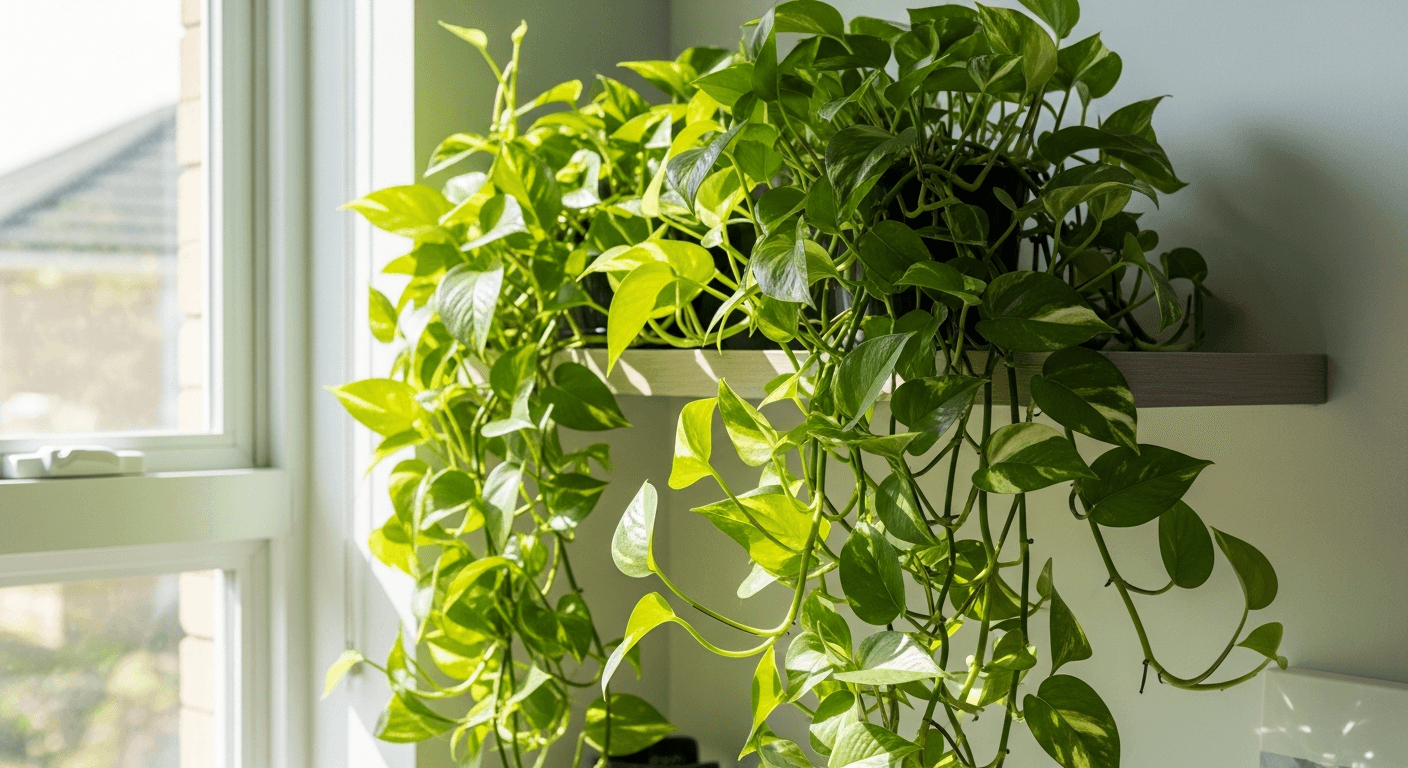
Fast-Growing Houseplants (Rewarding Results Fast)
The best fast-growing houseplants: pothos, tradescantia, spider plant and philodendron. How to speed up growth with light, feeding and timely repotting.
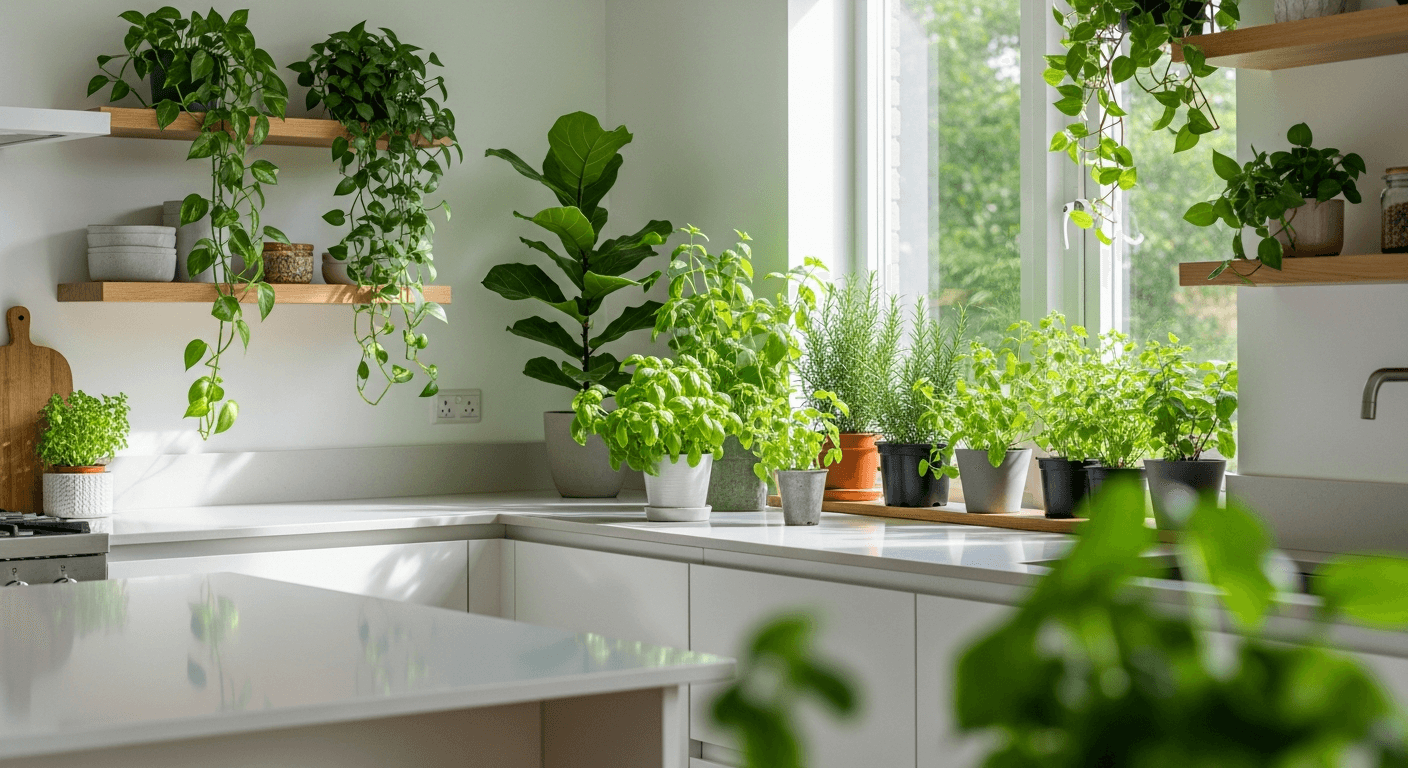
The Best Plants for the Kitchen (and Where to Put Them)
The best plants for the kitchen: easy herbs plus houseplants that tolerate humidity and low light. What to avoid near heat and how to care for them here.
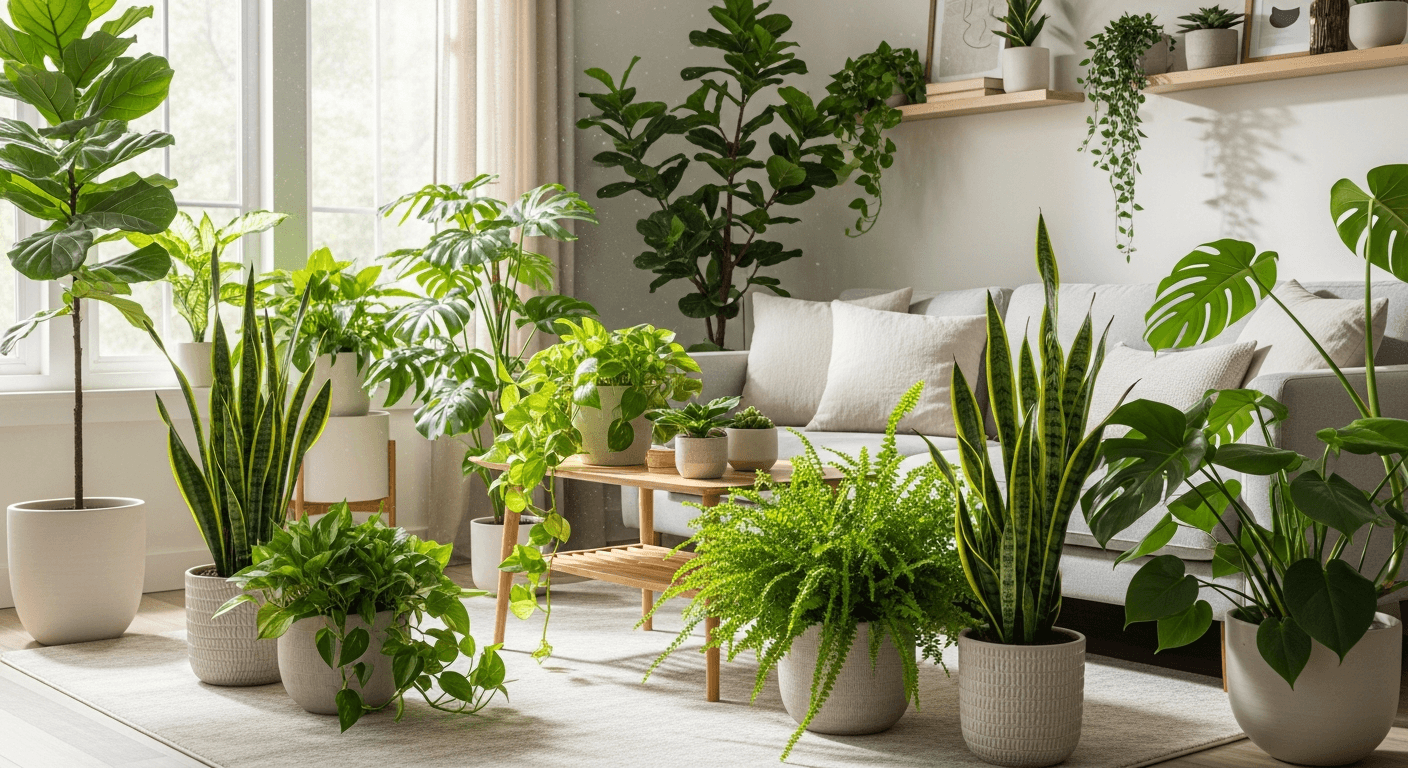
The Best Air-Purifying Plants for Your Home
A list of the best air-purifying plants (snake plant, pothos, peace lily, spider plant, areca) with their care and a realistic note on how much they help.
Trouble with your plant?
AI diagnosis