Plants That Cope With Kitchen Heat and Cooking Steam
The best plants for the kitchen: easy herbs plus houseplants that tolerate humidity and low light. What to avoid near heat and how to care for them here.
In this article
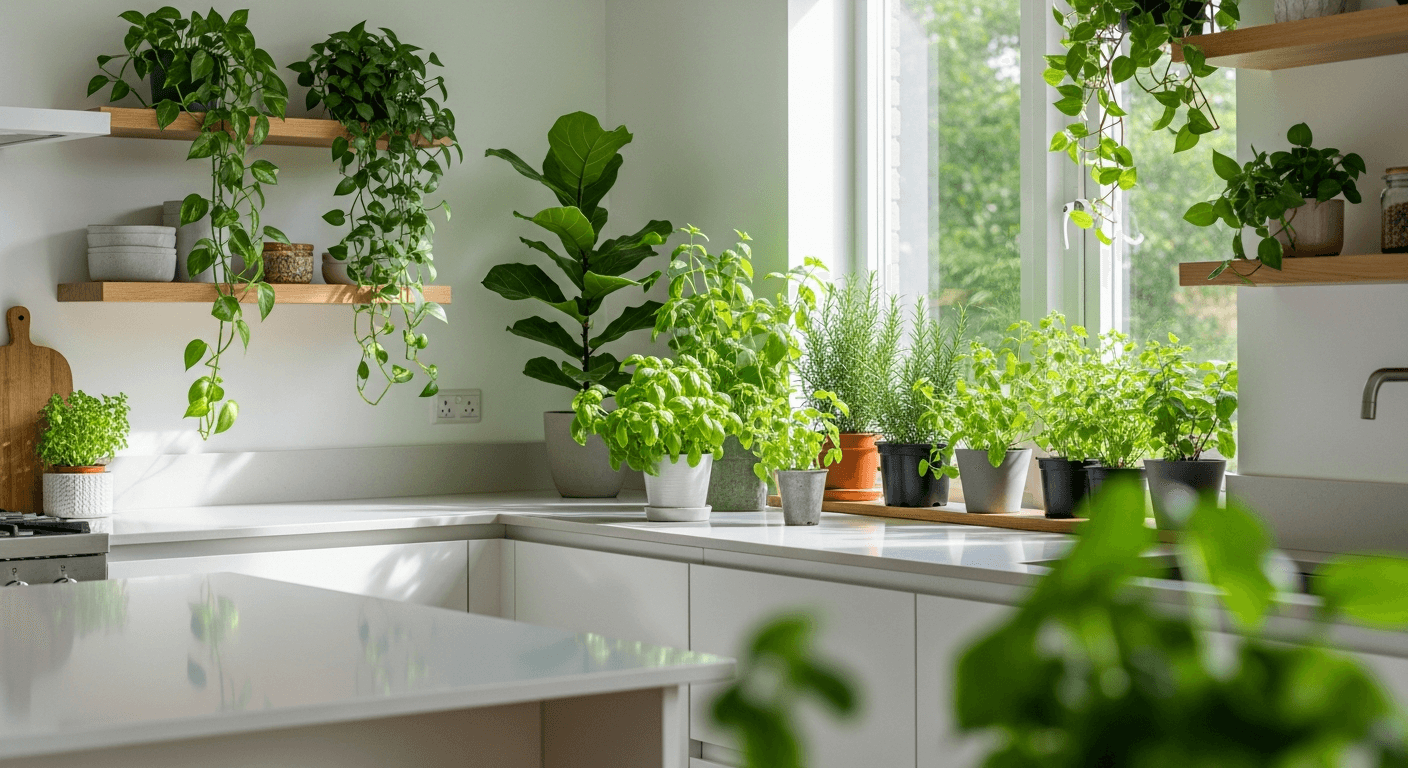
The kitchen is one of the best rooms in the house for plants, and most people never quite use it that way. Water is right there at the tap, the light is often the best in the home, and the warmth and steam from cooking suit a surprising number of tropical species. On top of that, having fresh herbs within arm's reach genuinely changes how you cook. The catch is that a kitchen is also full of microclimates: a scorching zone above the stove, a parched shelf over the fridge, a cold draft by the back door. Put a plant in the wrong one and it will sulk no matter how good the species is.
This guide walks through the best plants for a kitchen, sorted by how much light you actually have, and then maps each one to the right spot so it thrives instead of merely surviving.
First, read your kitchen's light
Before you buy anything, spend a moment honestly assessing your light. Hold your hand a foot above the counter at midday: a hard, crisp shadow means bright light; a soft, fuzzy shadow means medium; barely any shadow means low light. North-facing windows give gentle, even light all day. South-facing windows are the brightest and can scorch tender leaves in summer. East gives soft morning sun; west gives hot afternoon sun. Match the plant to what you have rather than what you wish you had, and half of your problems disappear before they start.
Is your plant looking off and you are not sure why?
Free AI diagnosisWhich plants to choose for a kitchen
Herbs: the essentials
Nothing beats snipping basil or parsley right before it hits the pan. The one thing nearly everyone underestimates is how much light herbs need. They are full-sun plants, and a kitchen herb pot wants at least 6 hours of bright direct light a day, ideally on a south- or west-facing sill. In a dim kitchen they stretch, go pale, and turn leggy within a couple of weeks.
- Basil, parsley, cilantro: fast, productive and genuinely useful. Basil is a warm-season annual that hates cold sills below 12 C / 54 F. Cilantro bolts (runs to flower) the moment it gets hot or root-bound, so sow a small batch every three weeks for a steady supply.
- Mint: grows almost on its own, but always keep it in its own pot. Its roots are aggressive and will strangle anything sharing a container. See our mint in pots guide for keeping it productive and contained.
- Rosemary, thyme, oregano, sage: Mediterranean herbs that want sun, sharp drainage and to dry out between waterings. They die far more often from soggy roots than from neglect, so resist the temptation to water them on the same schedule as your leafy herbs.
A common mistake is harvesting herbs like a vegetable, stripping a whole stem bare. Instead, pinch from the top growth just above a pair of leaves. This triggers the plant to branch and bush out, so you get more, not less. You'll find the full step-by-step in our herbs in pots article.
Plants that love the humidity
Steam from boiling pasta, a running kettle and a busy sink raises the ambient humidity, and that suits tropical foliage perfectly. These are the plants that look better in a kitchen than almost anywhere else in the house.
- Pothos: the all-rounder. It climbs or trails, tolerates almost any light from medium to bright-indirect, and forgives the occasional missed watering. Great trailing off the top of a cabinet. Full care in our pothos guide.
- Ferns (Boston fern, maidenhair): they adore the kitchen's ambient moisture and crispy-tipped sufferers elsewhere in the house often perk up here.
- Spider plant (Chlorophytum): tough, forgiving, and it throws out little plantlets you can snip and root for free. One of the easiest plants alive — see the spider plant care page.
- Peace lily: flowers even in medium light and dramatically wilts when thirsty, then bounces back within hours of a drink, which makes it a brilliant beginner's barometer. More in peace lily care.
If your kitchen runs dry rather than steamy (frequent extractor fan, no boiling), group these plants together so they share moisture, and read our notes on humidity for plants for cheap ways to raise it.
For a low-light kitchen
Plenty of kitchens are interior rooms with one small window or none at all. Don't give up; just pick plants built for gloom.
- Snake plant (sansevieria): practically indestructible, copes with low light and weeks between waterings, and tolerates the warm dry air near appliances better than almost anything. See snake plant care.
- ZZ plant (Zamioculcas): glossy, architectural and astonishingly tolerant of neglect and dim corners. Details in ZZ plant care.
- Pothos: again, the dependable choice that bridges medium and low light.
- Aglaonema (Chinese evergreen) and cast-iron plant: both shrug off poor light without complaint.
For a deeper bench of options, our low-light plants guide ranks the toughest performers.
Where to put each plant
The single most useful skill in a kitchen is matching the plant to the exact spot. Here's a quick map:
| Spot in the kitchen | Light level | Best plants | Watch out for |
|---|---|---|---|
| Sunny south/west windowsill | Bright direct | Herbs, small succulents, aloe | Summer scorch; rotate pots weekly |
| Medium-light shelf or counter | Bright indirect | Trailing pothos, spider plant, peace lily | Stretching if too far from the window |
| Corner with no direct sun | Low | Snake plant, ZZ, aglaonema | Overwatering — go easy |
| Near the sink | Medium + humid | Ferns, calathea, prayer plant | Never let pots sit in standing water |
| Top of a cabinet | Varies | Trailing pothos, heartleaf philodendron | Heat rises; check it isn't baking |
A quick note on rotation: any plant on a windowsill leans toward the glass over time. Give every pot a quarter-turn once a week so it grows evenly instead of lopsided.
What to avoid in the kitchen
The kitchen has three real enemies for plants, and all of them are easy to design around once you know to look.
- Direct heat: never place a plant right beside the stove or oven, or on top of the fridge (it vents warm air from the back and the top runs dry). Leaves scorch, soil dries out within a day, and tender herbs cook. Keep a hand's width of clearance from any heat source.
- Drafts and sudden temperature swings: avoid the direct path of a door or window you open and close constantly. Tropicals in particular hate cold gusts and the 10-degree swings that come with them. Sudden chills show up as yellowing or dropped leaves a few days later.
- Grease and dust: cooking throws up a fine greasy film that settles on leaves and clogs the pores (stomata) the plant breathes through. Wipe broad leaves with a damp cloth every couple of weeks; our cleaning leaves guide covers the right way to do it without damaging the surface.
Kitchen-specific care
A kitchen has its own little microclimate, and a few habits keep plants happy in it.
Watering. With the tap right there, overwatering is the number-one kitchen killer. Always check first: push a finger 2 to 3 cm into the soil, and only water if it's dry at your fingertip. For most of these foliage plants, that means roughly once a week, less in winter. If you struggle to read the soil or you travel, a self-watering pot takes the guesswork out — see our self-watering pots guide. When a plant looks unwell, learning to tell overwatering from underwatering is the most valuable troubleshooting skill you can build.
Drainage. Kitchens tempt you to use a pretty pot with no hole. Don't, unless you keep the plant in a plastic nursery pot inside it and tip out any water that collects in the bottom after watering. Roots sitting in a puddle rot fast, and warm kitchen air speeds it up.
Ventilation. Crack a window or run the extractor when you cook. Steam with no air exchange encourages mold and a white crust on the soil surface, and it's also a magnet for fungus gnats. If little flies start hovering, you're keeping the top of the soil too wet; our fungus gnats guide has the fix.
Pet safety. If you have a cat that patrols the counter or a dog that grazes, be deliberate. Pothos, peace lily, snake plant and dieffenbachia are all toxic to varying degrees if chewed. For a pet-friendly kitchen, lean on edible herbs (basil, parsley, thyme are all safe) and spider plant, and check the full pet-safe plants guide before you buy.
Troubleshooting common kitchen problems
Most kitchen plant trouble traces back to the room's quirks. Here's how to read the signs:
| Symptom | Likely cause | Fix |
|---|---|---|
| Crispy brown leaf edges or tips | Hot, dry air from an appliance; low humidity | Move away from heat; group plants; raise humidity |
| Leggy, pale, stretched herbs | Not enough light | Move to the brightest sill or add a grow light |
| Yellowing lower leaves, mushy stems | Overwatering / no drainage | Let soil dry; check the pot drains; repot if roots are rotting |
| Sudden leaf drop | Cold draft or temperature swing | Relocate away from doors and drafty windows |
| Dull, sticky, grey-filmed leaves | Cooking grease and dust on the surface | Wipe with a damp cloth every couple of weeks |
| Tiny flies around the soil | Soil kept too wet (fungus gnats) | Let the top dry out; bottom-water; use sticky traps |
A mini-garden on the windowsill
If your kitchen has a sunny window, use it to set up a small garden of herbs and quick leafy crops. A few pots of basil, parsley and chives, plus a couple of tough green plants, transform the room and put fresh ingredients within reach. It's the prettiest way to start with edible plants, and the proximity makes you far more likely to actually use your herbs while they're fresh rather than letting a supermarket bunch wilt in the fridge. Start with three or four pots rather than a dozen; a small collection you tend well beats a crowded sill you neglect.
With the right plant in the right spot, your kitchen gains life, aroma and fresh herbs for cooking, with very little fuss.
Is a kitchen plant of yours scorched, wilting or covered in something you can't identify? Upload a photo to our AI diagnosis and we'll tell you what's going wrong and how to fix it.
Related articles
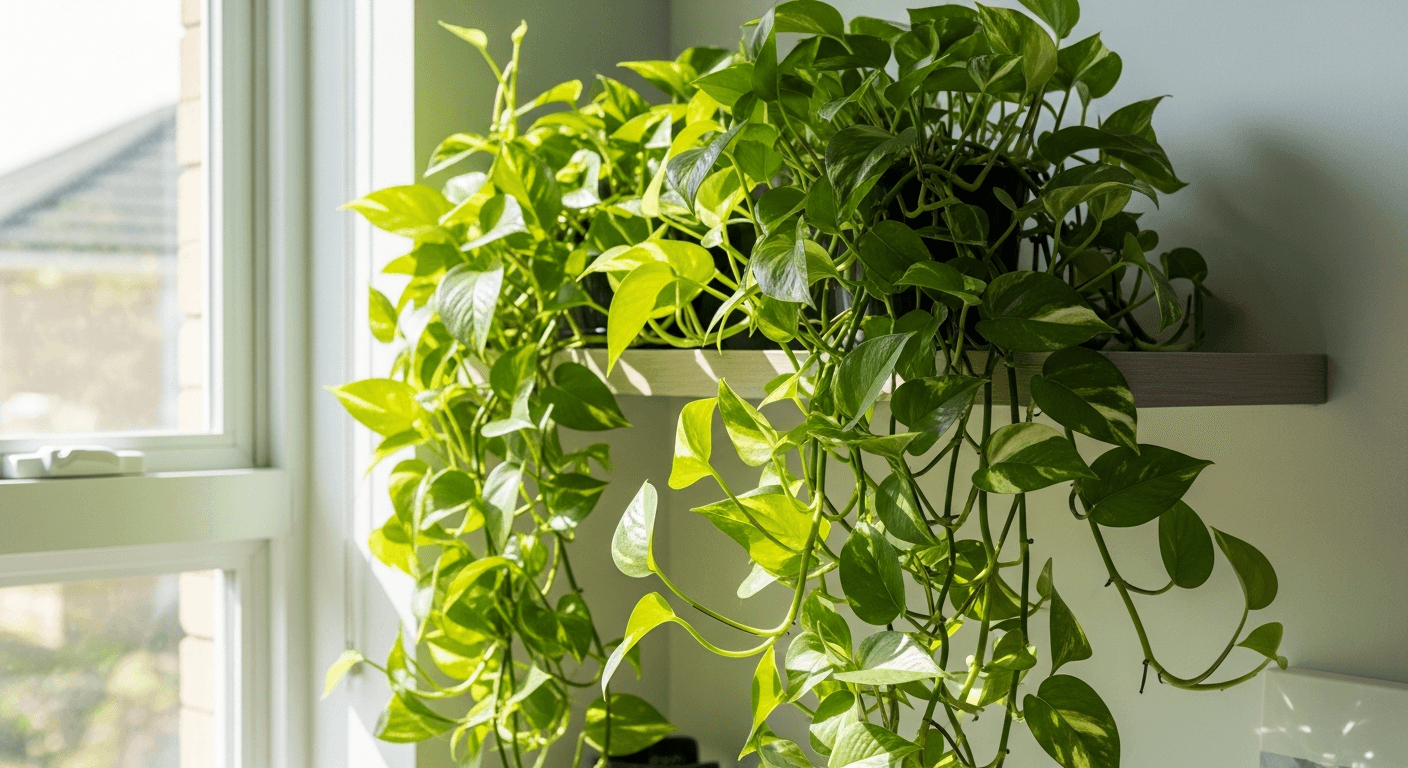
Fast-Growing Houseplants (Rewarding Results Fast)
The best fast-growing houseplants: pothos, tradescantia, spider plant and philodendron. How to speed up growth with light, feeding and timely repotting.
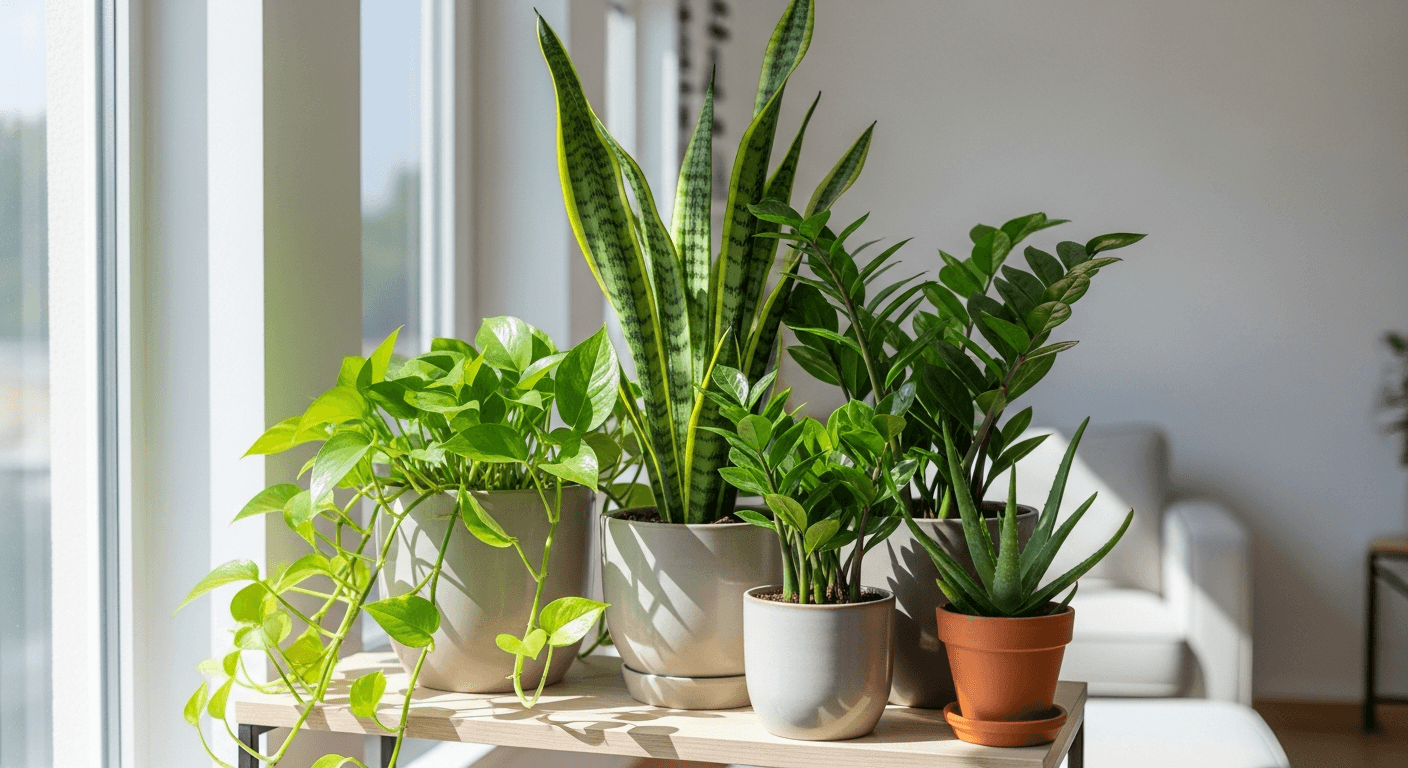
The 12 Best Indoor Plants for Beginners
Starting out with plants? These 12 are nearly impossible to kill: tough, forgiving and pretty. With light, water, toxicity and the habits that actually kill them.
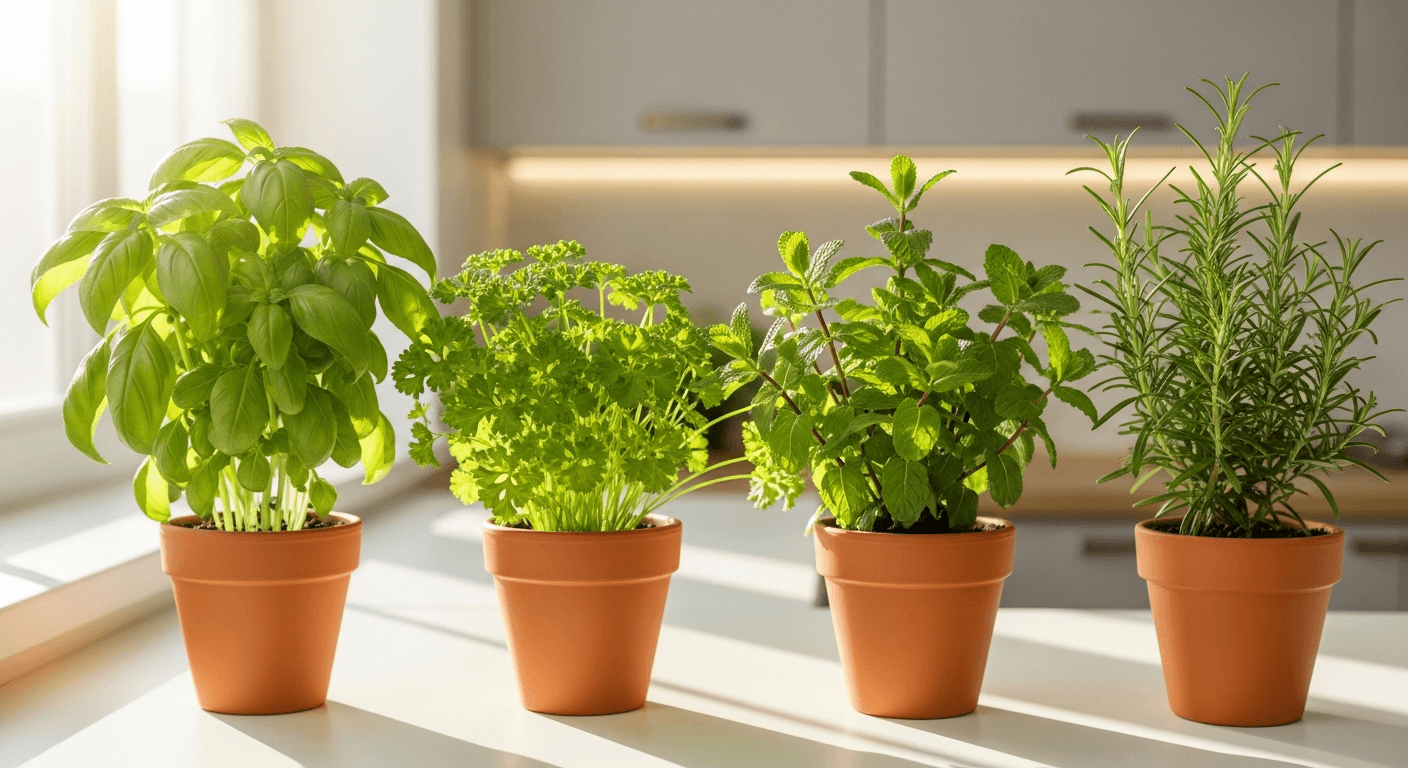
Herbs in Pots: The Easiest Garden to Start With
How to grow basil, parsley, mint, rosemary and more in pots or on your kitchen sill. Light, watering, when to harvest and tricks so they don't bolt or die.
Trouble with your plant?
AI diagnosis