Monstera Care: Light, Water and Why the Holes Appear
Everything about the Monstera Deliciosa or Swiss cheese plant: light, watering, humidity, how to get those holey leaves (fenestrations) and troubleshooting.
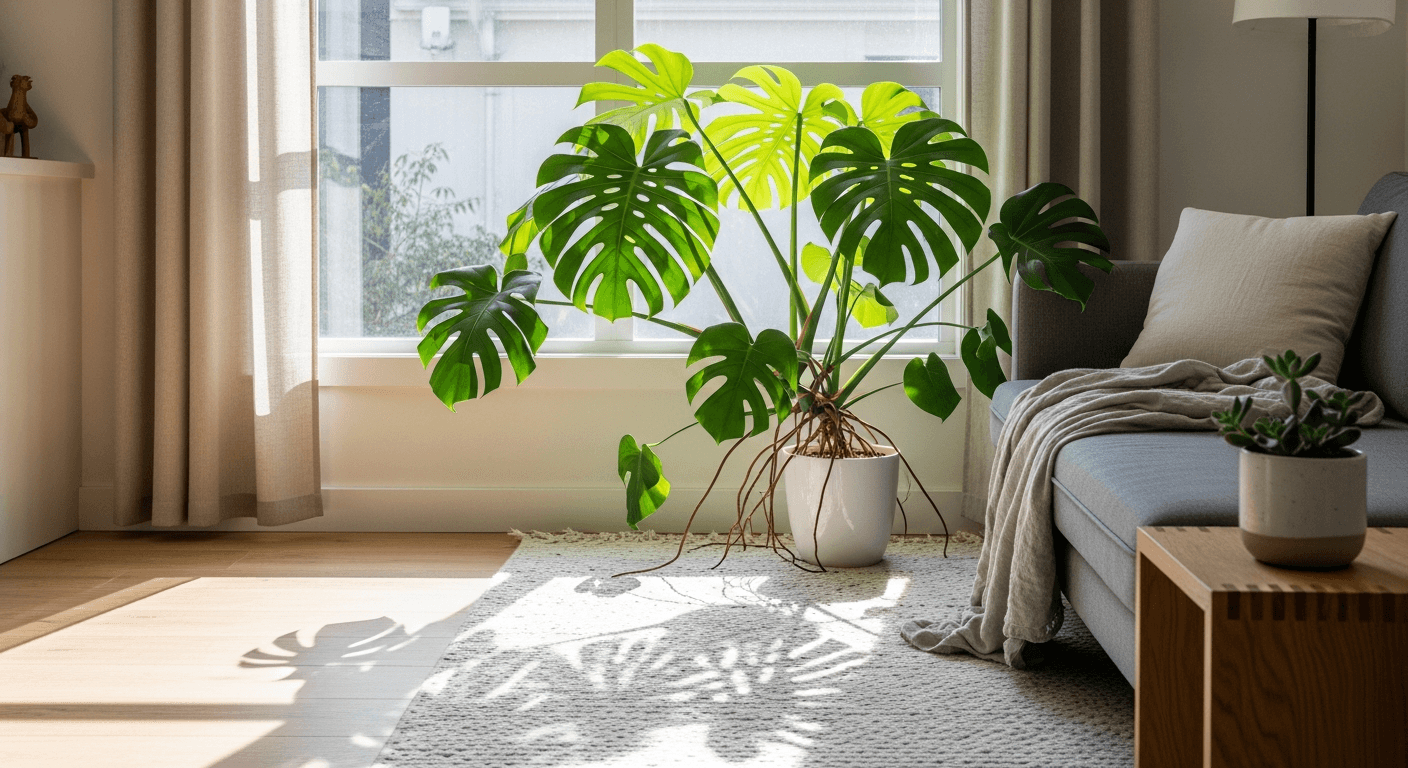
In this article
- Origin and why it has holes
- Basic care, point by point
- Light: the factor that decides fenestrations
- Watering
- Humidity and temperature
- Soil and repotting
- The moss pole: the key to big leaves
- How to get huge, fenestrated leaves
- Propagation step by step
- Varieties you'll see (and the usual mix-up)
- Common problems
- Is it toxic?
The Monstera Deliciosa, known as the Swiss cheese plant, is the most iconic houseplant of the past decade — and for good reason: it's forgiving, grows fast, and its huge perforated leaves bring a jungle feel to any corner. I love it because it nails two things I care about most: it's a true tropical and yet one of the easiest plants to keep happy. This is the guide you need to help yours thrive and give you those showstopping leaves.
Origin and why it has holes
It's a hemiepiphytic climber from the jungles of Central America. It germinates on the ground and climbs tree trunks toward the canopy light, gripping with aerial roots. Its famous holes (fenestrations) aren't decorative: the leading theory is they let it capture light scattered across a dappled canopy with less leaf surface, withstand wind better, and let rain reach its roots.
The practical takeaway: those holes appear only as the plant matures and gets good light. A young or low-light Monstera puts out whole, heart-shaped leaves. That's normal — with time and the right light they'll start to fenestrate.
Is your plant looking off and you are not sure why?
Free AI diagnosisBasic care, point by point
Light: the factor that decides fenestrations
| Light level | Result |
|---|---|
| Bright indirect (E/W window, or near a sheer-curtained S one) | Vigorous growth and well-fenestrated leaves ✅ |
| Medium indirect | Grows, but slower and with fewer holes |
| Low light | Survives; small, whole leaves and stretched stems |
| Direct midday sun | Scorch: dry brown patches |
If new leaves come out small and without holes, it's almost always not enough light: move it closer to the window. Rotate it a quarter turn weekly for even growth. In dark interiors, a grow light makes a real difference. See also the indoor light guide.
Watering
Water when the top 1-2 inches of soil feel dry. In spring and summer that's usually once a week; in winter, every 10-14 days. Monstera prefers to stay slightly dry rather than soggy.
Golden rule: it's far easier to kill a Monstera by overwatering than by underwatering.
Water deeply until it runs from the drainage holes, let it drain, and empty the saucer. If you're unsure of the rhythm, the watering guide covers the finger and weight methods. Chronic overwatering leads to root rot, its main cause of death.
Humidity and temperature
Being tropical, it appreciates ambient humidity above 50-60%. It tolerates a normal home, but heating dries the air and brown tips appear. Raise humidity by grouping plants or with a humidifier (see the humidity guide). Keep it between 65 and 80 °F (18-27 °C) and away from cold drafts and radiators.
Soil and repotting
It wants an airy, free-draining mix: coco coir or peat with plenty of perlite and a handful of pine bark. That structure mimics the jungle floor and prevents waterlogging (more in the right potting soil).
Repot every 1-2 years, in spring, into a pot 1-2 inches larger when you see roots poking out of the drainage holes. Take care not to snap the aerial roots; I walk you through it in how to repot a plant.
The moss pole: the key to big leaves
This is what separates a "potted" Monstera from a spectacular one. In the wild it climbs, and climbing makes it mature: its leaves get bigger and more fenestrated. Give it a moss pole, tie the stems gently and keep the moss damp; the aerial roots will grab on and the plant will grow upward with vigor. Full detail in how to use a moss pole.
How to get huge, fenestrated leaves
If you want those magazine leaves, combine four factors:
- More light (without scorching direct sun): the engine of fenestrations.
- Maturity: give it time; each new leaf usually has more holes than the last.
- Vertical support: the moss pole switches on mature growth.
- Feeding while growing: spring to summer, a balanced fertilizer every 3-4 weeks at half strength.
Propagation step by step
Monstera propagates very easily from a node cutting:
- Find a node with an aerial root below a leaf (the bump on the stem).
- Cut just below the node with clean scissors, leaving 1-2 leaves.
- Put the cutting in water (node submerged) or straight into damp soil.
- Change the water every 3-4 days. In 3-6 weeks you'll have roots.
- When they reach 1-2 inches, pot it up. A free plant! More in how to propagate plants.
Varieties you'll see (and the usual mix-up)
- Deliciosa: the big one, with leaves that fenestrate and split at the edges.
- Adansonii: smaller leaves with closed, Swiss-cheese-style holes.
- Variegata (albo / Thai Constellation): with white or cream zones; gorgeous, pricey and a bit more delicate (needs more light, grows slower).
Heads up: the "Monstera minima" sometimes sold is actually Rhaphidophora tetrasperma, a different (if similar) plant.
Common problems
| Symptom | Likely cause | Fix |
|---|---|---|
| Yellow leaves | Overwatering | Let it dry more; check drainage |
| Dry brown patches | Sunburn or very dry air | Move off direct sun; raise humidity |
| Small new leaves, no holes | Too little light / young plant | More light + moss pole + patience |
| Fine webbing on undersides | Spider mites | Raise humidity and treat |
| White cottony lumps | Mealybugs | Isolate and wipe with alcohol |
| Water drops on the tips | Guttation (normal) | Nothing, it's a good sign |
Is it toxic?
Yes: it contains calcium oxalates that irritate the mouth and throat of pets and children if the leaves are chewed. It's rarely fatal in small amounts but quite unpleasant; keep it out of reach.
With the right light, careful watering and a good moss pole, your Monstera will reward you with ever bigger, more spectacular leaves for years. Got one looking rough? Upload a photo to our AI diagnosis tool and we'll tell you what's wrong.
Related articles
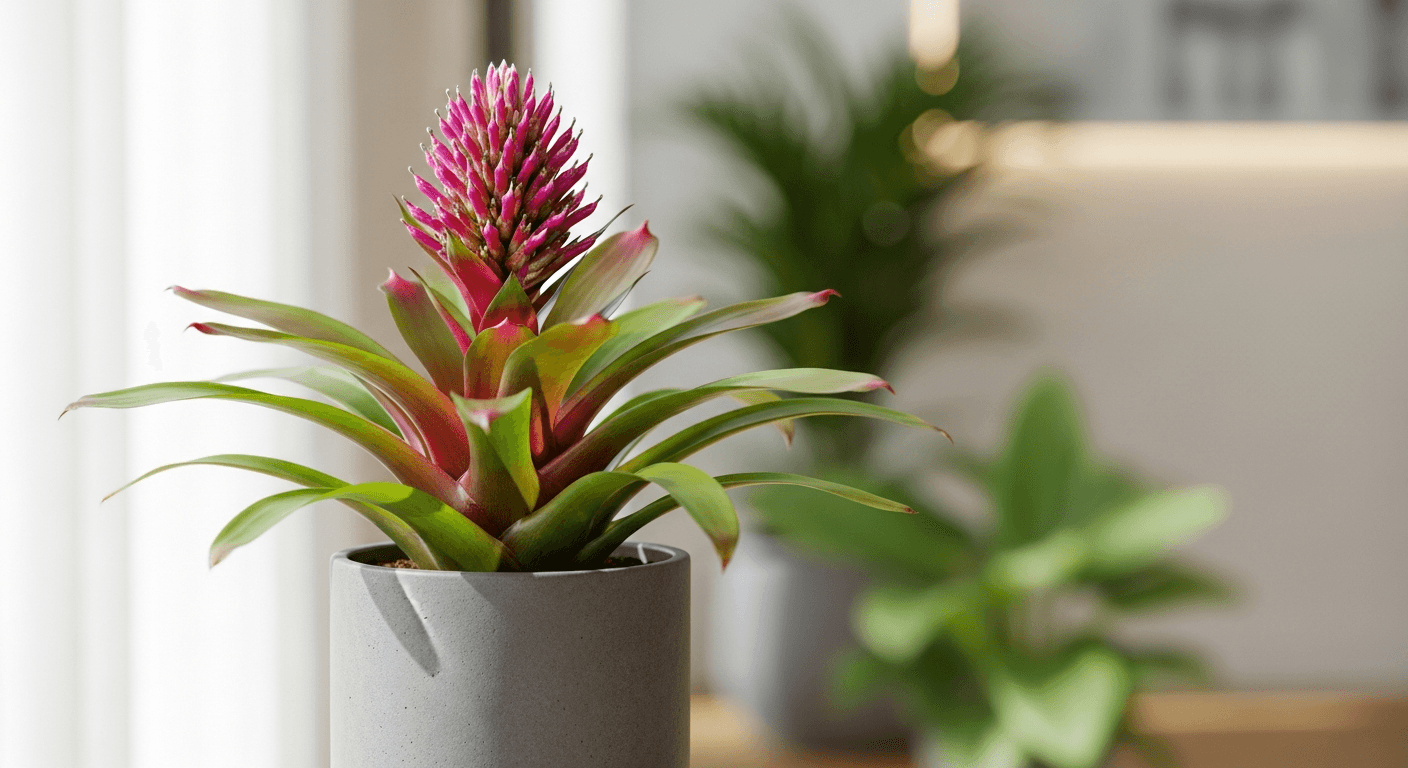
Bromeliad Care: Watering the Central Cup and Pups
Bromeliad care: watering the central cup, bright indirect light, humidity and what to do with the pups when the plant flowers and dies. Full guide.
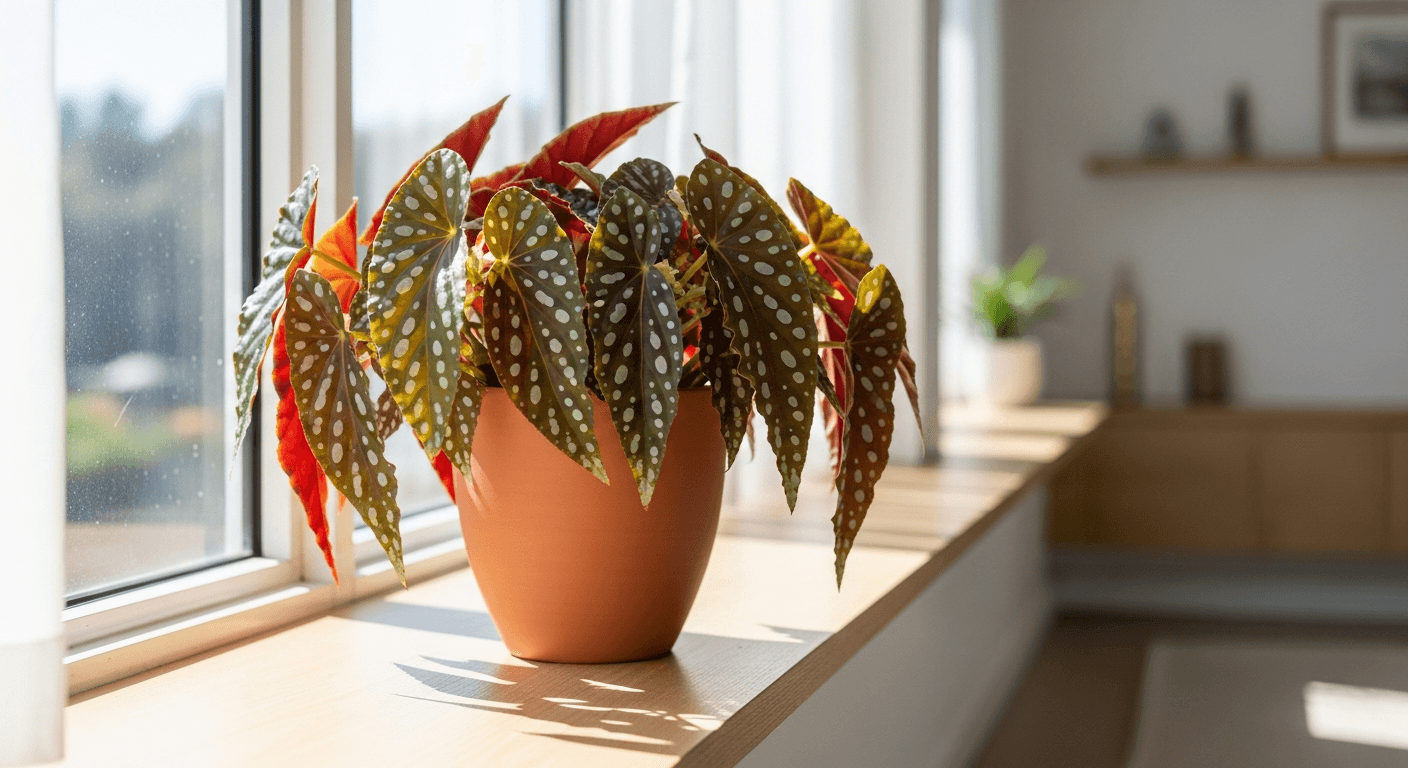
Begonia Care: Rex and Maculata (Polka Dot) Begonias
Begonia rex and maculata care: bright indirect light, watering without wetting the leaves, humidity, propagation and why it's toxic to pets. Full guide.
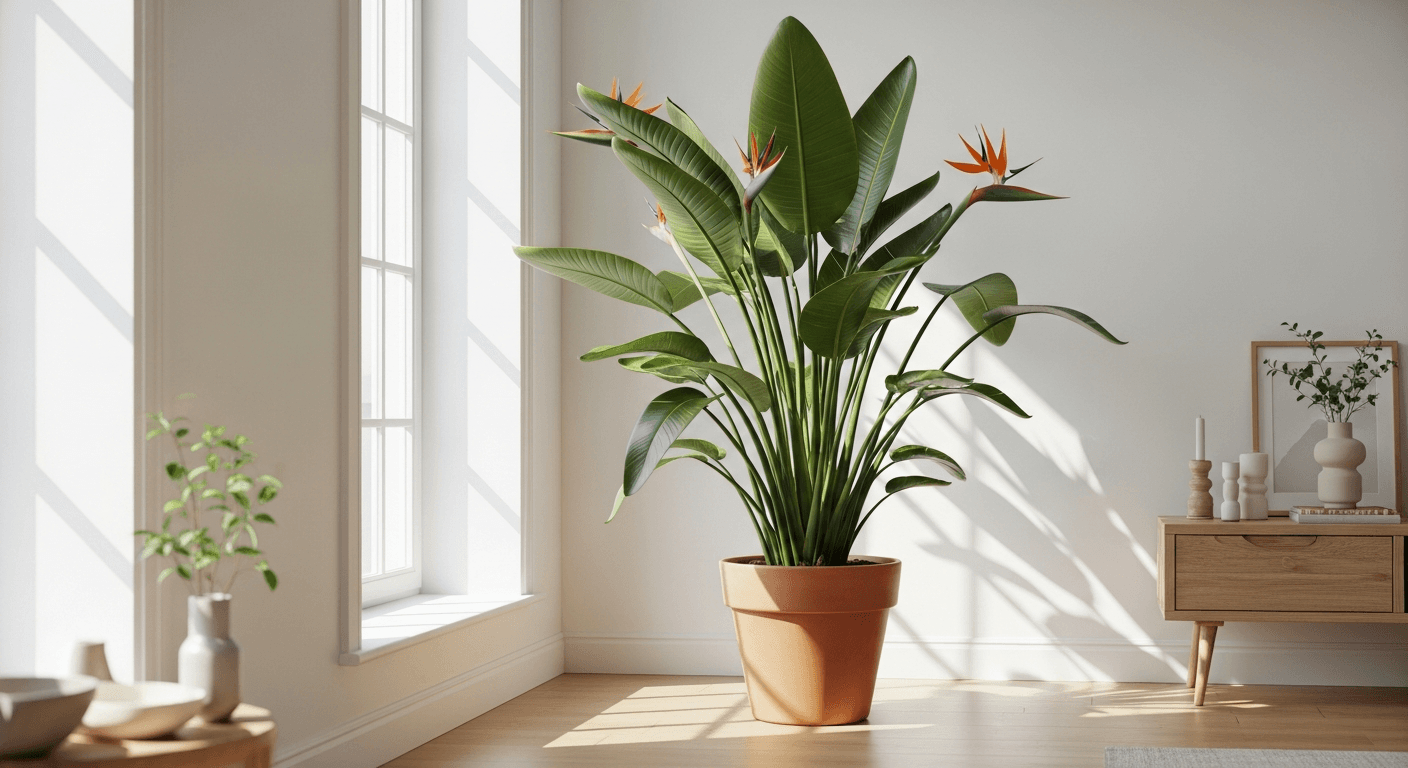
Bird of Paradise (Strelitzia): Care, Light and How It Blooms
Strelitzia (bird of paradise) care: lots of bright light, watering, why the leaves split naturally, and how to get it to bloom indoors. Full guide.
Trouble with your plant?
AI diagnosis