White Cottony Specks on Plants: What They Are and What to Do
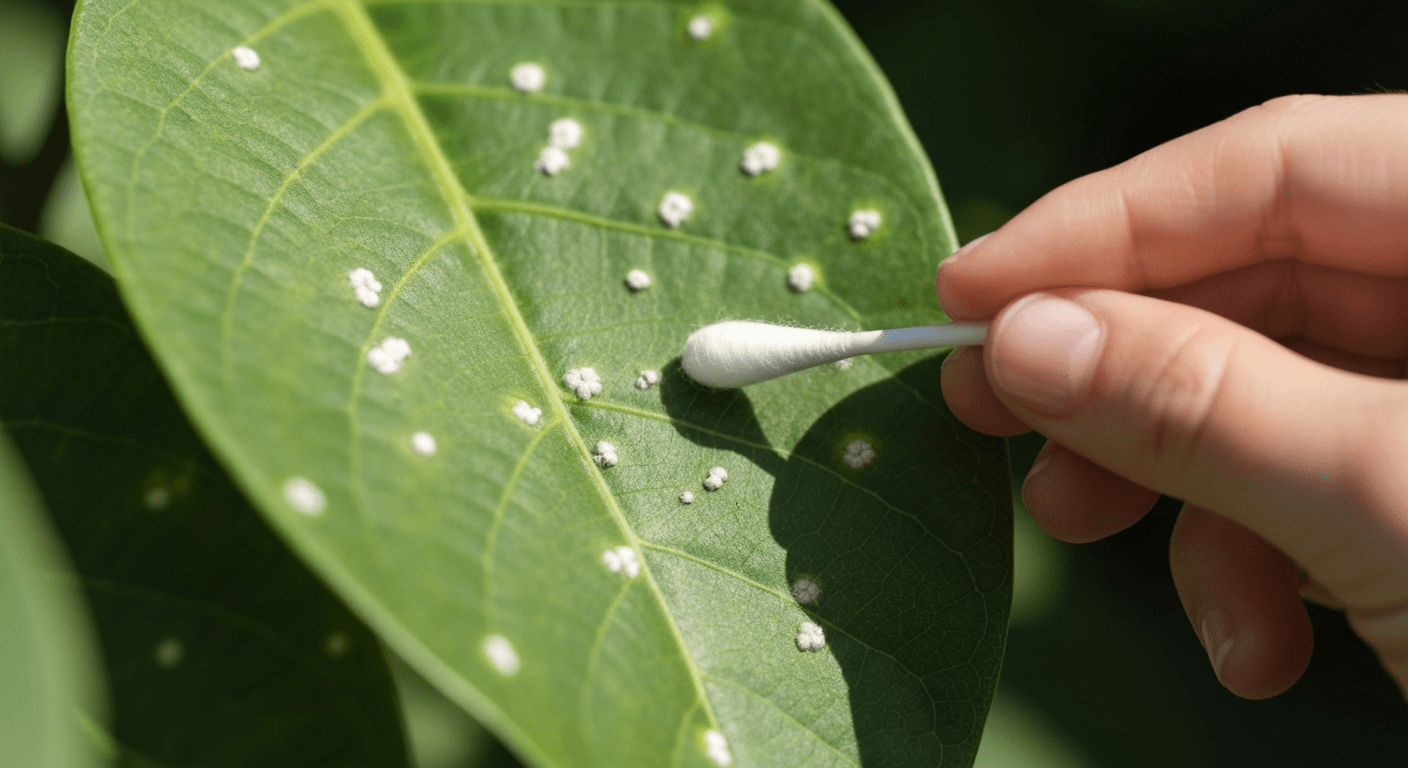
Those white cottony specks on your plants are mealybugs. Here's how to identify them, remove them step by step and prevent them from coming back.
In this article
Small white, cottony specks on stems, leaf joints and the undersides of leaves? Those are mealybugs, and you clear them with 70% isopropyl alcohol on the visible ones plus insecticidal soap sprays every 5-7 days for 3-4 weeks. They're one of the most common — and most stubborn — indoor pests: they suck sap, weaken the plant and breed fast, hiding in the trickiest corners. I've fought them many times, and I'll tell you one thing for sure: they can be wiped out, but the key is persistence. Here's the full plan.
How to identify them
| Sign | Detail |
|---|---|
| White cottony specks | In leaf joints, nodes and undersides (like fluff) |
| Sticky substance (honeydew) | On leaves and nearby furniture |
| Sooty mold (black fungus) | Grows on the honeydew |
| Slow growth, yellow leaves | The plant loses vigor |
Their white waxy coat is what makes them water-resistant: that's why you have to break it to treat them.
Types of scale-like pests
- Mealybugs (this article): mobile, look like cotton, in joints and undersides.
- Armored/soft scale: immobile, like small brown bumps stuck to stems and veins.
- Root mealybugs: live in the root ball, on the roots; suspect them if the plant declines with no visible pest above.
Is your plant looking off and you are not sure why?
Free AI diagnosisAct fast: isolate the plant
First, separate the affected plant from the rest: mealybugs spread from one to another easily, especially to succulents and soft-leaved plants. Check the neighbors just in case.
Step-by-step treatment
- Remove the visible ones with a cotton swab dipped in isopropyl alcohol (70%). The alcohol dissolves their waxy coat and kills them on contact.
- Wash the plant with water and a few drops of insecticidal soap, focusing on undersides and joints.
- Spray with a mix of 1 quart water + 1 teaspoon insecticidal soap + (optional) a few drops of neem oil. Cover the whole plant.
- Repeat every 5-7 days for 3-4 weeks. This is the most important part: it wipes out the nymphs as they hatch and the hidden ones.
Root mealybugs
If the plant declines, yellows and you find no pest on the leaves, lift the root ball: if you see white cottony specks on the roots, it's root mealybugs. Rinse the roots, remove the infested soil, and replant in fresh soil after a root soak in soapy water or a systemic insecticide.
Severe cases and biological control
If the infestation is massive, prune the worst-affected parts. For very valuable plants or in a greenhouse, the predatory beetle Cryptolaemus montrouzieri (the "mealybug destroyer") works very well.
Honeydew, ants and sooty mold
Like aphids, mealybugs excrete sweet honeydew: that's why leaves go sticky, the black sooty mold appears and ants show up to protect them. Controlling the ants helps control the mealybugs.
How to prevent a comeback
Quarantine and inspection
- Quarantine new plants for 2 weeks before mixing them in.
- Check undersides and joints every time you water.
A strong plant defends itself
- Don't over-fertilize: excess nitrogen produces soft new growth that attracts the pest.
- Keep leaves clean and the plant strong: a healthy plant resists better.
Persistence is 90% of success: don't quit the treatment at the first sign of improvement. Not sure if it's mealybugs or something else? Upload a photo to the AI diagnosis tool.
Related articles
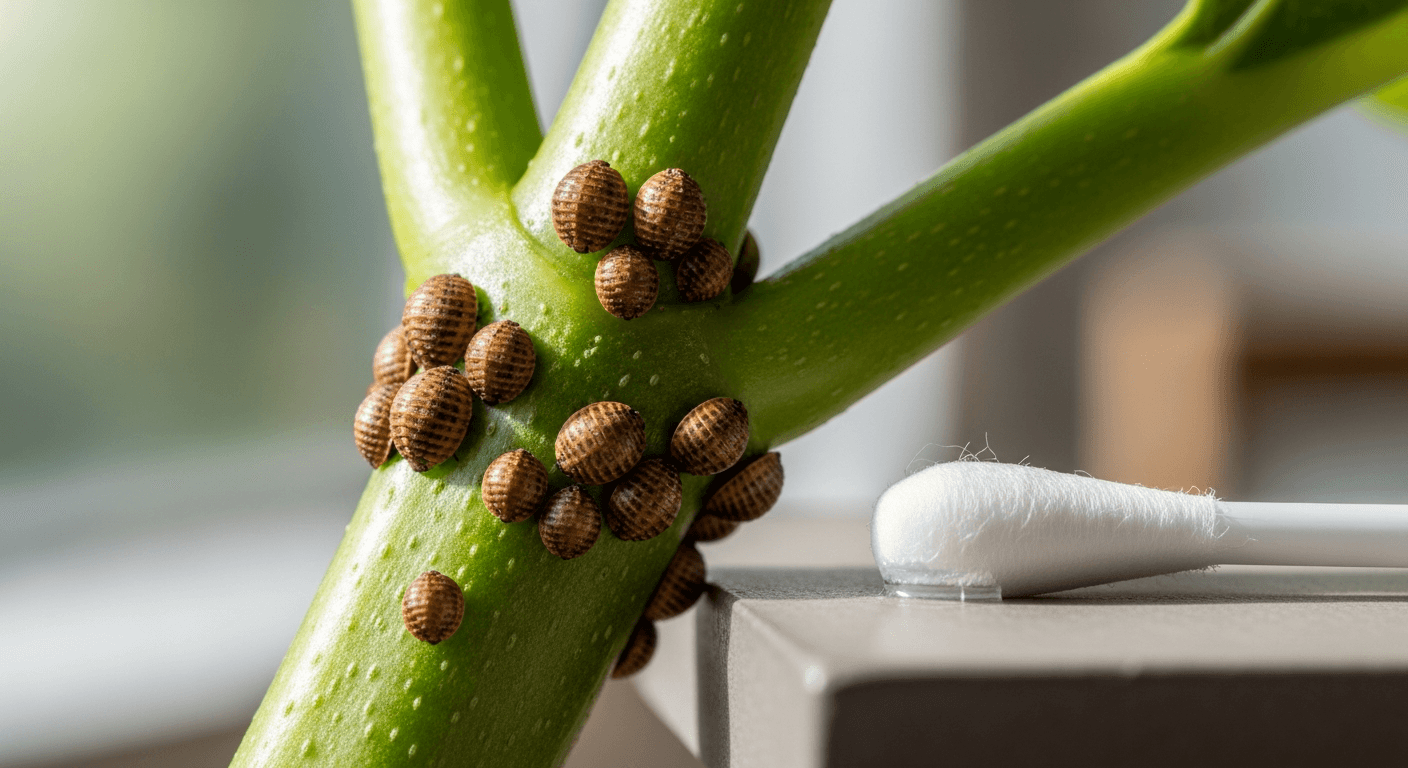
Scale Insects: How to Get Rid of Those Brown Bumps
Those hard brown bumps stuck to stems and leaves are scale insects. Learn to identify them, remove them step by step and stop them coming back to your plant.
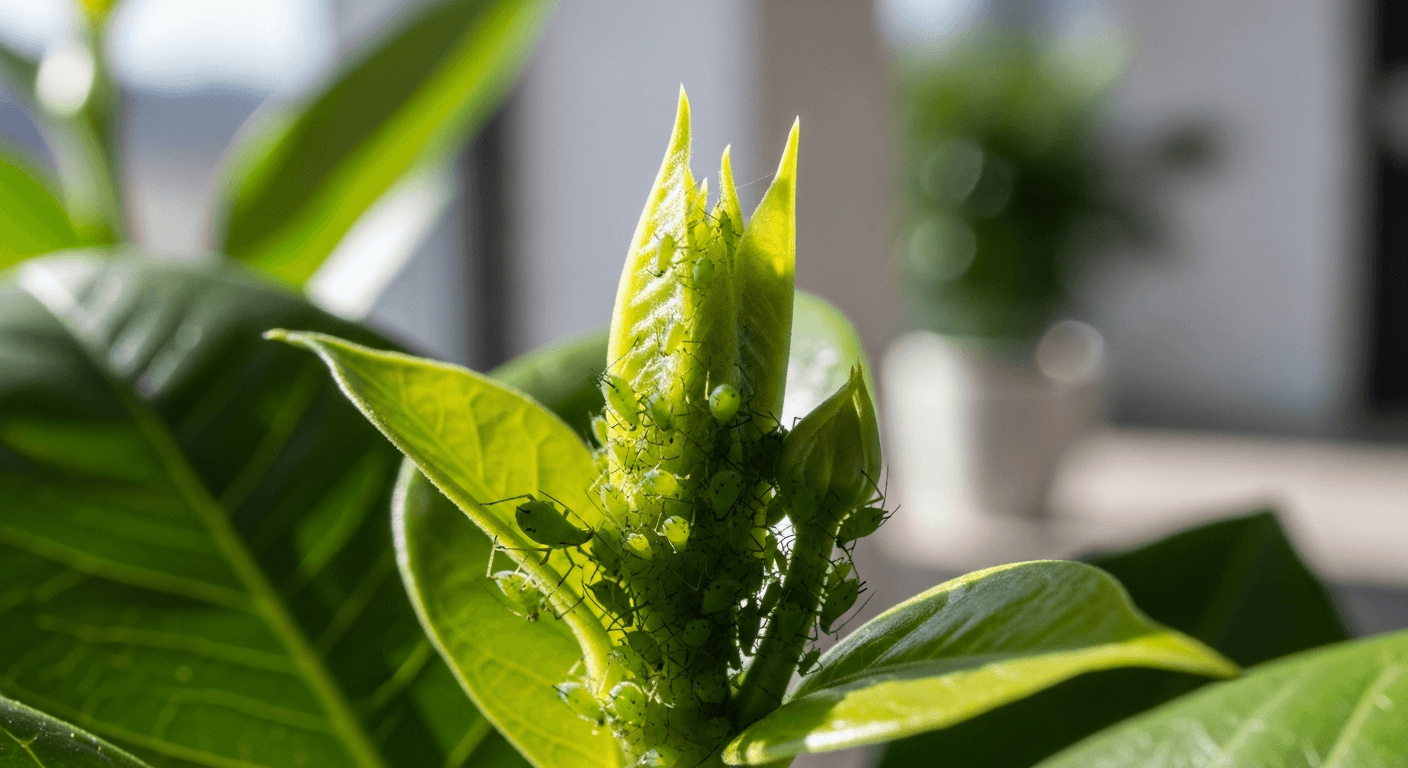
Aphids: How to Get Rid of Them With Easy Remedies
Aphids breed at lightning speed on new shoots and buds. Learn to identify them, clear them with water, soap and natural remedies, and prevent a comeback.
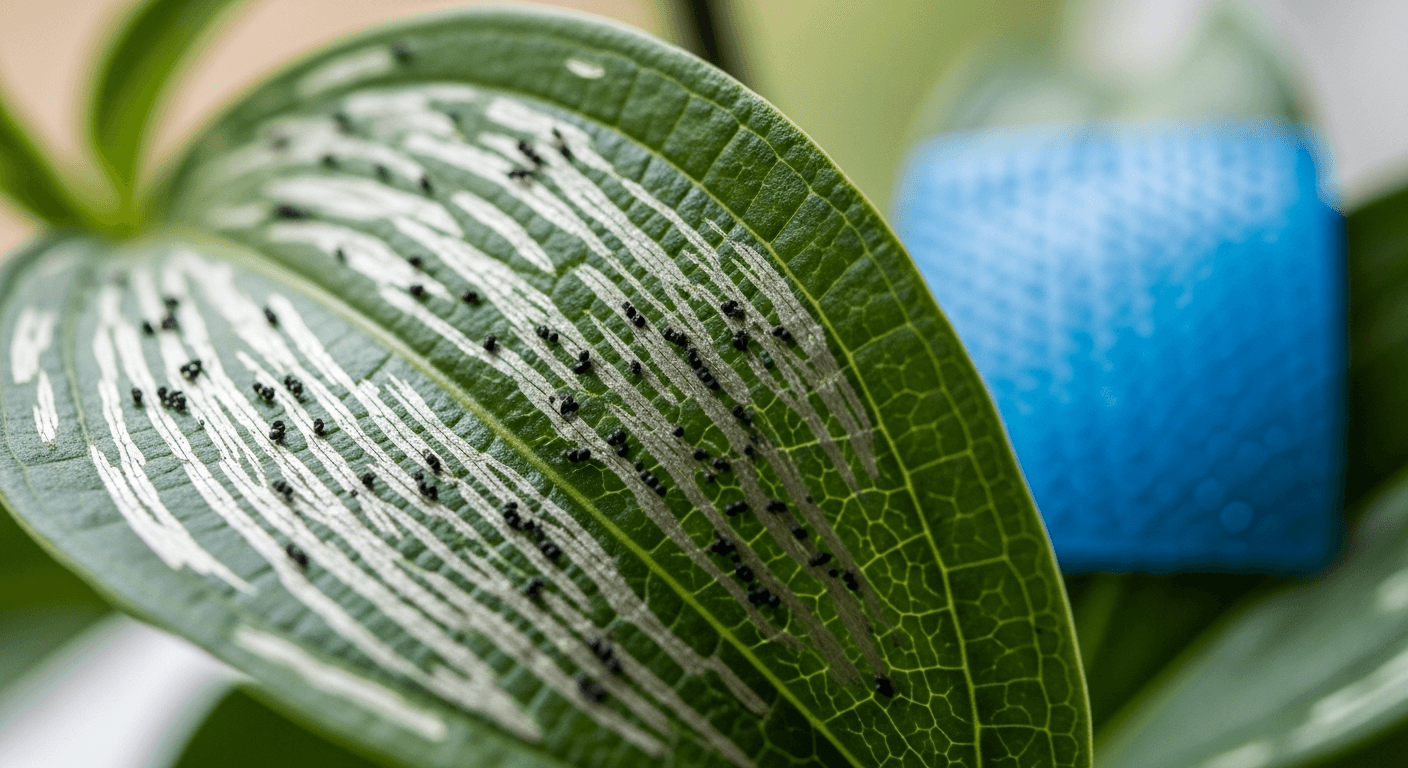
Thrips: How to Spot and Eliminate This Tiny Pest
Thrips are nearly invisible but leave leaves silvery with tiny black dots. Learn to identify them, eliminate them with traps and soap, and prevent them.
Trouble with your plant?
AI diagnosis