Neem Oil: How to Mix and Apply It Without Scorching Leaves
Neem oil is the most versatile natural insecticide. How to dilute it properly with water and soap, when and how to spray, and how to avoid scorching plants.
In this article
Neem oil is the favorite natural ally of plant lovers: it works against many common pests, it comes from a plant, and it is low in toxicity when used correctly. But "natural" does not mean "careless" — applied wrong, it can scorch leaves in a single afternoon. After a decade of growing container vegetables and houseplants alongside two very curious cats, neem is the one bottle I always keep within reach. This is the guide I wish I had when I started: exactly how to mix it, when to spray, and how to avoid the mistakes that turn a helpful treatment into a leaf-burning one.
What neem oil actually is
Neem oil is pressed from the seeds of the Azadirachta indica tree, native to the Indian subcontinent. The version you buy at a garden center is usually cold-pressed crude neem oil, which still contains its key active compound, azadirachtin. That distinction matters: clarified or hydrophobic neem products have had most of the azadirachtin stripped out and act mainly as a smothering oil, so they work on contact but lack the longer-acting effect. For real pest control, look for a label that mentions azadirachtin or says "cold-pressed."
Neem works in two ways at once, which is why it is so versatile:
- As a smothering oil, it coats soft-bodied insects and blocks the pores they breathe through, killing the ones it directly touches.
- As a feeding and growth disruptor, azadirachtin interferes with how insects eat, molt, and reproduce. Pests that nibble treated tissue eat less, fail to mature, and lay fewer viable eggs.
That second mechanism is why neem is not an instant knockdown. You will not walk away and find a pile of dead bugs an hour later. It works gradually, over several applications, by breaking the pest's life cycle. Patience is part of the method.
Is your plant looking off and you are not sure why?
Free AI diagnosisWhat it works on (and what it does not)
Neem is a generalist. It earns its place against the soft-bodied, sap-sucking pests that plague indoor and container plants, and it has mild antifungal action on top of that. Here is a realistic breakdown of where it shines and where you should reach for something else.
| Pest or problem | How well neem works | Notes |
|---|---|---|
| Aphids | Very good | Soft-bodied; coat them directly and they smother fast. |
| Spider mites | Good | Hit the leaf undersides; needs repeat sprays to catch hatchlings. |
| Whitefly | Good | Adults fly off; target eggs and nymphs on undersides. |
| Thrips | Moderate | Slows them; combine with sticky traps and persistence. |
| Scale insects | Moderate | Armored adults resist oil; best on the mobile "crawler" stage. |
| Mealybugs | Moderate | Their waxy coat repels sprays; alcohol on a swab first helps. |
| Powdery mildew | Mild, preventive | Suppresses spread; not a cure for heavy infections. |
Where neem falls short: it does little against caterpillars, beetles, ants, or established root problems, and it will not fix damage that is actually a watering or light issue in disguise. Hard-shelled adult scale and the waxy armor of mealybugs both shrug off a single spray, so for those you treat persistently and often pair neem with a cotton swab dipped in rubbing alcohol to knock down the worst clusters first.
How to mix and apply it
The correct dilution
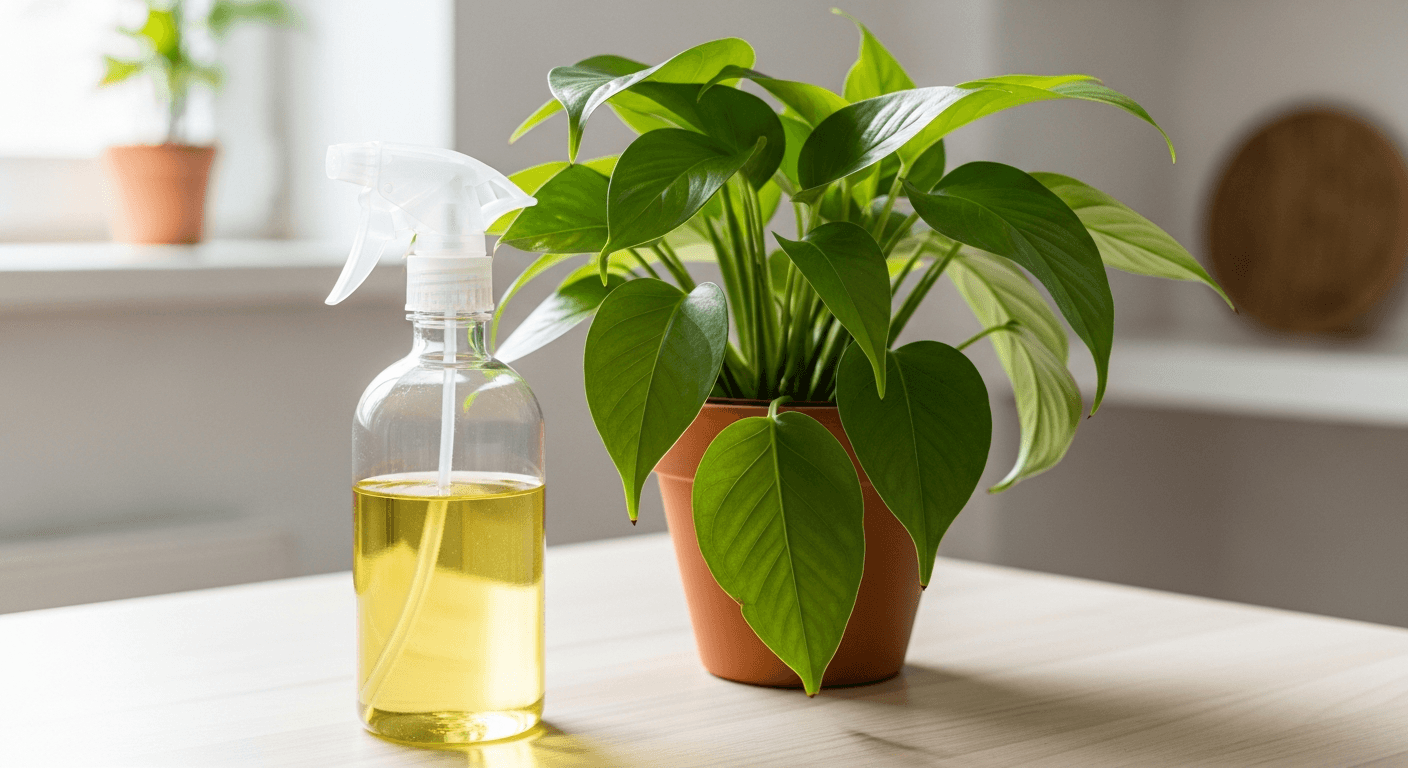
Neem oil will not mix with water on its own — it is an oil, so it beads up and floats. You need an emulsifier to break it into tiny suspended droplets, and you need lukewarm water because cold water lets the oil congeal and clog your sprayer. Here is my standard recipe for a general-purpose spray:
- 1 quart (about 1 liter) of lukewarm water — warm to the touch, never hot. Hot water can degrade the azadirachtin.
- 1 to 2 teaspoons (5 to 10 ml) of cold-pressed neem oil. Start at the lower end; you can always go stronger.
- 1/2 to 1 teaspoon of mild liquid soap or insecticidal soap as the emulsifier. A gentle dish soap with no degreasers, bleach, or fragrance works; a true insecticidal soap is gentlest on foliage.
Add the soap to the water first, then drizzle in the neem while stirring or shaking. Mix vigorously until the liquid turns uniformly milky with no oil slick on top. That cloudy, even look is your sign the emulsion is stable.
Use it fresh. Once mixed, neem starts to break down and the emulsion separates within a few hours, so make only what you will use in one session. For light or preventive applications you can halve the neem dose. For a stubborn infestation, stay at the stronger end but do not exceed the label rate — more neem does not mean faster results, only a higher risk of leaf burn.
How and when to spray
Getting the timing and coverage right matters as much as the recipe. The single most important rule: never spray neem in direct sun or high heat. Oil plus sunlight equals scorched leaves, and it is by far the most common way people damage their plants with neem.
- Spray at dusk, early morning, or on an overcast day, when the plant is out of direct sun and temperatures are mild (roughly 50–85°F / 10–29°C). This gives the oil hours to do its work and dry before the sun hits.
- Coat both sides of every leaf, paying special attention to the undersides and the tender new growth, leaf joints, and stems where pests shelter and lay eggs. Pests hide where you cannot see them, so spray as if you are looking for them.
- Spray to the point of runoff but stop before it drips — you want an even film, not a flood.
- Repeat every 5 to 7 days, three or four times in a row. A single spray never catches the eggs that hatch a few days later. This repeat schedule is what actually breaks the life cycle.
- Work in good ventilation, but avoid breezy conditions that blow the spray off-target or onto open flowers.
Tip: always patch-test first. Spray one leaf, wait 24 hours, and check for spotting or browning. If the leaf looks fine, treat the whole plant. This thirty-second habit has saved me from ruining more than one sensitive fern.
For houseplants, I like to move the plant to the sink, bathtub, or a shady spot outdoors to spray, let it sit out of the sun for a few hours, then rinse very lightly or just return it to its place. Outdoors, an evening spray after the sun is off the bed works perfectly.
Common mistakes and how to fix them
Most neem failures come down to a handful of avoidable errors. This table covers the ones I see most often.
| Symptom | Likely cause | Fix |
|---|---|---|
| Brown or yellow scorched patches | Sprayed in sun or heat, or too strong | Move out of light; dilute more; only spray at dusk. |
| Oil slick floats on the mix | No emulsifier or water too cold | Add soap; use lukewarm water; shake until milky. |
| Pests came back in a week | Stopped after one spray | Repeat every 5–7 days for 3–4 cycles to catch eggs. |
| Sprayer keeps clogging | Oil congealing in cold water | Mix warmer; clean the nozzle; shake between sprays. |
| White residue on leaves | Soap or hard-water film | Wipe leaves gently a day later; see leaf-cleaning tips. |
| No effect at all | Clarified neem with no azadirachtin | Switch to a cold-pressed product with azadirachtin listed. |
If you find a film building up on glossy foliage after a few treatments, a gentle wipe-down a day after spraying keeps leaves breathing and looking their best — the same approach I cover in cleaning plant leaves.
Important precautions
- Do not spray in full sun, high heat, or a heat wave. This is the number one cause of leaf burn. When summer turns brutal, hold off until evening or skip treatment entirely; see summer plant care for hot-weather guidance.
- Avoid spraying open flowers to protect bees and other pollinators. Neem is much safer for beneficial insects than synthetic insecticides, but a direct hit on a foraging bee can still harm it. Spray when pollinators are not active and steer clear of blooms.
- Some plants are sensitive. Thin- or delicate-leaved species — ferns, calatheas, and other fussy foliage — can react badly. Patch-test first and dilute more for these.
- Keep it away from kids and pets while wet. Neem has low toxicity, but my cats would happily chew a freshly sprayed leaf, so I keep treated plants out of reach until everything is fully dry. If you share your home with curious animals, my guide to pet-safe plants is worth a read alongside this one.
- Do not use it on healthy plants for no reason. Neem is a treatment, not a routine tonic. Spraying when there is no pest only stresses the foliage.
- Store the bottle properly. Crude neem solidifies in the cold; keep it at room temperature and warm it gently (in a bowl of warm water) if it has gone thick before you measure.
Using neem as prevention
On plants that are repeatedly targeted — especially indoor plants suffering in dry winter air, or container crops that pests love — a light spray every two to three weeks can help keep pests from gaining a foothold. Use the lower neem dose, hit the undersides, and treat it as occasional insurance, not a habit.
A few non-chemical habits make neem work less often necessary in the first place: inspect new arrivals before they join your collection, quarantine them for a couple of weeks, keep humidity up for plants that crave it (dry air invites spider mites), and wipe down leaves now and then. Prevention is always cheaper and gentler than a full infestation.
Make sure it is the right pest first
Neem is effective, but only when you are treating the right problem. Spider mite damage can look like a nutrient issue; thrips damage can be mistaken for disease; and what looks like "bugs" is sometimes just under- or over-watering stress. Spraying the wrong thing wastes time and stresses the plant.
If you are not certain what your plant has, upload a clear photo — ideally of the underside of an affected leaf — to our AI diagnosis tool before you mix a thing. Identifying the culprit correctly is half the battle, and it tells you whether neem is even the right call.
Well diluted, applied out of the sun, and used consistently over a few cycles, neem oil is one of the most useful and forgiving tools you can keep on the shelf for healthy, pest-free plants.
Related articles
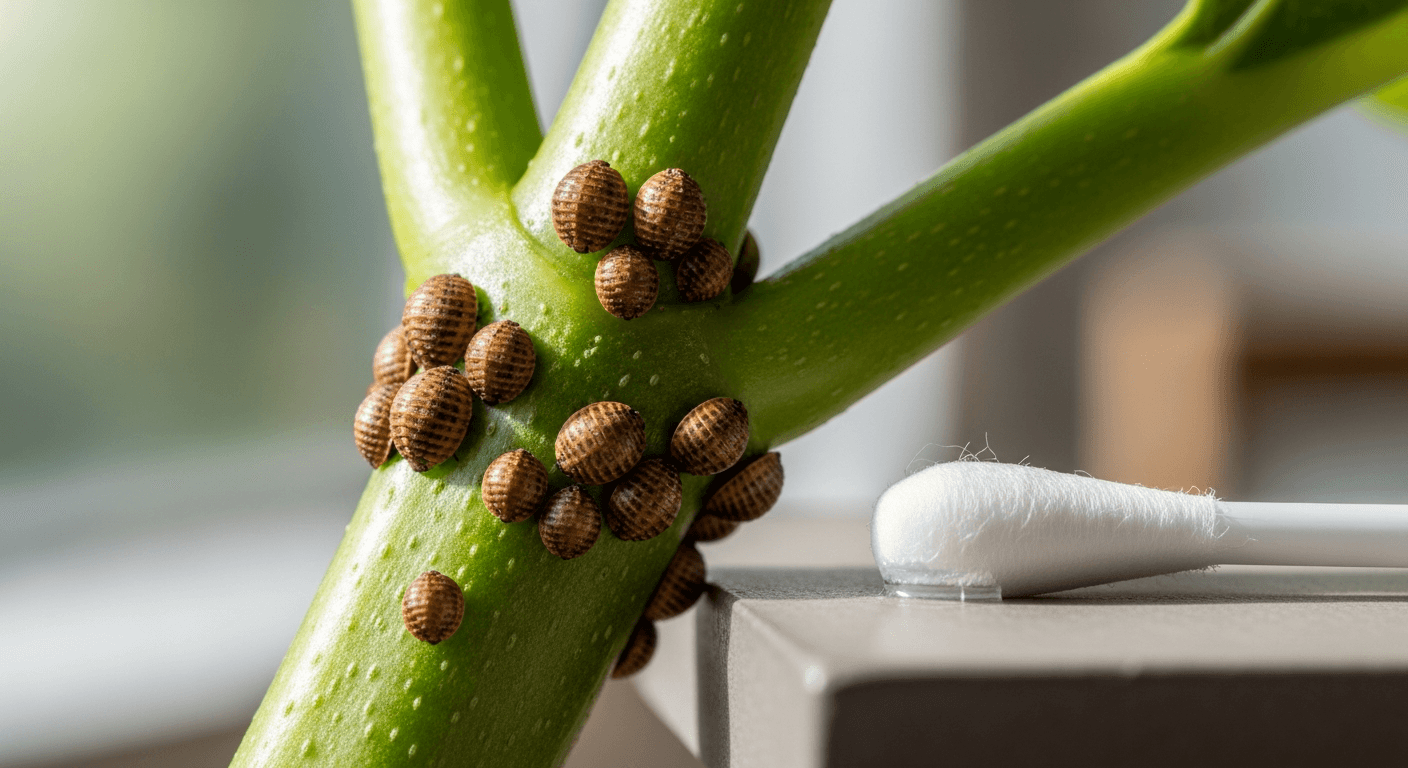
Scale Insects: How to Get Rid of Those Brown Bumps
Those hard brown bumps stuck to stems and leaves are scale insects. Learn to identify them, remove them step by step and stop them coming back to your plant.
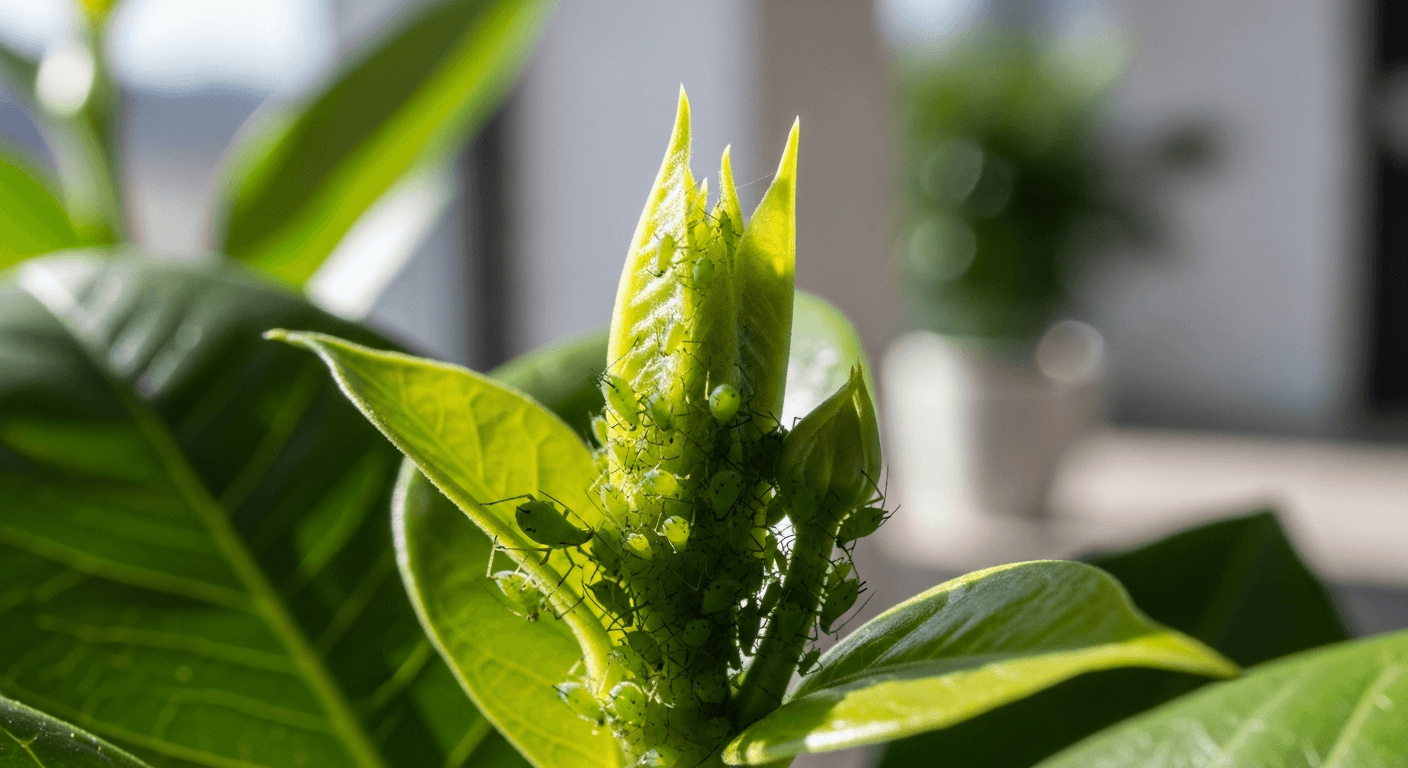
Aphids: How to Get Rid of Them With Easy Remedies
Aphids breed at lightning speed on new shoots and buds. Learn to identify them, clear them with water, soap and natural remedies, and prevent a comeback.
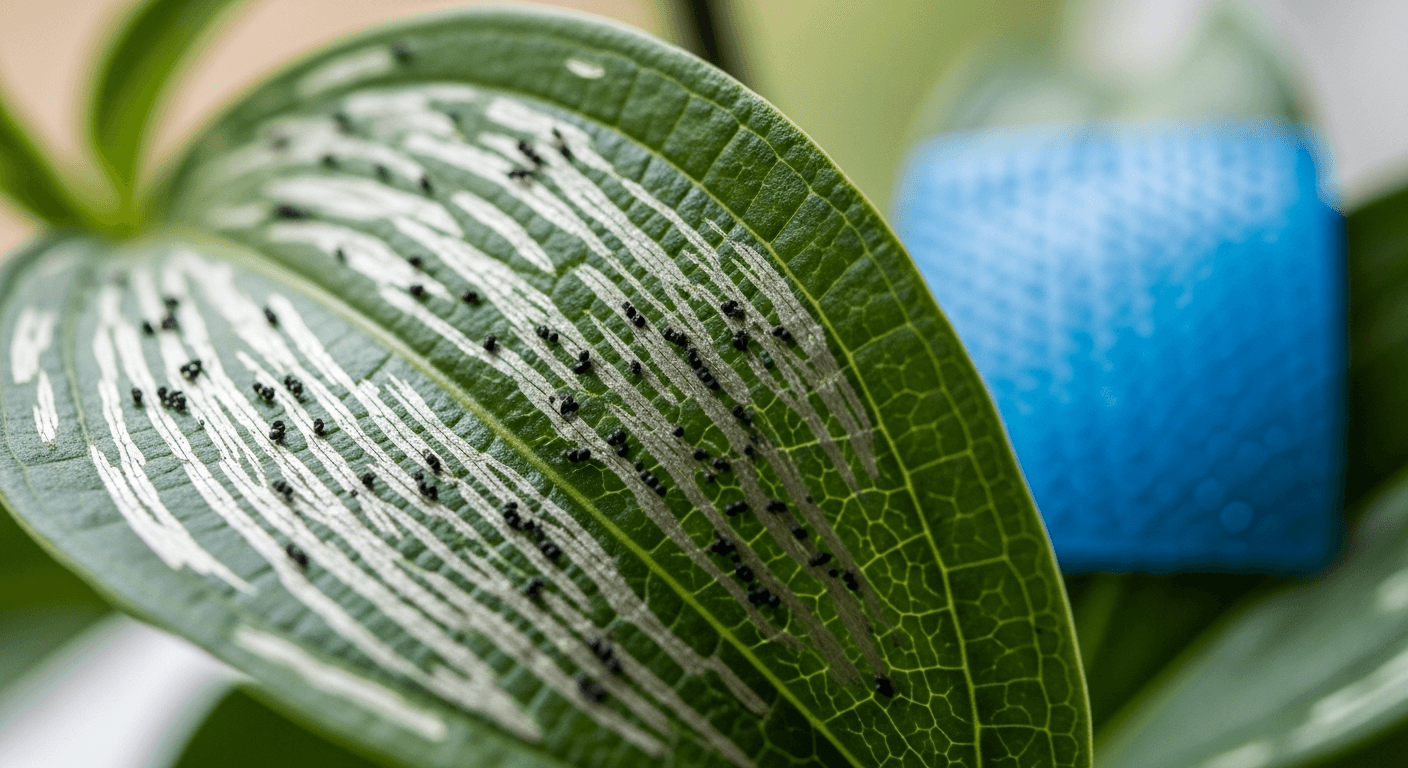
Thrips: How to Spot and Eliminate This Tiny Pest
Thrips are nearly invisible but leave leaves silvery with tiny black dots. Learn to identify them, eliminate them with traps and soap, and prevent them.
Trouble with your plant?
AI diagnosis