How to Save Your Houseplants From Heat and Harsh Sun
Summer houseplant care guide: water more often, shield plants from harsh midday sun, raise humidity, feed during growth and avoid heat stress on hot days.
In this article
- 1. Water more often (but always check)
- How to tell it really needs water
- What time of day to water
- 2. Shield them from harsh direct sun
- How to filter the strongest hours
- Signs of too much sun
- 3. Raise humidity when it gets hot
- Ways to build a humid microclimate
- Why misting in full sun backfires
- 4. Use the growing season to feed
- 5. Watch out for holidays
- Common summer problems
- What NOT to do in summer
In summer, water more often but always check the soil with a finger first, filter the midday sun coming through the glass, feed every 2-4 weeks and raise the humidity if the air is dry. The rest is vigilance: your plants live the opposite of winter, with more light, more warmth and most of them growing at full speed. That means they drink more, dry out faster and suffer if you neglect them for a few days.
1. Water more often (but always check)
With the heat the soil dries out much faster, so almost every plant needs more water than the rest of the year. Even so, don't water out of habit: overwatering is still the number one cause of death.
How to tell it really needs water
- Check with a finger: push 1-2 inches into the soil. If it's dry, water; if it's still damp, wait.
- Water thoroughly: soak until water runs out of the drainage and empty the saucer ten minutes later.
Summer rule: during a heat wave, check small pots every one or two days — they dry out in no time.
What time of day to water
Early morning or evening, never at high noon with the pot in the sun: cold water on a baking root ball gives the roots a thermal shock, and much of it evaporates before it reaches the bottom. If the pot has been sitting in the sun for hours, let it cool before you wet it.
Is your plant looking off and you are not sure why?
Free AI diagnosis2. Shield them from harsh direct sun
More light isn't always better. Midday sun through glass acts like a magnifying glass and scorches leaves, especially tropical plants used to jungle shade.
How to filter the strongest hours
- Move thin-leaved or tropical plants away from south-facing windows.
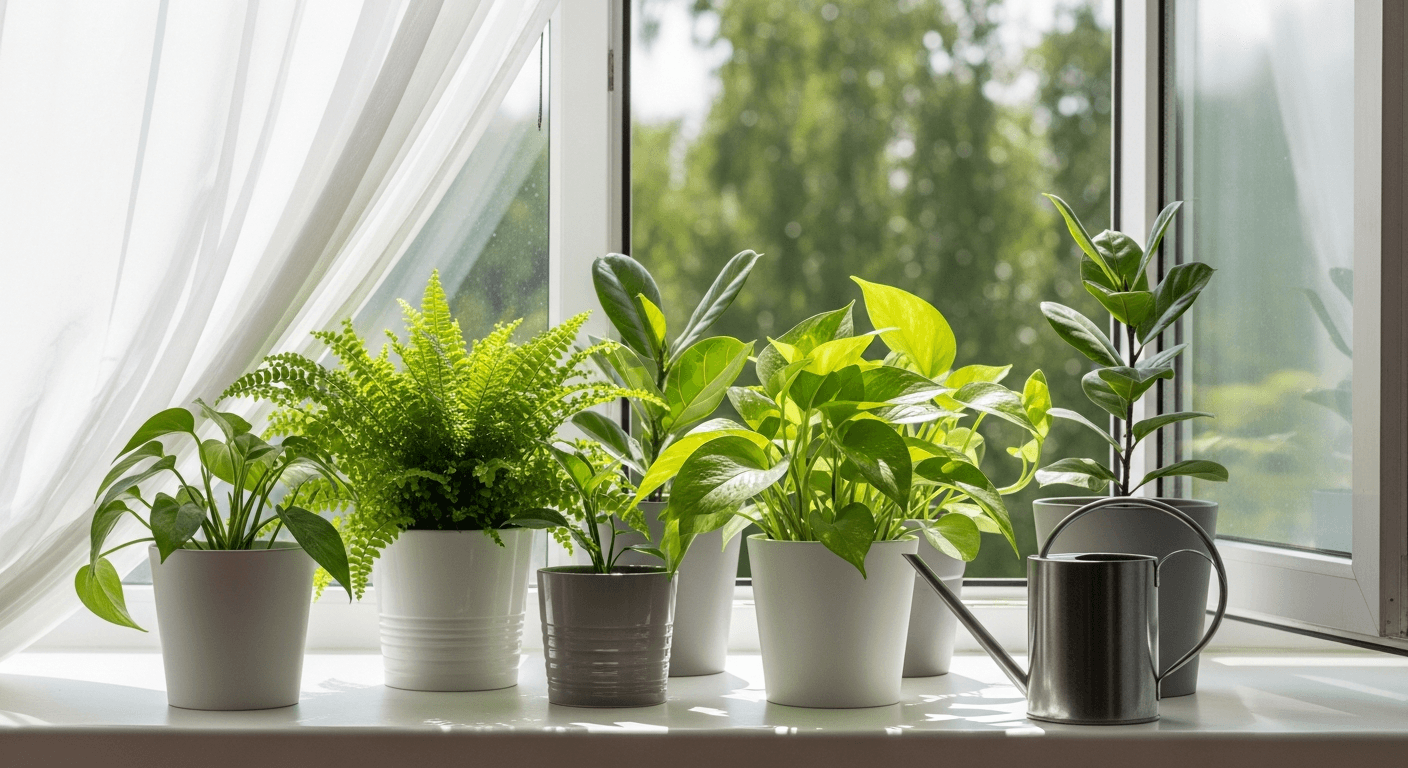
- Use a sheer curtain to filter the strongest hours.
- If you move plants out to the balcony, acclimate them slowly: start in shade and increase light gradually to avoid burns.
Signs of too much sun
Pale or dry brown patches on the side of the leaf facing the sun are burns. Move the plant somewhere more sheltered, and don't cut off the whole leaf if it still has green areas. How to tell them apart from other blemishes, and what to do next, is in our guide to plant sunburn.
3. Raise humidity when it gets hot
Hot, dry air dries out leaf tips. Tropicals (calatheas, ferns, marantas) feel it the most.
Ways to build a humid microclimate
- Group plants together to create a humid microclimate.
- Set pots on a tray of pebbles and water, with the base not touching the water.
- A humidifier is the most reliable fix if your air is very dry.
The percentage each plant type actually wants is in our guide to humidity for indoor plants.
Why misting in full sun backfires
Avoid misting at midday: droplets can act as a lens and mark the leaves, and the effect on ambient humidity lasts only minutes. If you do mist, do it first thing, once the sun is filtered.
4. Use the growing season to feed
Summer is peak growing season, so it's when feeding pays off most.
- Feed every 2-4 weeks with a diluted, balanced fertilizer.
- Less is more: a weak, frequent dose beats one strong hit.
- To really understand amounts and timing, review our guide to fertilizing plants.
5. Watch out for holidays
Summer is travel season, and a week with no water at 95 °F can finish off a plant. Before you leave, group them in the coolest room, away from direct sun, and set up a watering system. You'll find simple tricks in our watering while away guide.
Common summer problems
| Symptom | Likely cause |
|---|---|
| Leaves wilting in the afternoon but recovering at night | Brief heat, water is fine |
| Wilting that doesn't recover | Lack of water or damaged roots |
| Dry, pale patches | Sunburn |
| Brown tips | Dry air from the heat |
| Weak, stretched growth | Too much shade despite summer |
What NOT to do in summer
- Don't repot during a heat wave: the plant is already stressed; wait for milder days or, better still, for next spring as our seasonal houseplant care calendar suggests.
- Don't leave standing water in the saucer: in the heat roots rot even faster.
- Don't water a pot that's baking in the sun: let it cool down first.
Summer plant care is mostly about not neglecting them: enough water, shade during the strongest hours, and a little humidity. Has your plant gone downhill in the heat and you're not sure if it's thirst, sun or something else? Try it in our AI diagnosis and find out.
Related articles
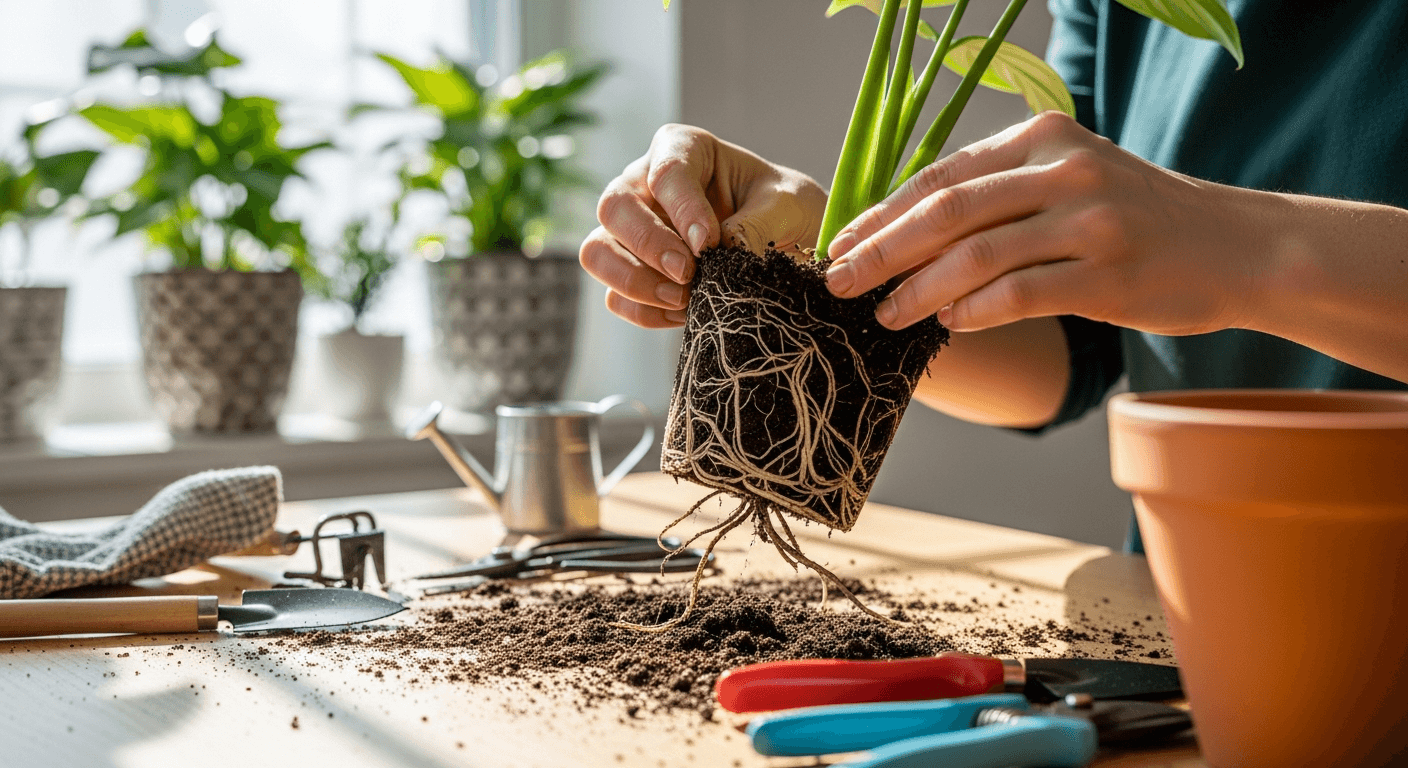
How to Revive a Dying Plant Step by Step
Your plant is dying and you don't know why. A guide to diagnosing and reviving a dying plant: watering, roots, light, pests and when it is simply too late.
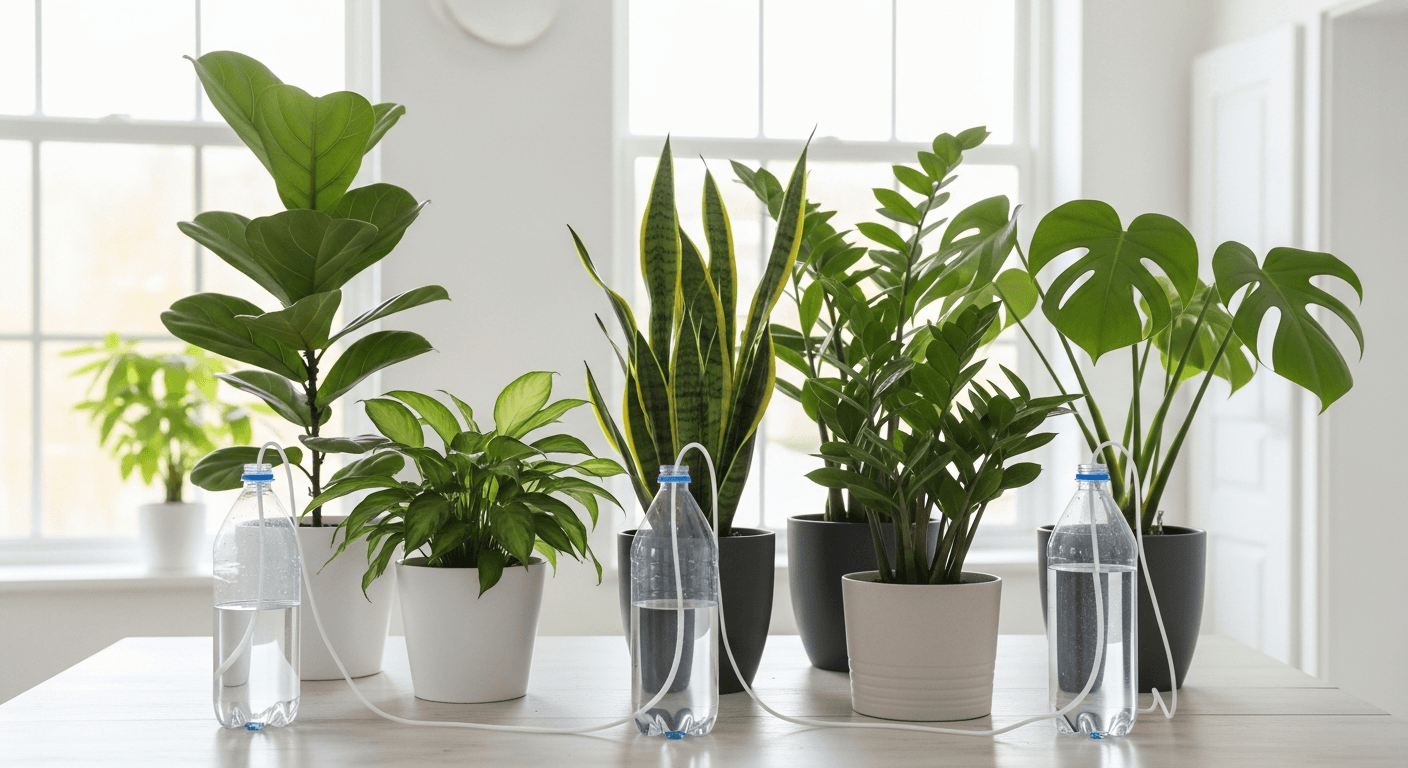
How to Keep Plants Watered While on Holiday
Tricks to keep plants watered while you're away: wicks, water bottles, grouping them in the bathroom, and how to prep your home before you walk out the door.

Winter Care for Indoor Plants
Winter houseplant care guide: water far less, chase the light, keep them away from radiators and drafts, pause feeding and raise the humidity.
Trouble with your plant?
AI diagnosis