Watering Plants While You're Away: Prep Your Home Before You Go
Tricks to keep plants watered while you're away: wicks, water bottles, grouping them in the bathroom, and how to prep your home before you walk out the door.
In this article
- First: how long will you be gone?
- Simple tricks (up to a week)
- Group plants away from the sun
- A deep soak before leaving
- Cover the soil
- Passive watering systems (one to two weeks)
- Wick or string watering
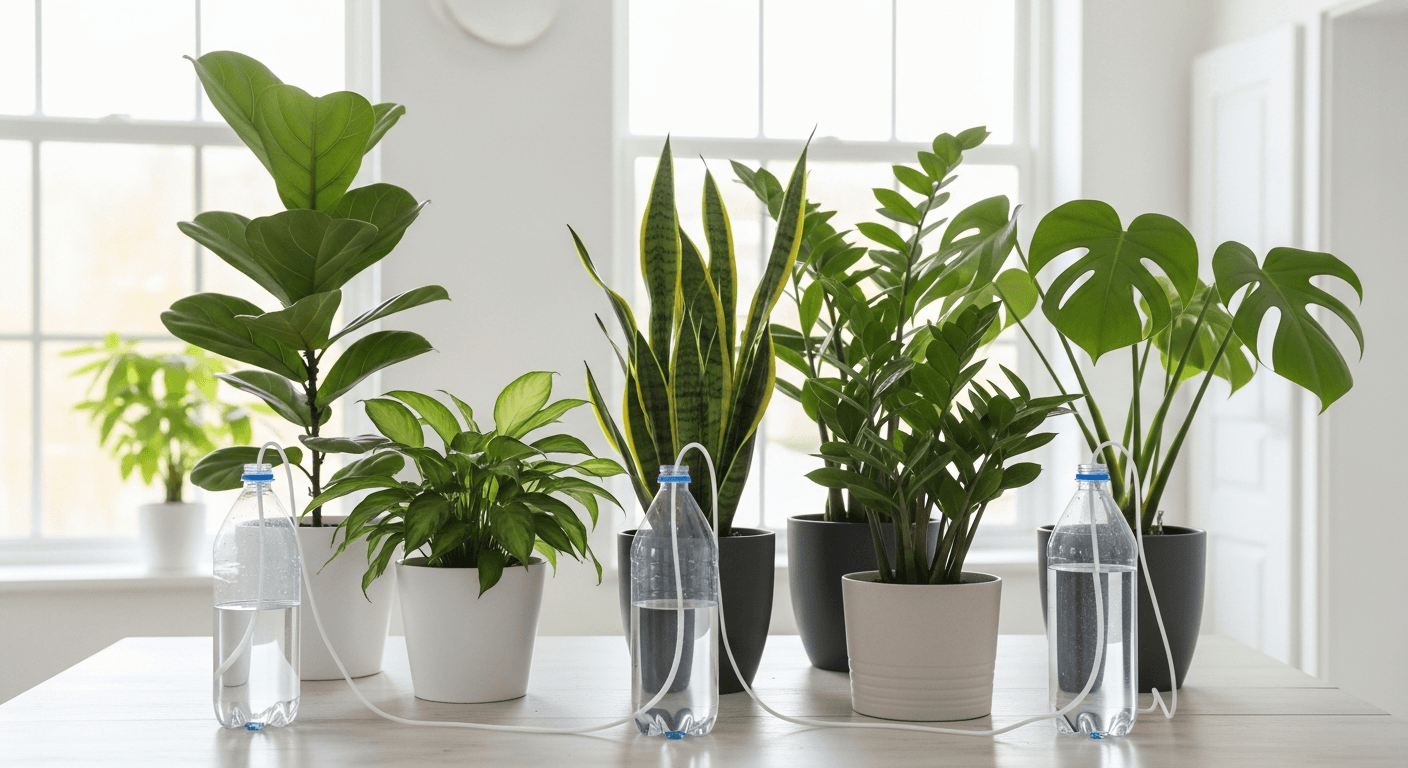
- Inverted bottle
- Bath or basin with a towel
- Cones and ceramic systems
- Checklist before you walk out the door
- Costly mistakes
- What if I have lots of plants?
- Sort your collection by thirst
- When to ask someone to pop in
- Travelling in winter is far easier
For a weekend away, a deep soak before you leave is all your plants need. For a week, group the pots in the coolest room and cover the soil to slow evaporation; past two weeks you need a passive system such as a cotton wick or an inverted bottle. The usual worry — will they survive? — is almost always settled by half an hour of prep before you walk out the door. Here are the methods that actually work, from the simplest to the most elaborate.
First: how long will you be gone?
- A weekend (2-3 days): almost no plant needs anything. Water well before you go and you're done.
- A week: grouping plants plus a simple trick is enough.
- Two weeks or more: you need a passive watering system or outside help.
The season changes the maths completely: in August a plant drinks roughly twice what it does in January, so read our summer care for indoor plants if you're travelling in the heat.
Get one plant-care guide a week, no spam.
Subscribe freeSimple tricks (up to a week)
Group plants away from the sun
Gather all the pots in the coolest room with indirect light, away from sun-facing windows. Clustered together they create a humid microclimate and lose less water. A bathroom with a window is ideal thanks to its humidity — the same principle we cover in our guide to humidity for indoor plants.
A deep soak before leaving
Water until it runs out of the drainage holes and let it drain. For thirsty plants, you can sink the pot in a basin for a few minutes so the soil soaks through completely.
Cover the soil
A layer of mulch, coco coir or even pebbles on top of the soil cuts evaporation and holds moisture for several more days.
Passive watering systems (one to two weeks)
Wick or string watering
The most reliable, cheapest method. Place a container of water higher than the pot and run a cotton or felt wick from the water into the soil. The wick slowly releases water by capillary action.
- Fill a bucket or jug with water.
- Put one end of the wick in the water and bury it a few centimetres in the pot.
- Test it a couple of days ahead to fine-tune the flow.
Inverted bottle
Fill a water bottle, make a couple of small holes in the cap, and stick it upside down into the soil. It releases water as the soil dries. Works best in medium and large pots.
Bath or basin with a towel
Lay a wet towel in the bottom of the bath and set the pots on top (no saucers). The towel keeps the base damp and the roots drink what they need. Make sure the pots have drainage holes.
Cones and ceramic systems
Terracotta cones that connect to a bottle are convenient and regulate flow pretty well. A good option if you travel often. If you're away several times a year, consider moving your thirstiest plants into self-watering pots and solving the problem for good.
Checklist before you walk out the door
- Move all plants out of direct sun.
- Water deeply and empty leftover saucers.
- Group the pots in a cool, humid spot.
- Set up and test your watering system ahead of time.
- Remove spent flowers and wilted leaves (they waste water).
- Lower the blinds a little to reduce evaporation.
Costly mistakes
- Leaving plants in full sun: they'll dry out in two days no matter what system you rig up.
- Drowning them "just in case": too much standing water leads to root rot — worse than being a little thirsty.
- Testing the system the same day: wicks and bottles need adjusting. Set it up two or three days early.
What if I have lots of plants?
With a big collection there's no point rigging the same system for everything. Sort the plants by thirst and put the effort where it actually counts.
Sort your collection by thirst
Succulents and cacti barely need anything and can stay right where they are. The big-leaved tropicals — monstera, calathea, ferns — are the first to suffer, so save the wicks and bottles for them.
When to ask someone to pop in
If you'll be gone more than two weeks, if you have seedlings or cuttings rooting, or if you're past twenty pots, one mid-trip visit saves a lot of grief. Leave written notes on which plants to water and which to leave alone.
Travelling in winter is far easier
In winter the risk is minimal because plants drink very little and evaporation drops off a cliff; review our winter care for indoor plants before you head off in the cold.
With a little planning, you'll come home to plants as green as you left them. If one greets you looking rough, upload a photo to our AI diagnosis to find out what happened.
Related articles
How to Revive a Dying Plant Step by Step
Your plant is dying and you don't know why. A guide to diagnosing and reviving a dying plant: watering, roots, light, pests and when it is simply too late.
Summer Care for Indoor Plants
Summer houseplant care guide: water more often, shield plants from harsh midday sun, raise humidity, feed during growth and avoid heat stress on hot days.

Winter Care for Indoor Plants
Winter houseplant care guide: water far less, chase the light, keep them away from radiators and drafts, pause feeding and raise the humidity.
Trouble with your plant?
AI diagnosis