Feeding Without Burning the Roots: Dose, Timing and Mistakes
Which fertilizer to use, how often and how much. Learn to read NPK, when NOT to fertilize, and the signs of overfeeding. So your plants grow strong.
In this article
In a pot, a plant only has the nutrients you give it. Outdoors a plant can push its roots out and forage; in a container, the world ends at the plastic wall, and whatever was in that bag of potting mix gets used up or washed out the drainage holes in a few months. After that, feeding well is the difference between a plant that just hangs on and one that grows strong, fills out, and blooms.
I have killed exactly one plant by underfeeding it and I genuinely cannot remember which one. I have scorched plenty by getting impatient and giving them "a little extra." That is the whole game in one sentence: the biggest fertilizer mistake is doing too much of it. Once you accept that, the rest is easy. Let me walk you through what the numbers mean, how often to feed, and how to read your plant when something is off.
Understand NPK
Every bottle and box of fertilizer carries three numbers, like 7-3-6 or 10-10-10. They are always in the same order and they tell you the percentage, by weight, of the three macronutrients plants need most:
- N (Nitrogen): leaves, stems and green growth. The "grow leafy and fast" number.
- P (Phosphorus): roots, flowers and fruit, and energy transfer inside the plant.
- K (Potassium, the chemical symbol is K): overall vigor, water regulation, disease resistance, and quality of flowers and fruit.
So a 10-10-10 is a balanced, do-everything feed. A 24-8-16 leans hard on leafy growth. A "bloom booster" like 10-30-20 pushes flowering. The numbers do not have to add up to 100 — the rest of the bottle is water, filler, and often a handful of micronutrients (iron, magnesium, manganese, calcium) that plants need in tiny amounts but still genuinely need.
A quick rule of thumb for matching feed to plant:
| Plant type | Examples | Look for | Why |
|---|---|---|---|
| Foliage houseplants | Pothos, monstera, philodendron | Higher N (e.g. 3-1-2 ratio) | You want leaves, not flowers |
| Flowering & fruiting | Tomatoes, peppers, orchids in bud | More P and K | Supports buds, fruit set, sweetness |
| Leafy greens & herbs | Lettuce, basil, arugula | Higher N, balanced | The leaves are the harvest |
| Cacti & succulents | Aloe, jade, echeveria | Low everything, diluted hard | Slow growers, burn easily |
| Seedlings | Anything just sprouted | Quarter-strength balanced | Tiny roots scorch fast |
You do not need a different bottle for every plant. For most homes, one balanced liquid feed (something in the 5-5-5 to 10-10-10 range) covers ninety percent of what you own. Add a "bloom" feed only if you grow flowering plants or vegetables in pots seriously.
Is your plant looking off and you are not sure why?
Free AI diagnosisFeeding in practice
How often to fertilize
The golden rule of timing: feed during the growing season, ease off when the plant rests. For most of the northern hemisphere that means feeding spring through late summer, and pulling back in fall and winter.
Here is the schedule I actually use, by fertilizer type:
| Method | When | Frequency | Strength |
|---|---|---|---|
| Liquid feed | Spring–summer | Every 2–4 weeks | Half label dose |
| Slow-release granules | Start of spring | Once, top up mid-summer | As labeled |
| Worm castings / compost | Spring–summer | Top-dress monthly | Can't really overdo it |
Why the seasonal pull-back matters: in fall and winter, light drops and most houseplants slow right down. They simply cannot use a full dose of nutrients, so the unused salts accumulate in the soil and start to draw water back out of the roots — that is what "fertilizer burn" actually is. If your home is bright and warm year-round, or you grow under grow lights, your plants may keep growing through winter, and a light monthly feed is fine. Let growth, not the calendar, be your signal: new leaves unfurling means the plant is hungry; a plant sitting still does not need feeding.
If you like having this mapped out month by month, I keep a fuller plant care calendar that lines feeding up with watering, pruning and repotting.
Types of fertilizer
There is no single "best" fertilizer — there is the one that fits how often you remember to do things.
- Liquid (concentrate or ready-mixed): the easiest to dose precisely, because you dilute it in the watering can and the plant gets it immediately. Best for beginners and anyone who likes control. The downside is you have to remember to do it.
- Slow-release granules / pellets: you mix them into the soil or scatter them on top once, and they release nutrients gradually over two to six months as you water. Wonderfully low-effort. The trade-off is less control — on a hot day the shell can release faster than you would like.
- Spikes / tablets: push them into the pot and forget. Convenient, but they concentrate nutrients in one spot, so roots near the spike can get more than their share. Fine for big plants, risky for small ones.
- Organic (worm castings, compost, fish or seaweed feeds): these feed the soil life as much as the plant, release slowly, and are very hard to burn with. They are my default for the garden and for anyone nervous about overfeeding. The catch is they work more slowly and some (fish emulsion) smell like, well, fish.
You can also make perfectly good feeds from kitchen scraps and coffee grounds — I go deep on that in homemade fertilizers, and on building your own soil amendment in how to make compost. For most people, the honest answer is: pick a liquid feed for control, or slow-release granules if you are forgetful, and a bag of worm castings to top-dress when you think of it.
How to feed, step by step
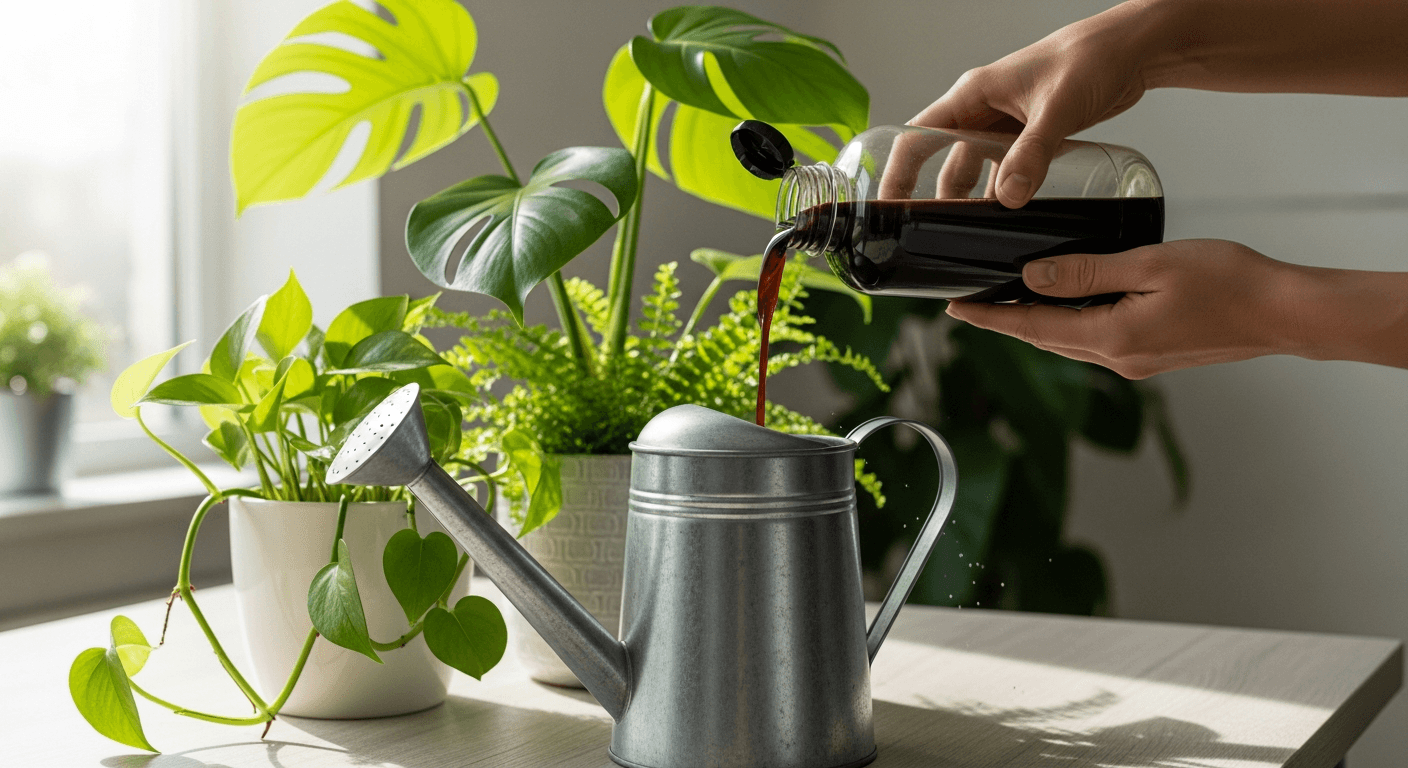
Liquid feeding is the method most people use, so here is exactly how I do it:
- Water first, then feed. Never pour fertilizer onto bone-dry soil — dry roots will pull in the salts too fast and scorch. Water lightly, or feed the day after a normal watering, so the roots are already plumped up.
- Dilute to half strength. Measure the label dose, then use half of it in the same amount of water. For seedlings and succulents, go to a quarter.
- Pour evenly over the whole soil surface until a little drains from the bottom. This wets all the roots and carries any old salt buildup out the drainage holes.
- Never feed the leaves by accident. Concentrated feed sitting on foliage can leave brown spots. If you splash some, wipe it off.
- Mark the date. A note on your phone or a tally on the pot stops the classic double-feed, where you forget and do it again next week.
Once a month, whether you feed or not, give thirsty plants a proper deep watering with plain water until it runs freely from the bottom. This "flush" rinses accumulated salts out of the soil and is the single best insurance against slow fertilizer buildup.
The golden rule: less is more
I will say it again because it is the whole article: it is far easier to harm a plant by overfeeding than by underfeeding. An underfed plant grows slowly and looks a little pale — annoying, but completely recoverable in a week. An overfed plant has chemically burnt roots, and damaged roots take a long time to regrow.
So always start with half the dose the label suggests, watch how the plant responds over a few weeks, and only nudge upward if it clearly wants more. Manufacturers write doses for ideal greenhouse conditions; your living room is not a greenhouse.
Signs of overfeeding (and how to fix it)
Plants are not subtle once you have crossed the line. Here is how to read the symptoms:
| What you see | Likely cause | What to do |
|---|---|---|
| Brown, crispy leaf tips and edges | Salt buildup / fertilizer burn | Flush the pot, pause feeding |
| White or yellow crust on soil or pot rim | Excess mineral salts | Scrape it off, flush thoroughly |
| Wilting even though soil is moist | Roots damaged, can't drink | Flush, hold off feeding for a month |
| Lush leaves but no flowers | Too much nitrogen | Switch to a higher-P bloom feed |
| Sudden leaf drop after feeding | Overdose shock | Flush, move out of harsh sun, wait |
The fix for nearly all of these is the same and it is reassuringly simple: flush the soil. Take the plant to a sink or outside and run plain, room-temperature water through the pot — slowly, three or four pot-volumes' worth — letting it drain completely each time. You are literally rinsing the excess salt out. Then stop fertilizing for at least a month and let the plant recover. If the salt crust is heavy and the mix has gone hard and crusty, it may be quicker to repot into fresh medium — here is how I handle repotting a plant, and what to put it in is covered in choosing the right potting soil.
Don't confuse hunger with other problems
This is the trap that sends people reaching for fertilizer when they should not. Yellowing leaves are the classic confusion. A genuinely underfed plant yellows evenly and from the oldest, lowest leaves first, while still growing slowly.
But yellow leaves much more often mean a watering problem. If the lower leaves yellow and the soil is constantly wet, you are likely looking at overwatering, not hunger — and feeding a waterlogged plant makes everything worse. It is worth learning to tell those two apart; I break it down in overwatering vs underwatering.
A third case looks like hunger but is not a quantity problem at all: when new leaves come in yellow with bright green veins, the plant usually has plenty of nutrients but cannot absorb iron, often because the soil pH is off or it is waterlogged. That is iron chlorosis, and dumping more general fertilizer on it does nothing. Diagnose before you feed.
When NOT to fertilize
Skipping feed at the right moments matters as much as feeding at the right ones. Hold off when:
- The plant is newly bought or freshly repotted. Quality potting mixes already contain starter nutrients (and repotting stresses the roots). Wait 3–4 weeks before the first feed. The same patience applies when settling a new plant into your home.
- The plant is sick, pest-ridden or badly stressed. Fertilizer is food for growth, not medicine. Fix the underlying problem first, then resume feeding once it is putting out healthy new growth again.
- It is the depth of winter and the plant has stopped growing. Resting plants cannot use the nutrients and the salts just build up.
- The soil is bone dry. Rehydrate first (see the step-by-step above), always.
Feed at half strength, in the right season, on a plant that is actually growing, and you will get strong leaves, more flowers, and far fewer crispy tips than the person across town who is "really taking good care" of their plants by feeding them every week. Less, but consistent, wins.
Not sure whether those yellow leaves mean your plant is hungry, thirsty, or something else entirely? Snap a photo and run it through our AI plant diagnosis — it is the fastest way to tell a feeding problem from a watering one before you reach for the bottle.
Related articles
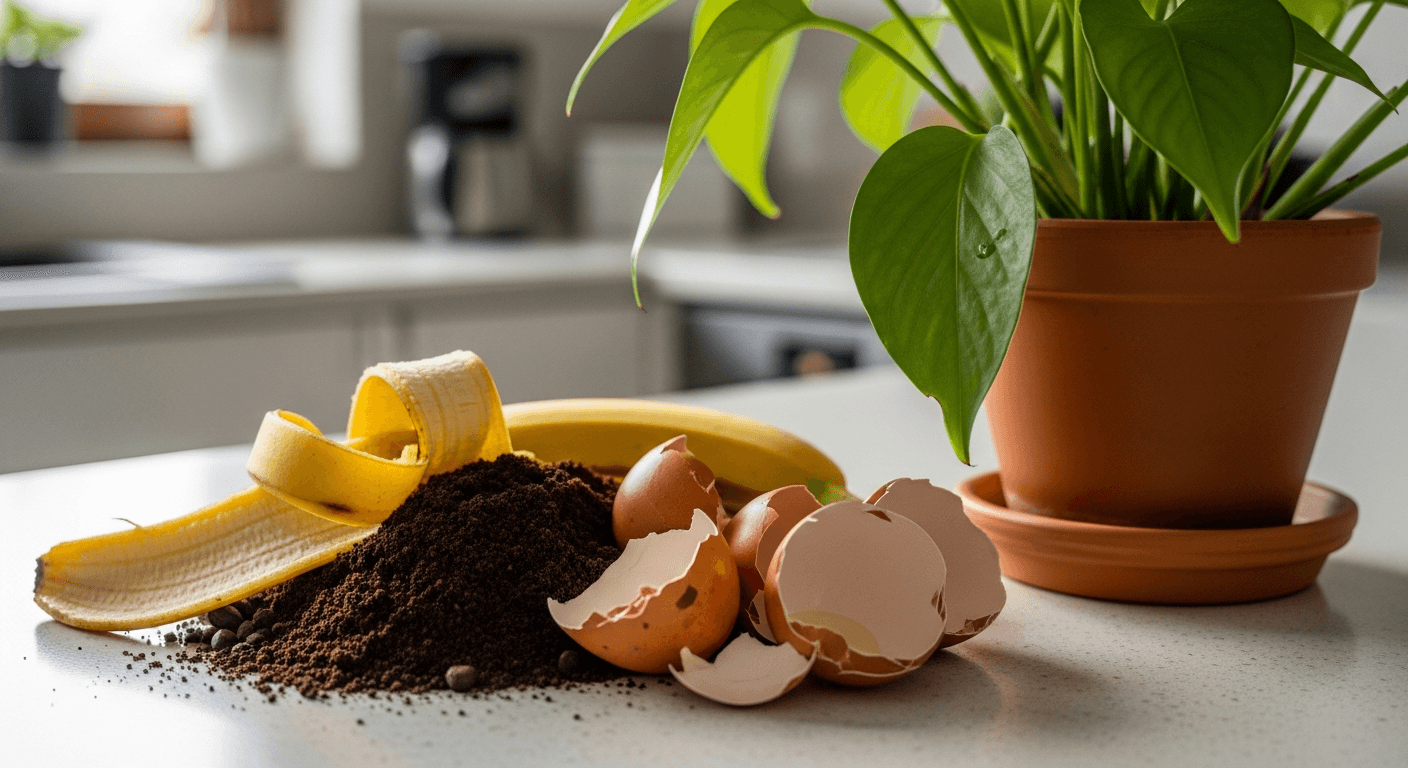
Homemade Fertilizers: What Actually Works and What's a Myth
Banana peels, coffee grounds, eggshells, cooking water... The most popular homemade fertilizers: which ones work, which are myths, and how to use them right.
Why Your Plant Isn't Growing: 5 Causes and How to Fix Them
Has your plant stopped growing? Discover the 5 most common causes (not enough light, root-bound, winter dormancy, lack of nutrients) and how to diagnose each one.
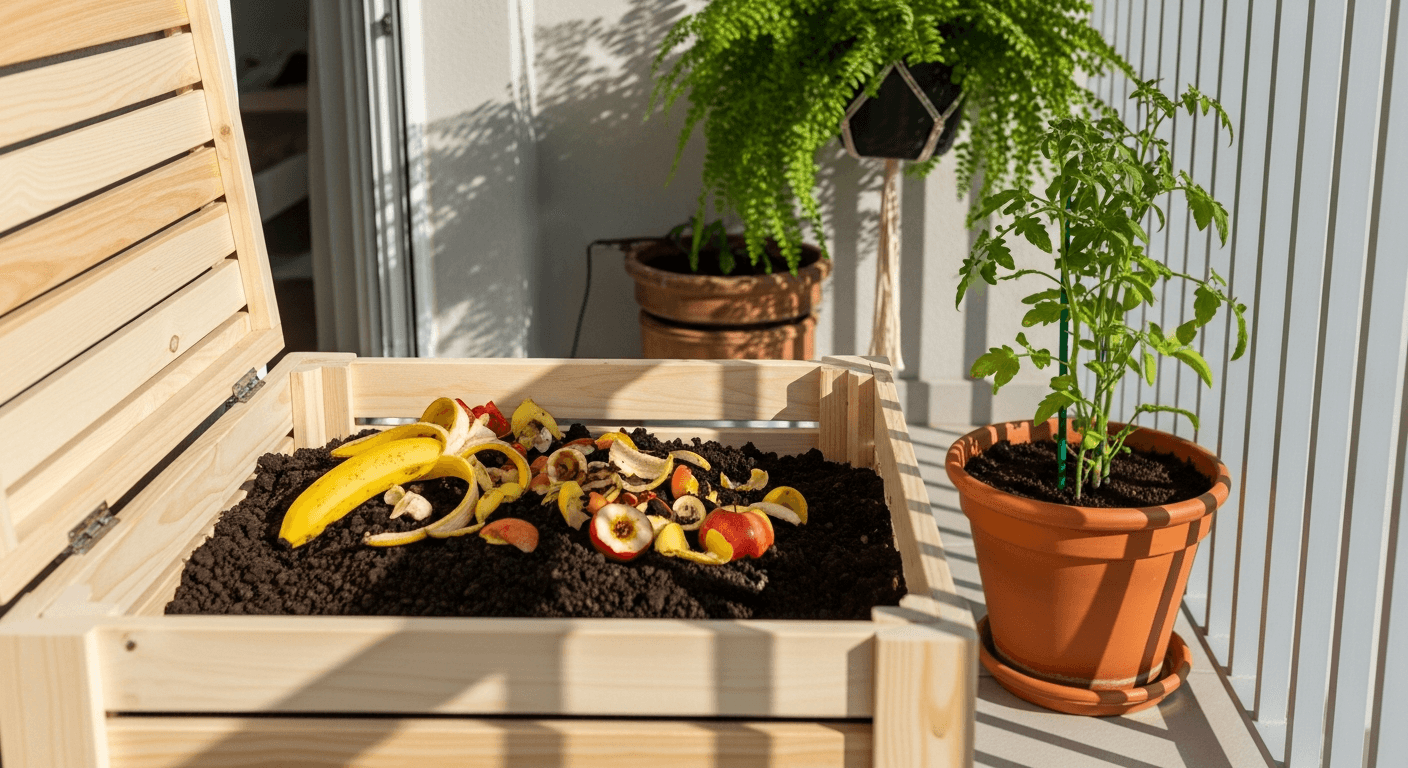
How to Make Compost at Home (Even on a Balcony)
Turn your kitchen scraps into free fertilizer. Learn what to add and what not to, the 'green and brown' mix, and how to compost on a balcony with a worm bin.
Trouble with your plant?
AI diagnosis