How to Fix an Iron Deficiency in Your Plants
Iron chlorosis turns the leaf yellow while the veins stay green. Learn why it happens (iron, pH, watering), how to tell it apart, and how to fix it.
In this article
If your plant has yellow leaves but the veins stay a deep green, it's iron chlorosis: a shortage of available iron. The fix is an EDDHA iron chelate plus, more importantly, sorting out whatever is locking that iron up — high pH from hard water and constantly soggy soil are the two usual culprits. It's very common in citrus, hydrangeas, gardenias and many houseplants, so the pattern will look familiar if you grow any of them. The good news: new leaves come out green again within 2-4 weeks once you get the cause right.
How to identify it
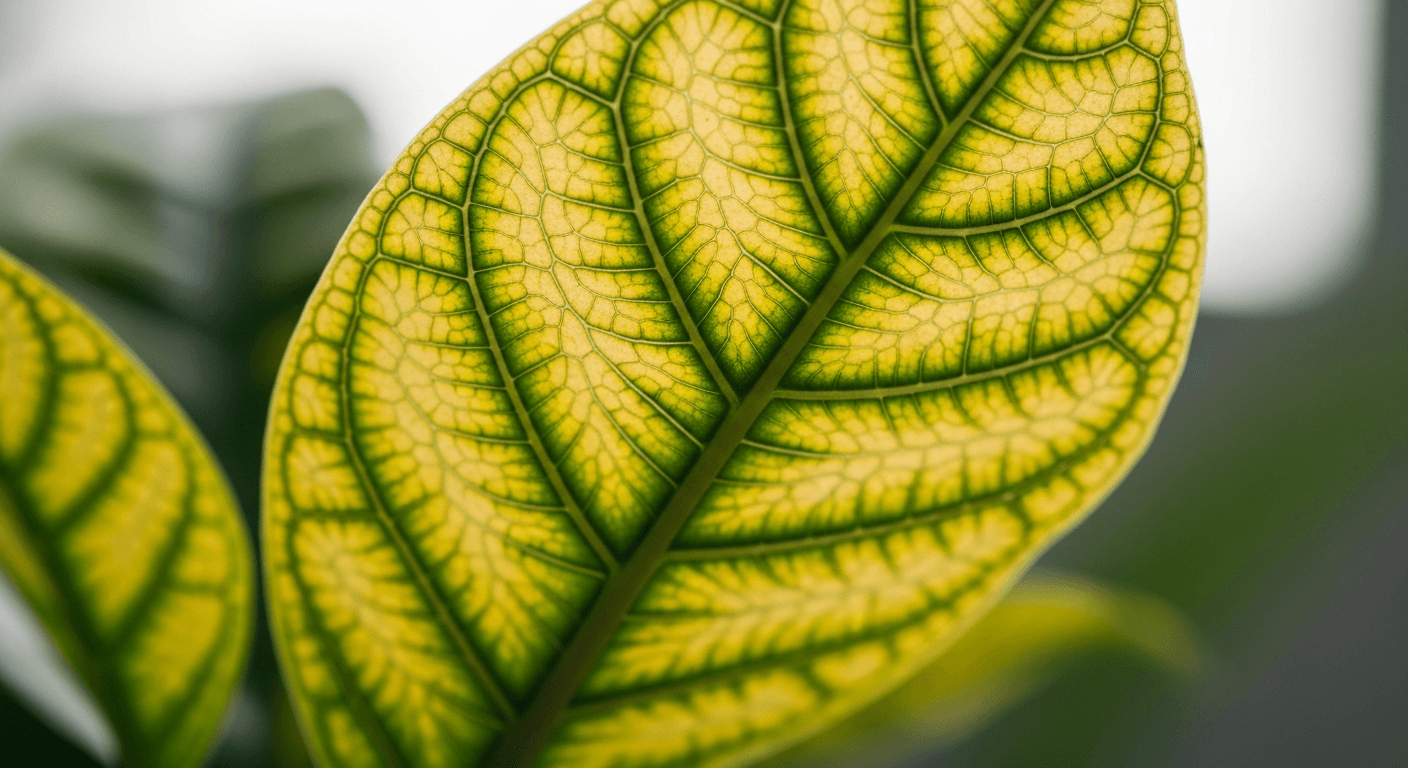
The pattern: yellow with green veins
The pattern is unmistakable:
- The leaf turns yellow or nearly white, but the veins stay green, forming a net.
- It starts on the new leaves (the top ones), because iron doesn't move around inside the plant.
- In severe cases the edges turn brown and the leaf dries out.
How to tell it apart from other deficiencies
The fact that it hits young leaves first is the key to telling it apart from other deficiencies. If the yellowing starts on the old lower leaves, it's probably something else: work through our yellow leaves guide, which covers every possible cause.
| Deficiency | Where it starts | Pattern |
|---|---|---|
| Iron (iron chlorosis) | New leaves (top) | Yellow with fine green veins |
| Magnesium | Old leaves (bottom) | Yellow between veins, veins green |
| Nitrogen | Old leaves (bottom) | Uniform yellow, no green net |
Is your plant looking off and you are not sure why?
Free AI diagnosisWhy it happens (it's rarely a lack of iron)
The surprising part: usually there is iron in the soil, but the plant can't absorb it. The common causes are:
pH too high
Iron gets locked up in chalky (alkaline) soils and water. If you water with hard tap water, the pH slowly creeps up and iron stops being available. This is the number-one cause.
Overwatering or poor drainage
Waterlogged roots can't take up nutrients well. Constantly soggy soil can trigger chlorosis even with plenty of iron present, and if the waterlogging drags on it ends in root rot. If you're not sure whether you're watering too much or too little, our overwatering vs underwatering comparison settles it in a minute.
Exhausted soil or damaged roots
In old pots that haven't been refreshed, or with roots hit by rot, absorption breaks down.
How to fix it
Address the cause, not just the symptom:
- Check your watering. Let the top inch dry between waterings and make sure drainage is good.
- Lower the pH. For acid-loving plants, use acidic soil and occasionally water with rainwater or a few very diluted drops of vinegar/lemon.
- Supply available iron. Iron chelate (especially EDDHA, which holds up at high pH) is the most effective remedy. Always follow the label dose.
- Refresh the soil. If the pot has been the same for years, repotting with fresh soil and a little compost helps a lot.
Iron chelate greens things up, but if you don't fix the pH and watering, the chlorosis will return. Treat the cause.
How long it takes to improve
Already-yellow leaves rarely turn fully green again — the damage is done. What you'll see is that new leaves emerge green and healthy within about 2-4 weeks. That's the sign you're on the right track.
How to prevent it
- Use the right potting soil for each plant (acidic for hydrangeas, gardenias, citrus).
- Water with rainwater if your tap water is very hard.
- Feed during the growing season with a fertilizer that includes micronutrients; our guide on how to fertilize without burning your plants has the doses and timing.
If you're unsure whether it's iron chlorosis or another deficiency, upload a photo to our AI diagnosis and it'll help you identify the problem in seconds.
With the pH under control, correct watering and an occasional iron boost, your plant will be sporting healthy green leaves again.
Related articles
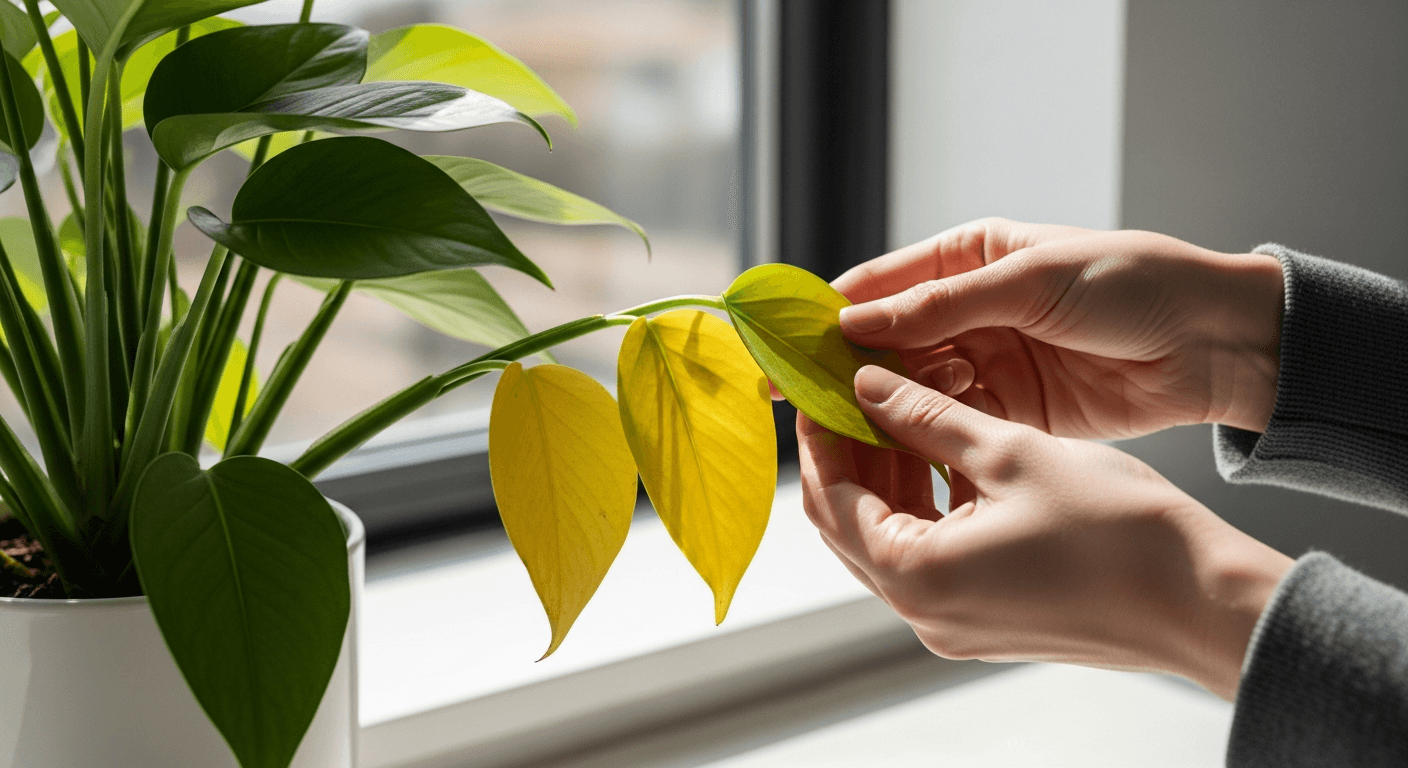
Why Your Plant Has Yellow Leaves (and How to Fix It)
Yellow leaves are the most common houseplant symptom. Learn to diagnose the exact cause —watering, light, nutrients or pests— and fix it step by step.
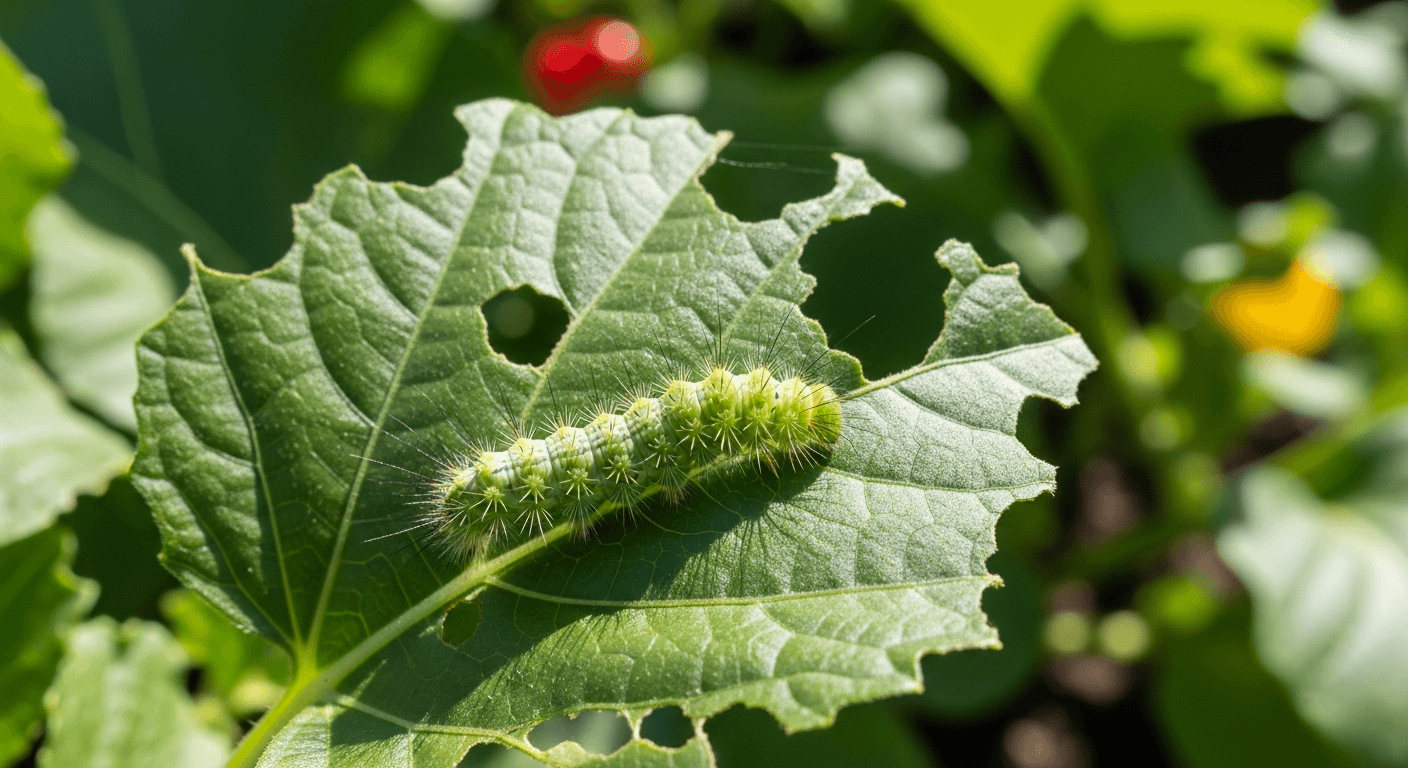
Caterpillars on Plants: How to Identify and Get Rid of Them
Caterpillars eating garden leaves: how to spot the holes and droppings, handpick them, and treat with Bacillus thuringiensis (Bt) without harsh chemicals.
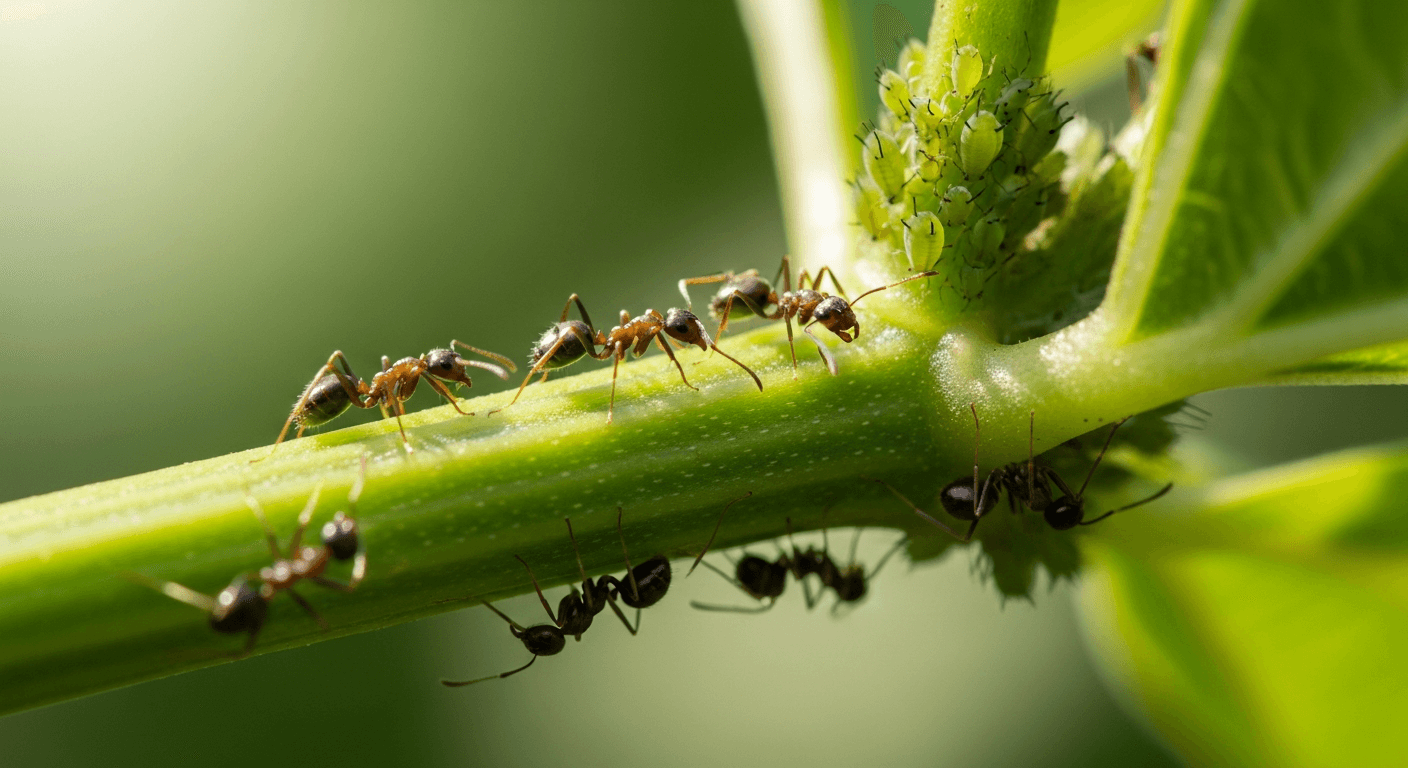
Ants on Your Plants: What They Want and How to Get Rid of Them
Ants on your plants are almost always farming aphids or scale for honeydew. Learn how to remove the ants and, above all, treat the real pest behind them.
Trouble with your plant?
AI diagnosis