White Powder on Leaves: How to Stop Powdery Mildew
Powdery mildew is that flour-like white dust on leaves. Learn to identify it, treat it with home and garden remedies, and prevent it with good airflow.
In this article
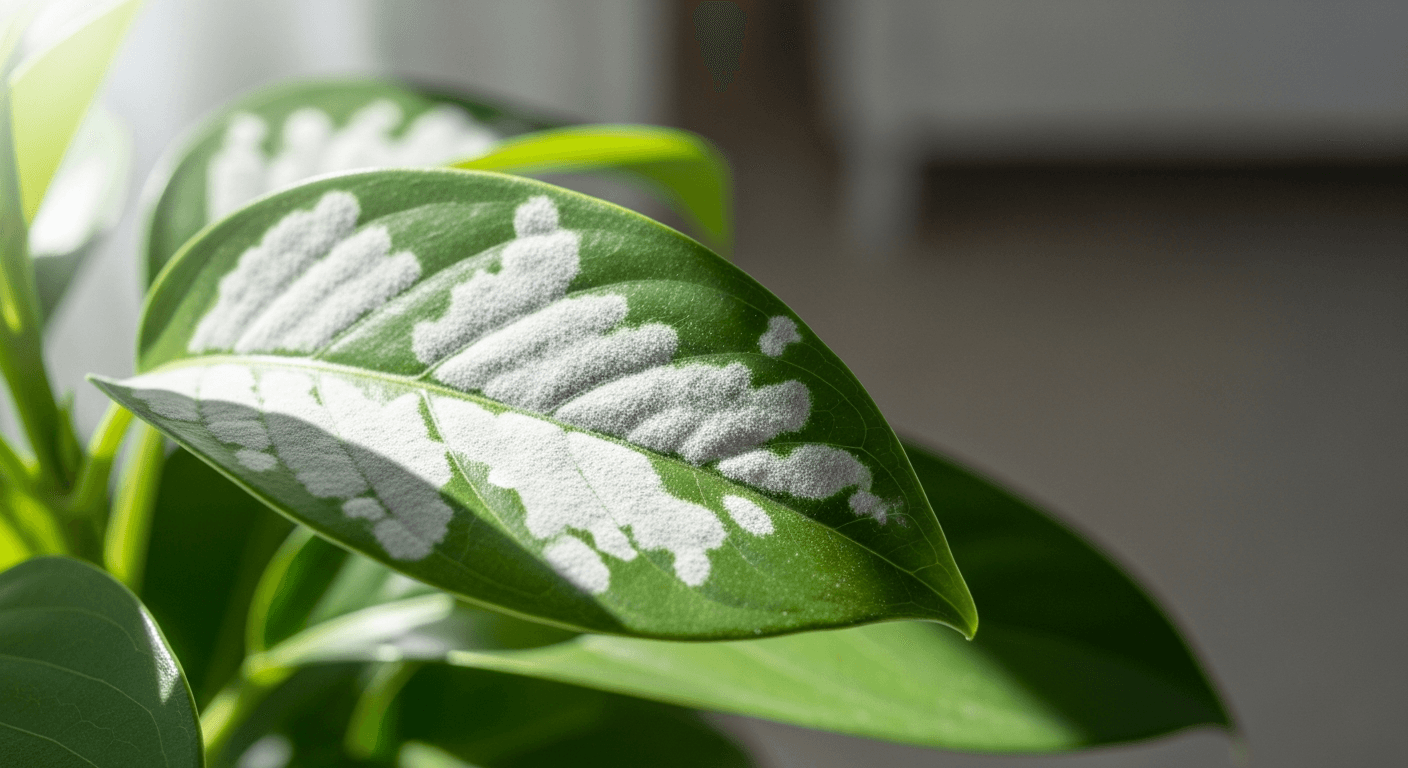
Powdery mildew is stopped by removing the worst-affected leaves, improving airflow and spraying baking soda (a teaspoon per quart of water with a few drops of soap) or a sulfur fungicide every 7-10 days. It is that dry white powder, like dusted talc, on the upper side of otherwise healthy leaves. Unlike other fungi it thrives on heat and stagnant air rather than wet foliage, so spacing plants out is half the cure.
Identifying it and why it shows up
How to identify it
| Sign | Detail |
|---|---|
| Whitish-gray powder | Like flour or talc, mostly on the tops of leaves |
| Round patches that spread | Starts localized and generalizes |
| Leaves that yellow and deform | Over time, affected ones drop |
Unlike other fungi, powdery mildew doesn't need the leaf to be wet to thrive: in fact, water on the leaf works against it. It likes humid, stagnant air.
Is your plant looking off and you are not sure why?
Free AI diagnosisWhy it appears (the powdery-mildew paradox)
It's a curious fungus: it thrives with high ambient humidity but dry leaves, the opposite of gray mold. Its usual triggers:
- Stagnant air and crowded plants.
- High ambient humidity with little air circulation.
- Sudden temperature swings (typical in spring and fall).
Most susceptible plants
Indoors, begonia, kalanchoe or African violets; in the garden, zucchini, cucumbers, roses and herbs like mint. If you grow these, watch them during spells of temperature change.
Step-by-step treatment
- Remove the worst leaves and bin them (not the compost, to avoid spreading spores).
- Improve airflow and space the plants out so air circulates.
- Spray, covering tops and undersides, with one of these:
- Baking soda: 1 teaspoon per quart of water + a few drops of soap (changes the leaf pH and slows the fungus).
- Diluted milk (1 part milk to 2-3 parts water): a surprisingly effective home remedy in the sun.
- Potassium bicarbonate, sulfur or a specific fungicide for stubborn cases.
- Neem oil also helps as a preventive.
- Repeat every 5-7 days until it's gone.
How to prevent it
- Airflow: don't crowd plants; let air circulate (a gentle fan helps indoors).
- Don't wet the leaves when watering; water the base. And avoid excessive ambient humidity (see the humidity guide).
- In the garden, choose resistant varieties and avoid excess nitrogen (soft new growth = more vulnerable).
Powdery mildew or gray mold?
Don't confuse them: powdery mildew is a dry white powder, mostly on the tops; gray mold (botrytis) is a gray, damp felt that rots tissue. If you see brown leaf spots instead of powder, it's probably something else.
Powdery mildew rarely kills a healthy plant, but it weakens and disfigures it. Treat it early and improve airflow. Not sure it's mildew? Upload a photo to the AI diagnosis tool.
Related articles
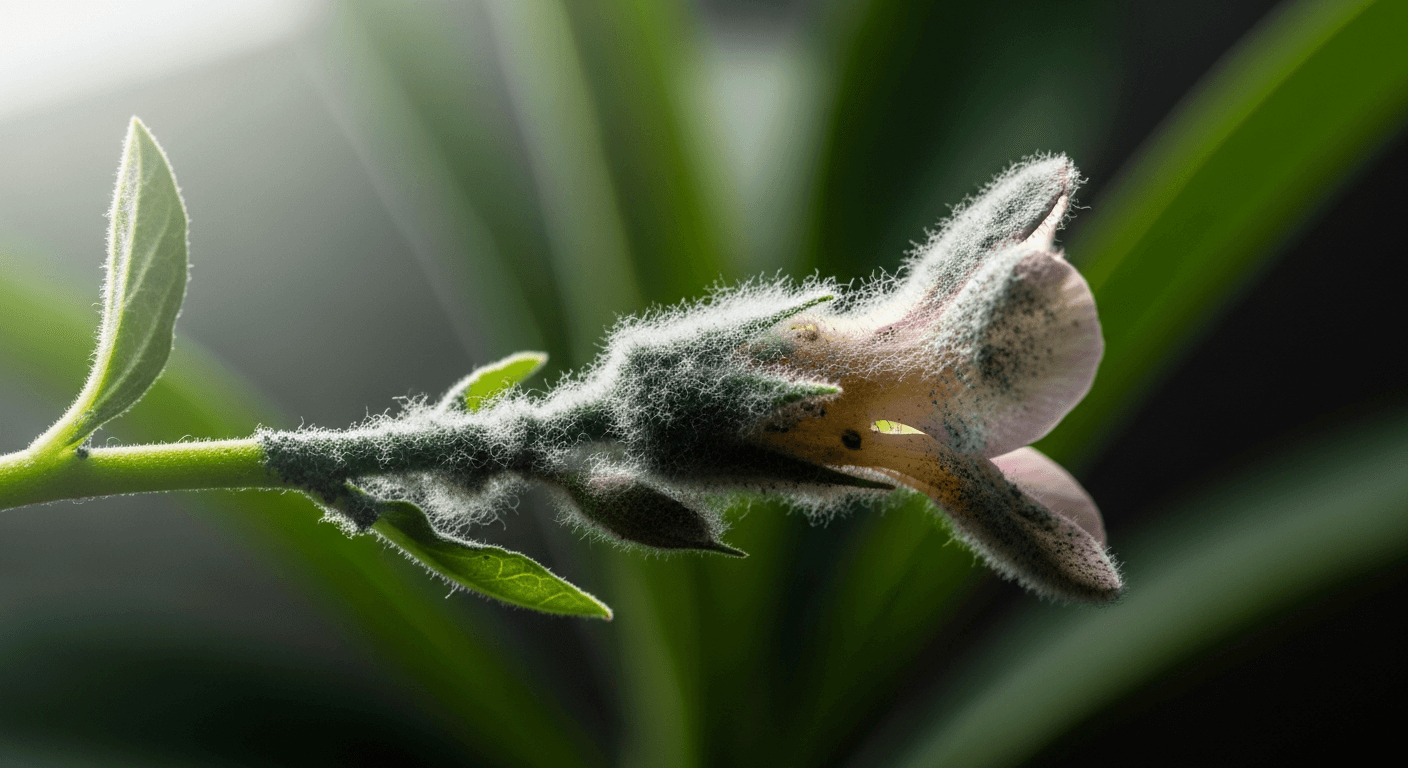
Gray Mold (Botrytis): How to Identify and Get Rid of It
Gray mold or botrytis is a fuzzy fungus that rots leaves, flowers and stems. Learn to identify it, remove the affected parts, treat it and prevent it.
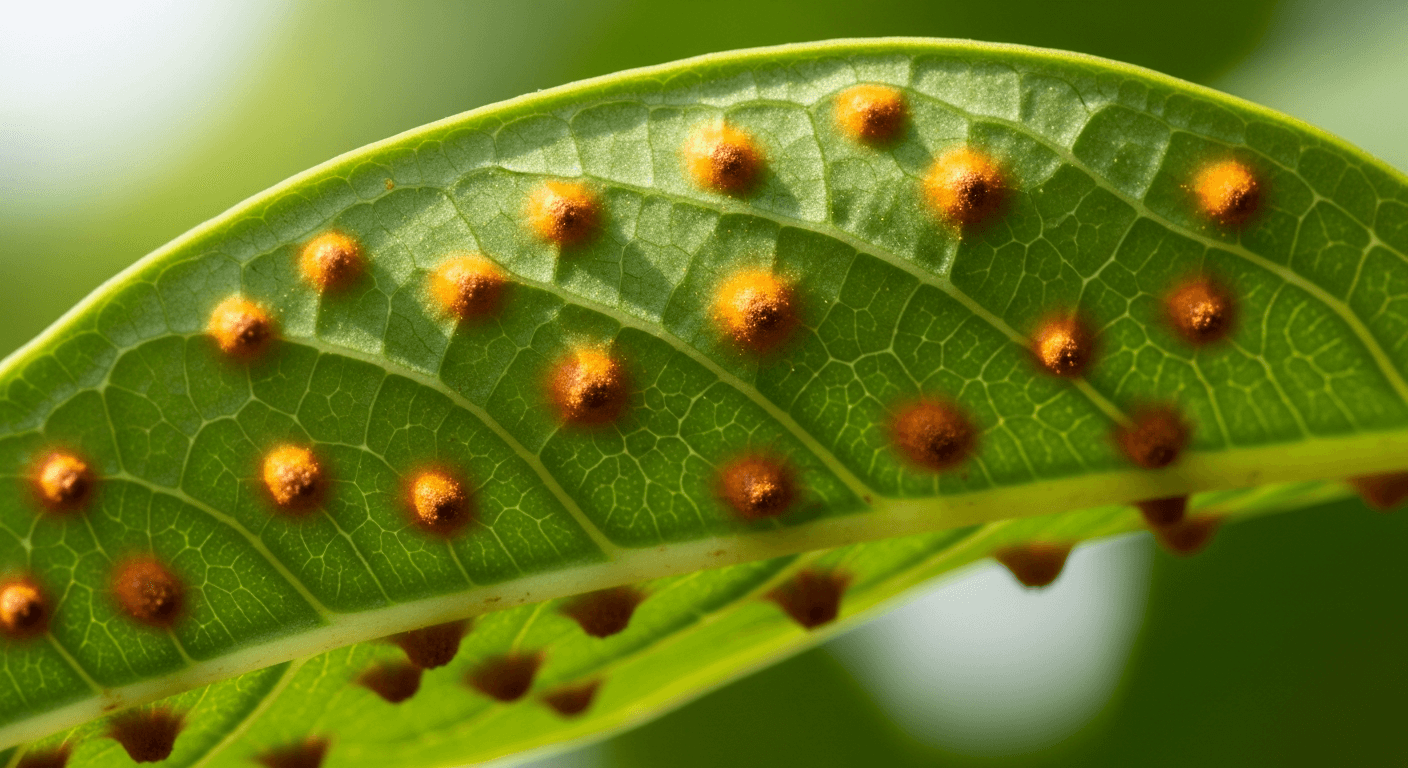
Rust Disease: The Orange Pustules on Leaves and How to Treat It
Rust is a fungus that forms orange or brown pustules on the undersides of leaves. Learn to identify it, remove affected parts, treat it and prevent it.
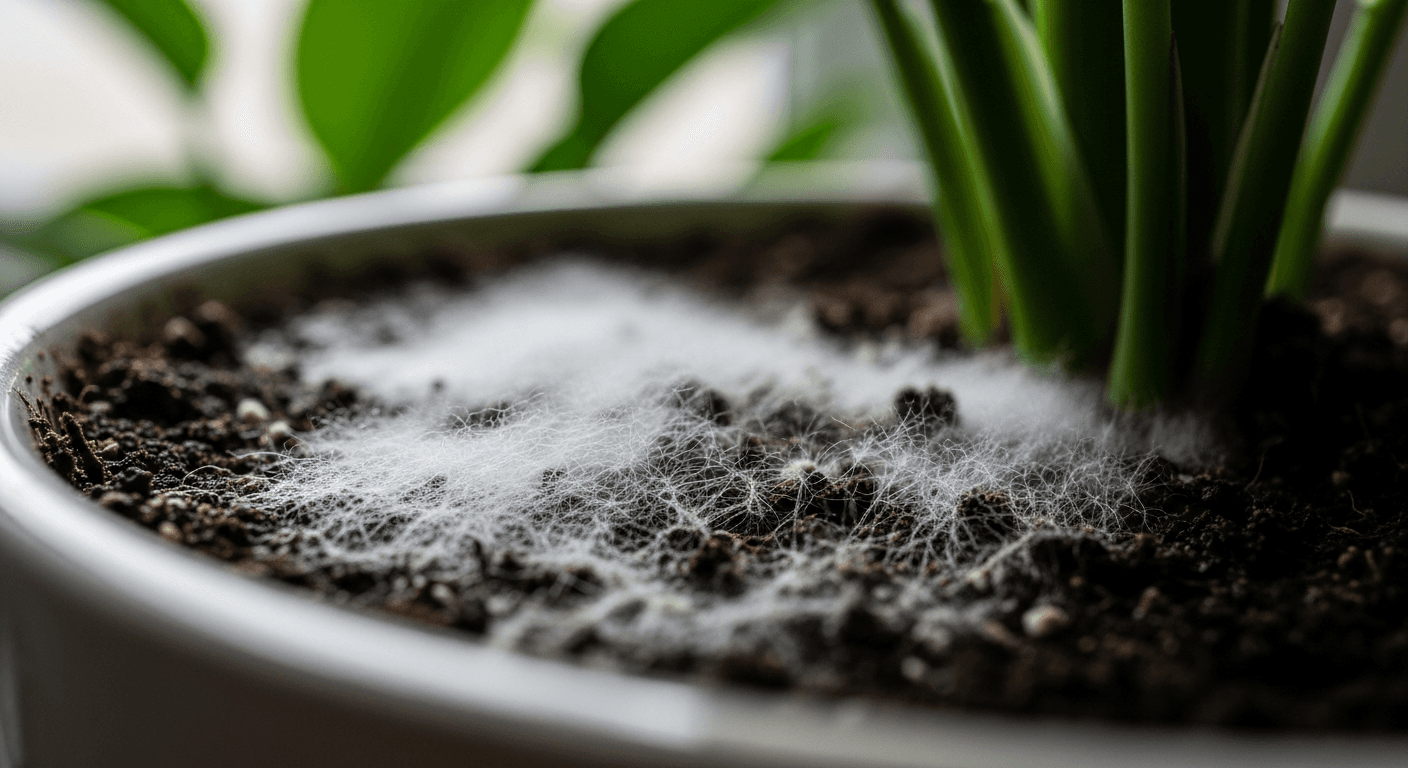
White Mold on Soil: Why It Appears and How to Remove It
That white, fuzzy mold on potting soil is a harmless fungus caused by moisture. Learn why it appears, how to remove it, and how to prevent it coming back.
Trouble with your plant?
AI diagnosis