How to Work Out What Is Causing Brown Spots on Leaves
Brown spots on your plant's leaves? Learn to tell apart fungal, bacterial, overwatering, sunburn and hard-water causes, and how to treat and prevent each.
In this article
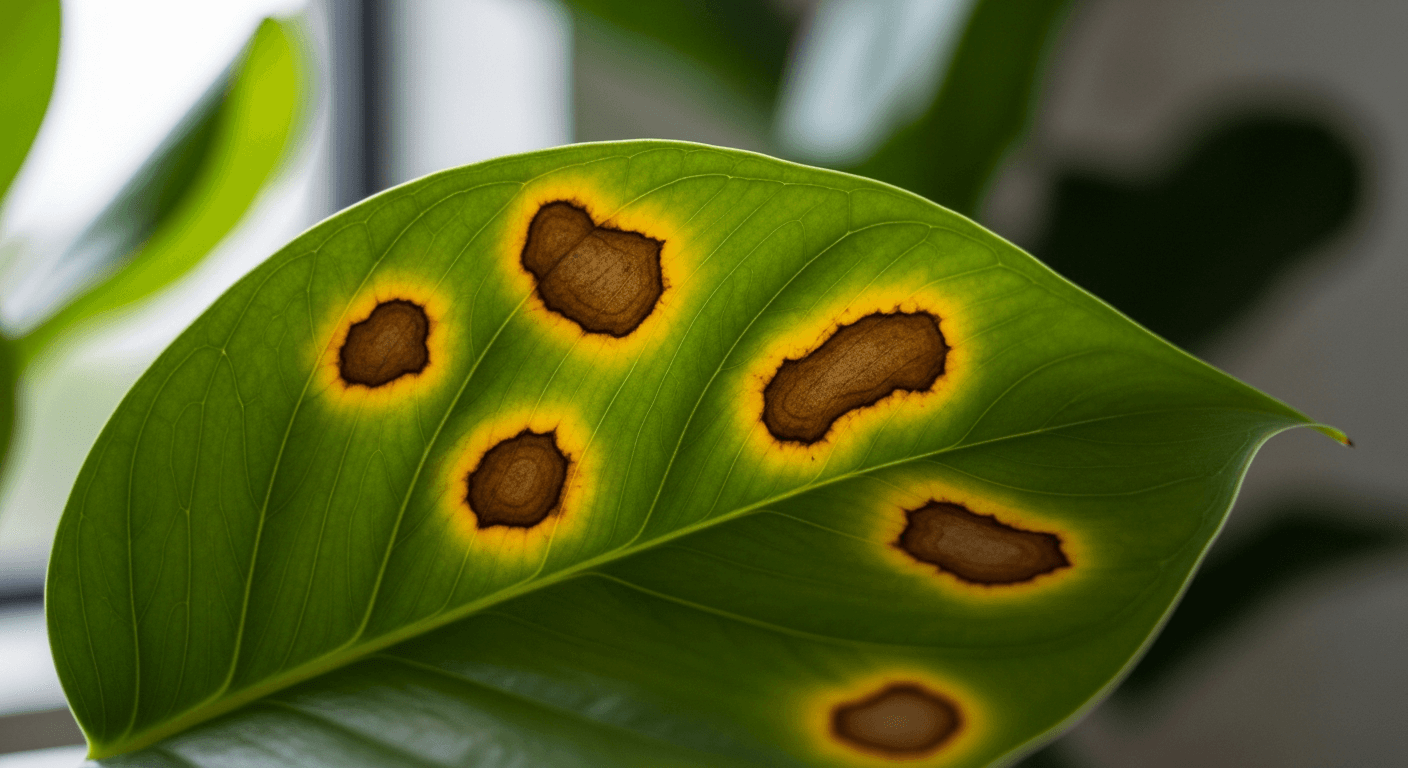
The edge of the spot tells you almost everything: if it is dry and crispy, it points to underwatering, dry air or sun scorch; if it is soft, dark and ringed with yellow, it is usually a fungus or a bacterium. And if only the tips are browning, it is nearly always hard water or low ambient humidity. Getting that reading right is half the fix, because treating a fungus and treating a burn have nothing in common.
First: where and what do the spots look like?
Notice these details before you act:
- Spots with a yellow halo and a wet look → usually fungal or bacterial.
- Brown, dry tips and edges → low humidity or hard water.
- Pale or bleached patches on the sun-facing side → sunburn.
- Soft brown spots spreading from the base → overwatering.
Is your plant looking off and you are not sure why?
Free AI diagnosisThe causes, one by one
Fungal or bacterial leaf spot
This is the classic "leaf spot." Circular spots appear, often with a yellow halo and a darker center, that grow and merge.
What to do:
- Remove the worst leaves with clean scissors and bin them (not the compost).
- Don't wet the leaves when watering: water at the base, in the morning.
- Improve airflow and space plants out so air can circulate.
- If it spreads, apply a fungicide (copper or a specific one) per the label.
When it isn't a pathogen
Not every spot is an infection:
- Overwatering: spots are soft and dark and the base smells bad. It often comes with root rot: let it dry and check drainage.
- Direct sun: pale, dry patches on the exposed area. Move the plant off the glass or filter the light.
- Hard water or fluoride: brown tips and edges. Use rested, rain or filtered water.
- Nutrient shortage: yellowing spots or edges on older leaves. Feed during the growing season.
How to prevent brown spots
- Water at the base, never over the foliage, and let the surface dry between waterings.
- Give good airflow: stagnant air and moisture sitting on leaves are the perfect breeding ground for fungi.
- Quarantine new plants for 2 weeks.
- Clean leaves and scissors between plants so you don't spread spores.
- Don't wet foliage at dusk: it stays damp overnight, which favors infection.
If you're also seeing whole leaves turn yellow, check our yellow leaves guide, since they often go together. Not sure if it's fungus, sun or watering? Upload a photo of the leaf to the AI diagnosis and it'll point you to the most likely cause.
Related articles
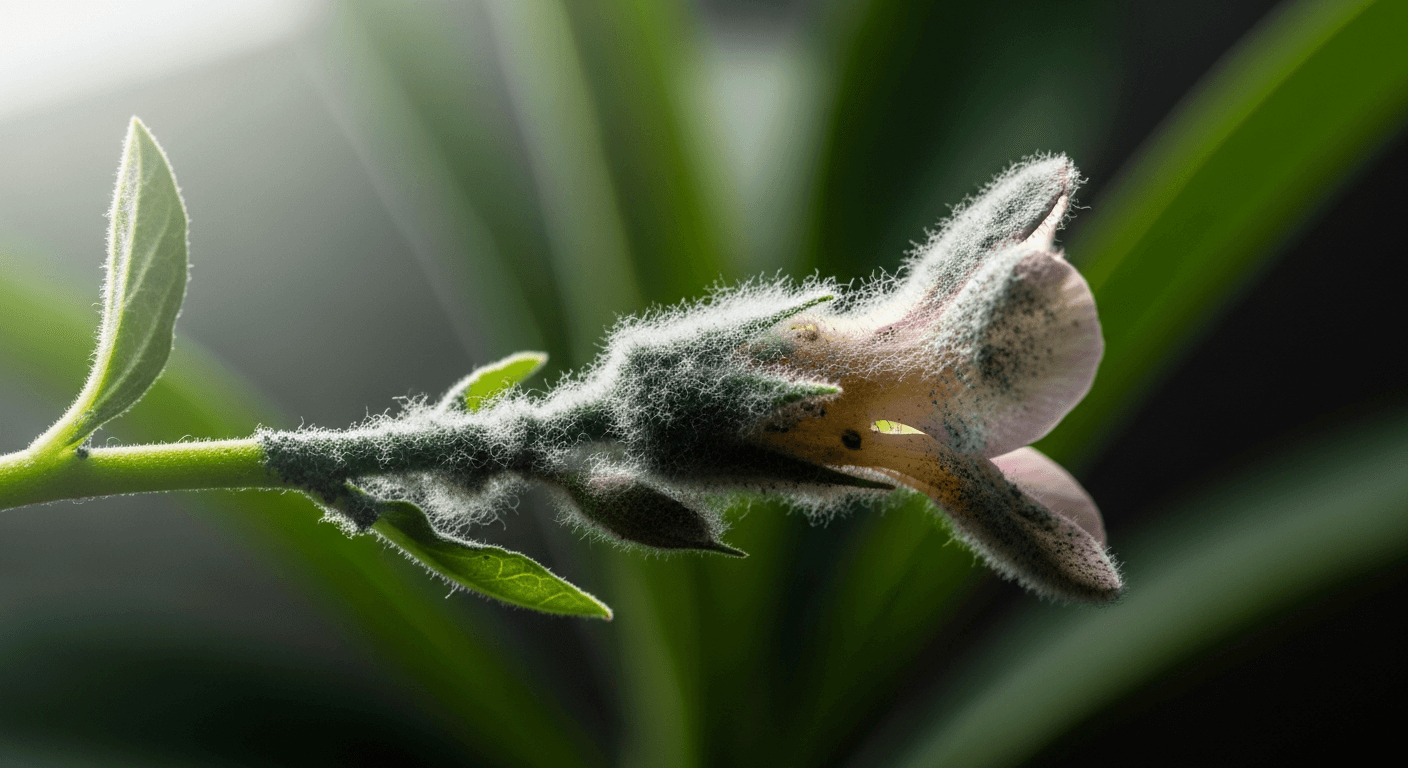
Gray Mold (Botrytis): How to Identify and Get Rid of It
Gray mold or botrytis is a fuzzy fungus that rots leaves, flowers and stems. Learn to identify it, remove the affected parts, treat it and prevent it.
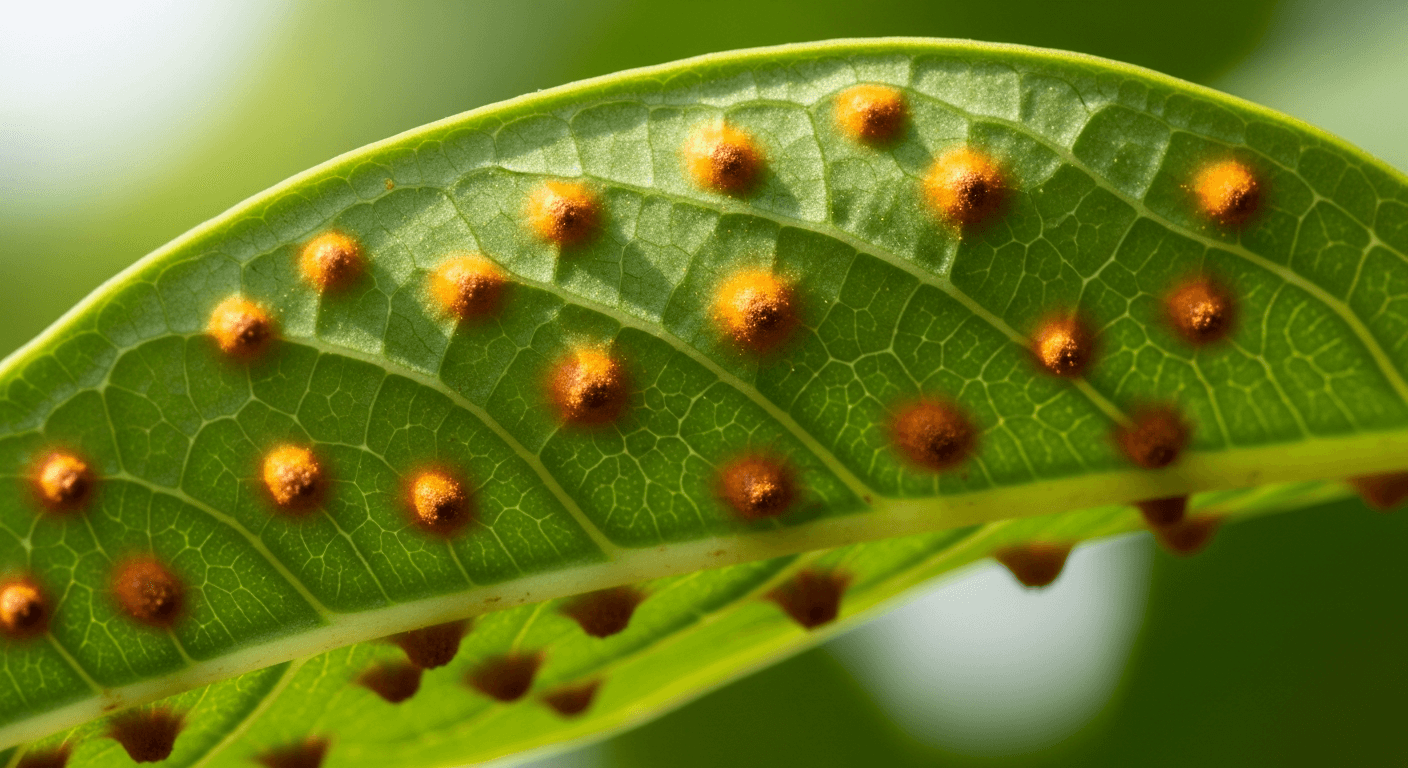
Rust Disease: The Orange Pustules on Leaves and How to Treat It
Rust is a fungus that forms orange or brown pustules on the undersides of leaves. Learn to identify it, remove affected parts, treat it and prevent it.
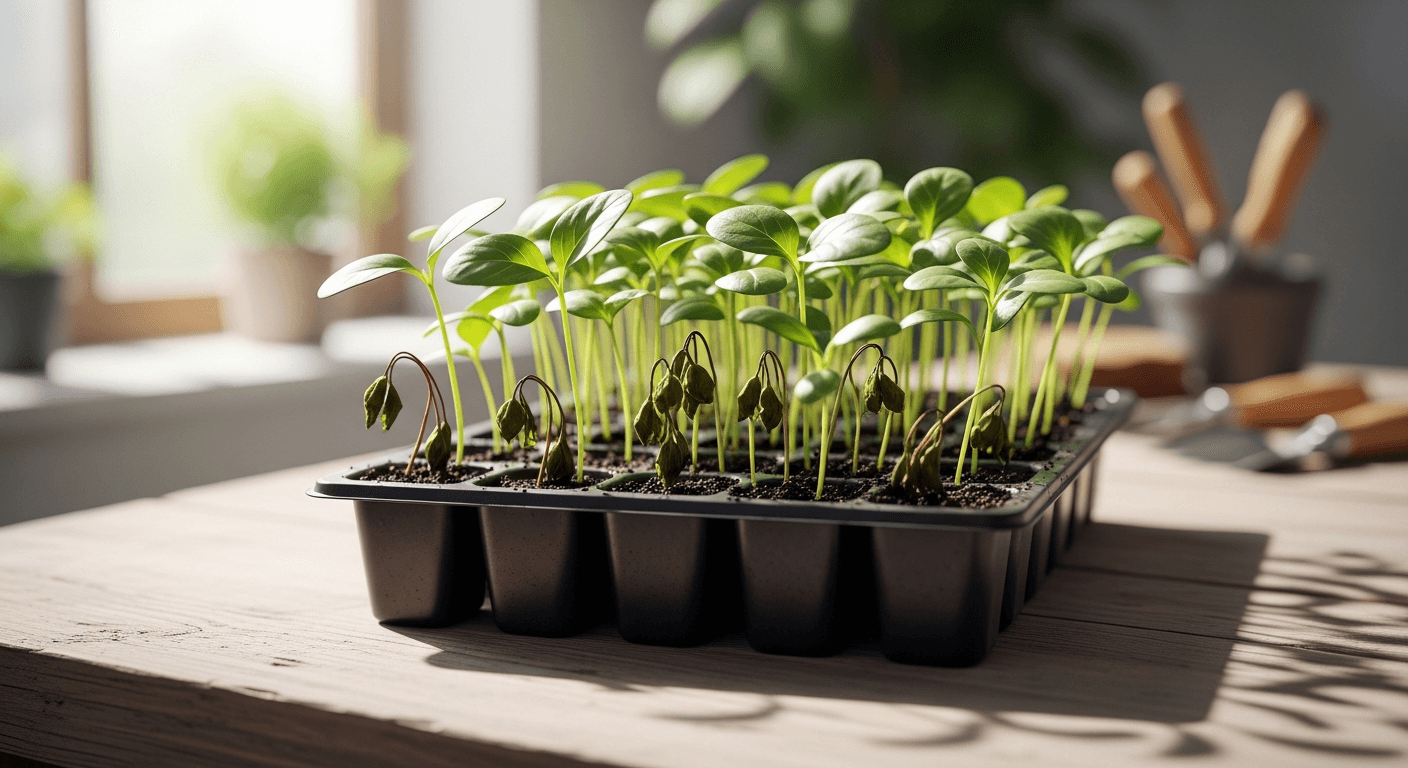
Damping Off: Why Seedlings Collapse and How to Prevent It
Your seedlings flop over at the base. Learn about damping off, the fungus behind it, and how to prevent it with clean soil, airflow and careful watering.
Trouble with your plant?
AI diagnosis