Spider Mites on Houseplants: Signs and a Treatment That Works
Identify and eliminate spider mites: fine webbing, yellow stippling and drying leaves. Step-by-step treatment with water, soap and humidity, and prevention.
In this article
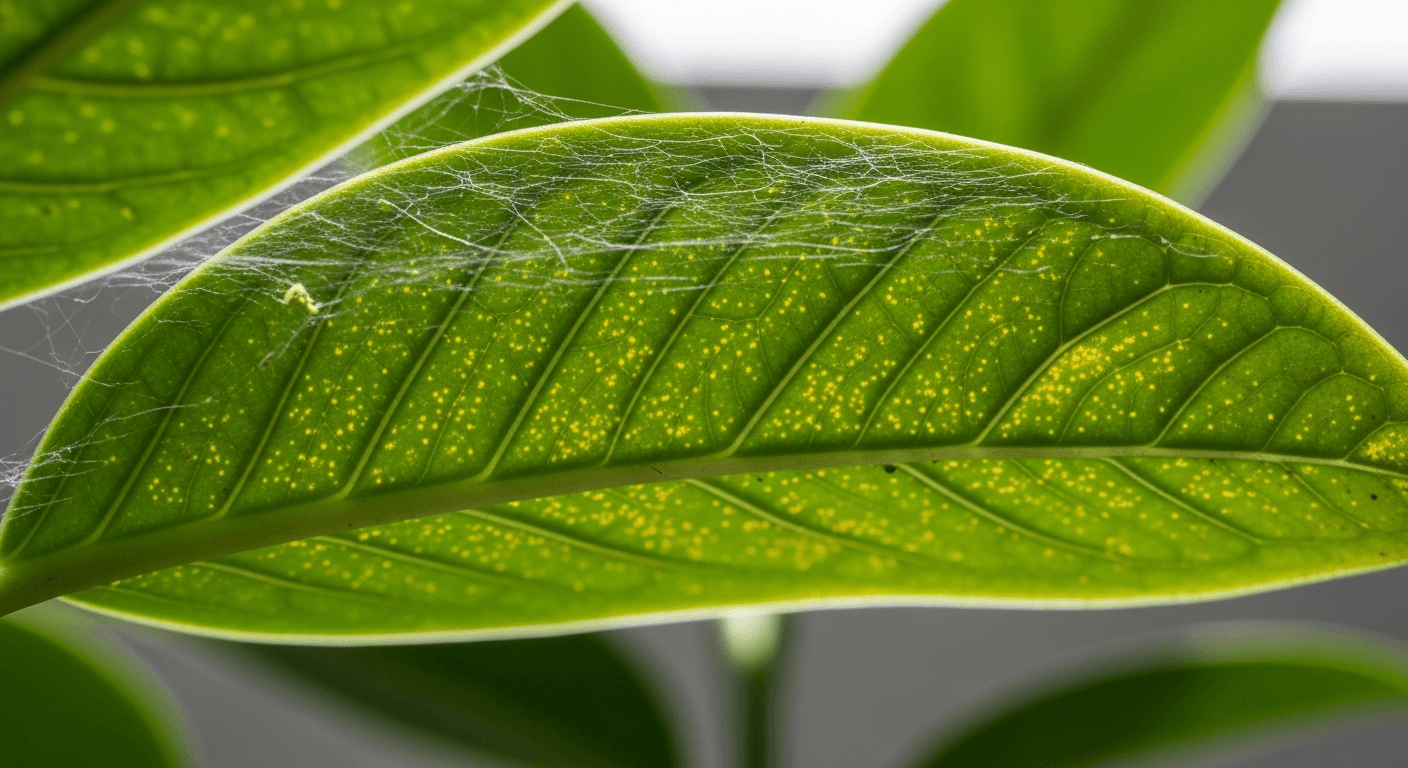
If you can see hair-fine webbing on the leaf undersides and yellow or silvery stippling on top, it's spider mites. To clear them: isolate the plant, give it a hard rinse aimed at the undersides, and spray insecticidal soap or neem oil every 4-5 days for three weeks — the eggs hatch in waves, so a single treatment never reaches them all. They're not insects but tiny mites that suck sap and thrive in heat and dry air. I've dealt with them more than once, especially in winter with the heating on, and the battle is won with two things: humidity and persistence.
How to identify them
| Sign | Detail |
|---|---|
| Yellow or silvery stippling | Like tiny pinpricks on the face of the leaf |
| Very fine webbing | On undersides and between stems (advanced sign) |
| Dull, dry leaves that drop | The plant loses vigor |
| Tiny red/brown dots moving | On the undersides; visible with a loupe |
Foolproof trick: hold a white sheet of paper under a leaf and tap it. If you see tiny moving dots on the paper, it's spider mites.
Where to look first
Don't waste time inspecting the tops of leaves: spider mites live underneath, and they always start on the oldest leaves and in the crotches where the petiole meets the stem. Check the plants nearest a radiator or an afternoon-sun window too — the air is driest there and colonies build fastest. A 10x loupe shows them moving; with the naked eye you'll only notice a faint dusty film.
Is your plant looking off and you are not sure why?
Free AI diagnosisWhy they appear
They love hot, dry conditions: heating in winter, heat spells in summer. That's why they attack mostly indoors and on plants stressed by underwatering. Humidity-loving plants like the calathea are their favorite victims when the air dries out.
Step-by-step treatment
- Isolate the plant: spider mites jump easily to neighbors.
- Pressure rinse: wash the whole plant, focusing on the undersides, to wash away mites and webbing. It knocks the population down fast.
- Spray with insecticidal soap (or neem oil), covering the undersides really well. Repeat every 4-5 days for 3 weeks: this is the most important part, because it breaks the cycle of eggs as they hatch.
- Raise humidity: mist often or use a humidifier.
Soap, neem or alcohol: which to reach for
Insecticidal soap is the first choice: cheap, harmless to the plant and enough if you catch things early. Neem oil also acts as a growth disruptor on the mite, so it works better on established infestations; always apply it out of direct sun so you don't scorch the foliage. Isopropyl alcohol diluted to 50% is only for spot-dabbing with a cotton bud on tough leaves, never sprayed over the whole plant. And beware generic supermarket insecticides: many don't kill mites at all, because a spider mite isn't an insect.
Why you have to keep going for three weeks
Spider mite eggs shrug off soaps and oils, and they hatch in staggered waves over about ten days. At 25 °C the full life cycle closes in a little over a week, so if you treat once and stop, the next generation is laying eggs before you notice. Three weeks of applications every 4-5 days covers every possible hatch — that's the whole reason for the nagging.
Why humidity is your best weapon
Spider mites hate humidity: they thrive precisely when the air is dry. Raising ambient humidity (with a humidifier, by grouping plants, or with a pebble tray of water) makes the environment hostile to them and strengthens the plant. It's the best long-term prevention; details in the humidity guide.
How to prevent a comeback
- Keep ambient humidity high, especially in winter with heating.
- Check leaf undersides weekly when you water; cleaning leaves helps you spot them early.
- Quarantine new plants for 1-2 weeks.
- Don't let plants go thirsty: a stressed plant is more vulnerable.
When to worry
If the plant is heavily infested and weak, prune the worst leaves (those covered in webbing) and repeat the treatment on the healthy parts.
Biological control with predatory mites
On valuable plants, big collections or in a greenhouse, Phytoseiulus persimilis is the cleanest fix: a predatory mite that eats spider mites and dies off once the food runs out. It ships in sachets, you release it onto the foliage, and it needs high humidity plus no insecticide sprays in the days beforehand. For a single houseplant it isn't worth it; from ten or fifteen affected plants upward, it is.
Spider mites or another pest?
Don't confuse them: mealybugs leave cottony specks; thrips leave silvering but with tiny black dots (their droppings) and no webbing. The fine webbing is the unmistakable signature of spider mites.
Persistence wins the battle: don't quit at the first improvement, because the eggs keep hatching. Not sure it's spider mites? Upload a photo to the AI diagnosis tool.
Related articles
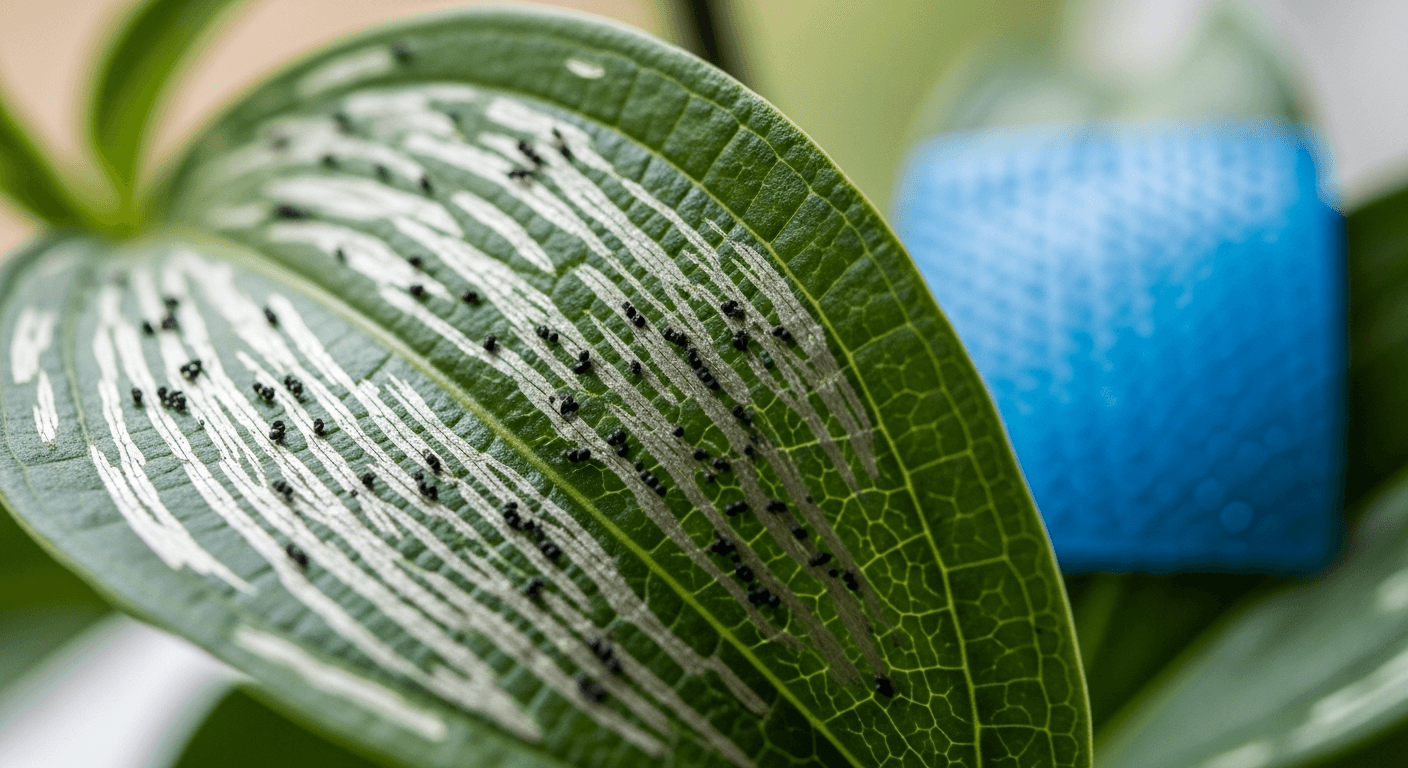
Thrips: How to Spot and Eliminate This Tiny Pest
Thrips are nearly invisible but leave leaves silvery with tiny black dots. Learn to identify them, eliminate them with traps and soap, and prevent them.
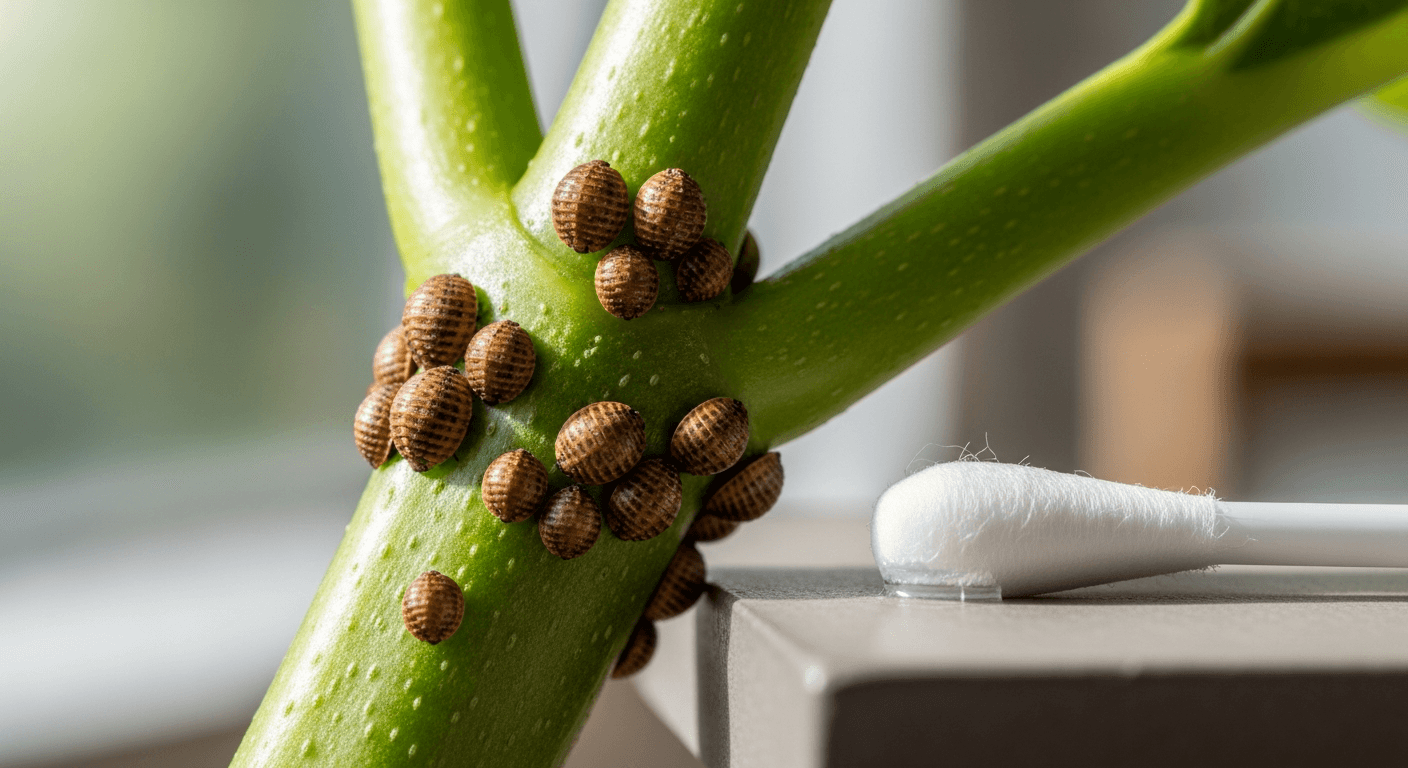
Scale Insects: How to Get Rid of Those Brown Bumps
Those hard brown bumps stuck to stems and leaves are scale insects. Learn to identify them, remove them step by step and stop them coming back to your plant.
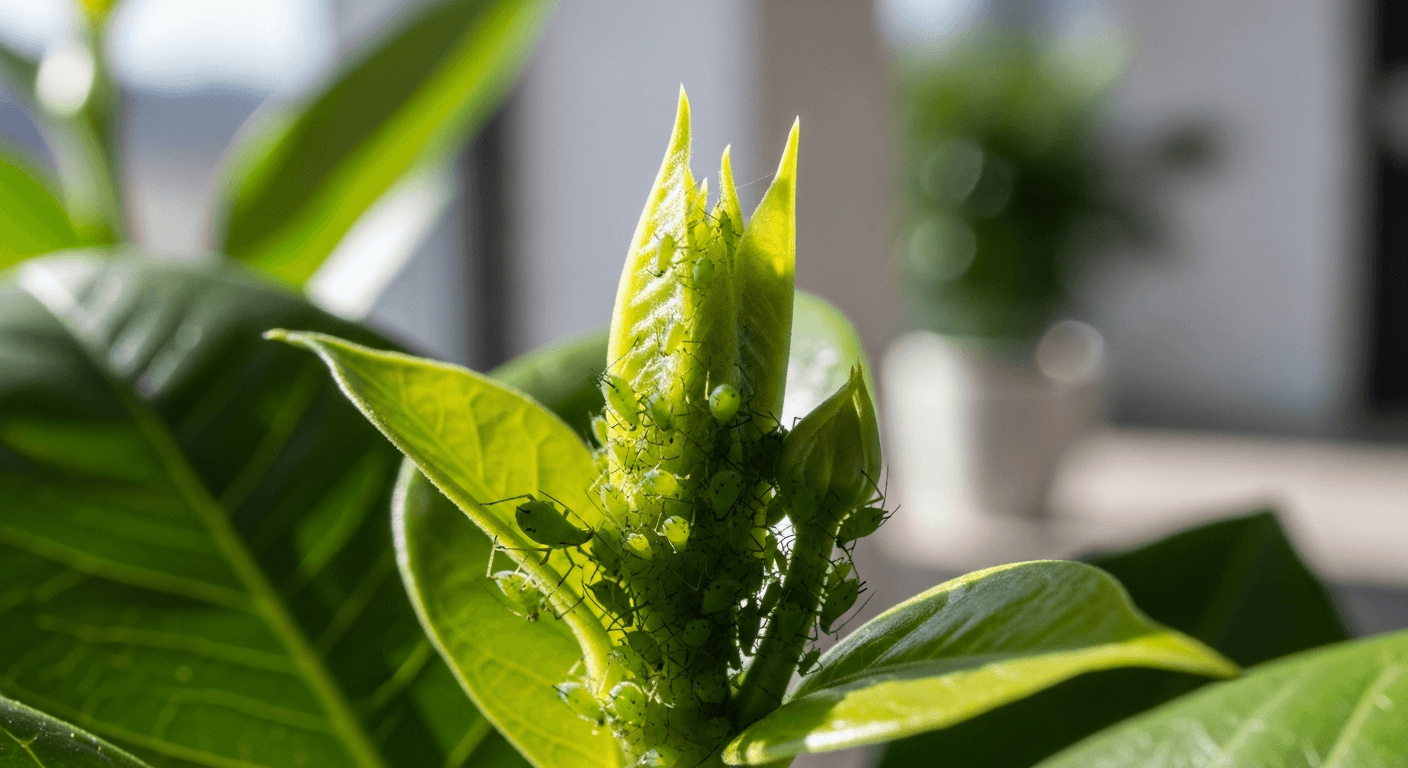
Aphids: How to Get Rid of Them With Easy Remedies
Aphids breed at lightning speed on new shoots and buds. Learn to identify them, clear them with water, soap and natural remedies, and prevent a comeback.
Trouble with your plant?
AI diagnosis