Begonia: Spectacular Leaves That Must Stay Dry
Begonia rex and maculata care: bright indirect light, watering without wetting the leaves, humidity, propagation and why it's toxic to pets. Full guide.
In this article
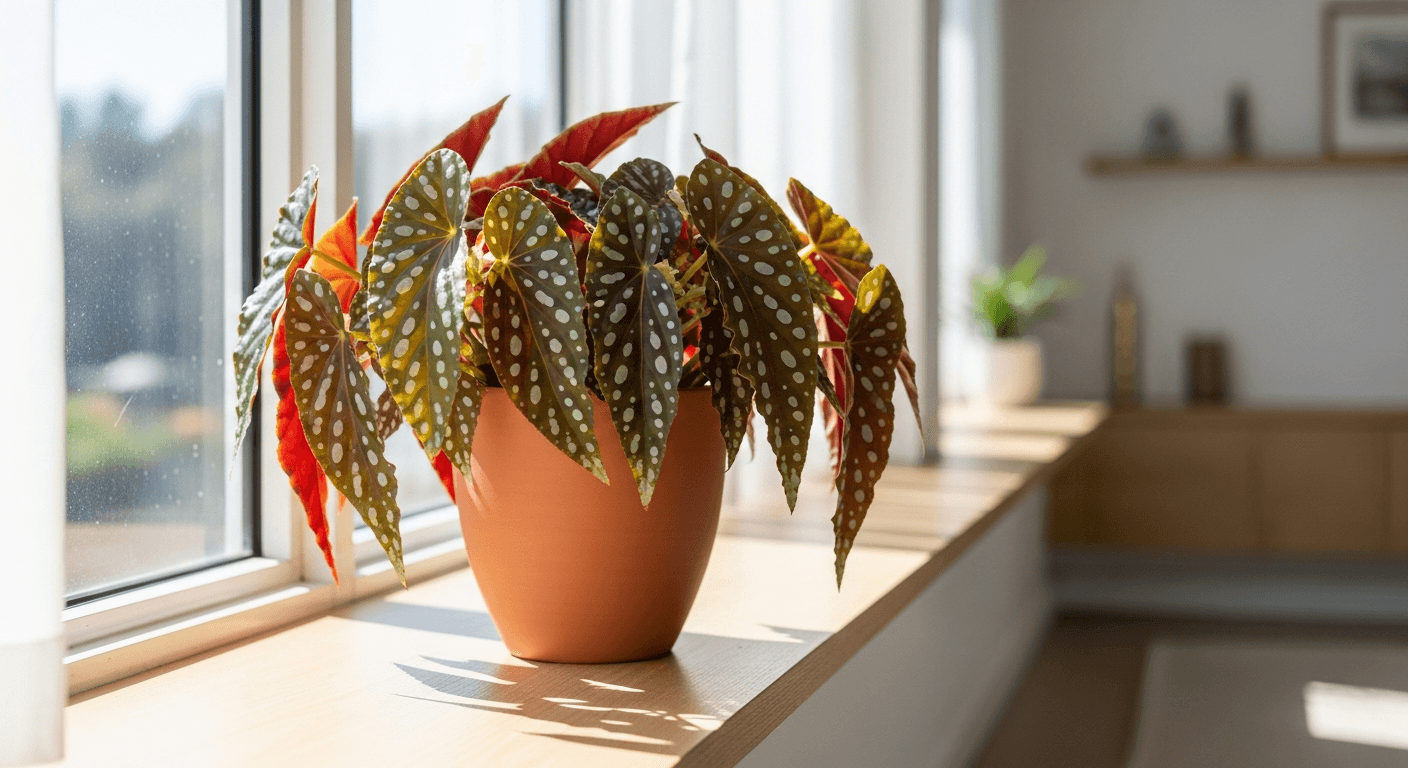
Begonias are some of the most spectacular foliage plants you can grow indoors. Between the rex begonia, with leaves painted in silver, purple and green, and the begonia maculata (the "polka dot" one with white spots on angel-wing leaves), there's one for every corner. They have a reputation for being fussy, but really they only ask you to understand three things: light, watering and humidity.
Types of indoor begonia
- Rex begonia: grown for its almost metallic, multicolored leaves. The foliage is the star; it rarely flowers showily.
- Begonia maculata (angel wing): tall cane-like stems, leaves with silver spots and a reddish underside, and clusters of small white flowers.
- Flowering begonias (semperflorens): the classic garden and balcony types that bloom non-stop outdoors.
Is your plant looking off and you are not sure why?
Free AI diagnosisBasic care, point by point
Light
Begonias want bright, indirect light. Right by an east- or west-facing window, or set back a bit from a south-facing one, is perfect.
- Avoid harsh midday sun: it scorches and bleaches the leaves, especially on the rex.
- Too much shade dulls the colors and stretches the stems.
If the leaf patterns lose their contrast, it's almost always not enough light.
Watering: the trickiest part
This is where most begonias are lost. Water when the top inch of soil is dry, and do it at the edge of the pot, without wetting the leaves. Water sitting on the foliage invites powdery mildew and rot.
Golden rule: begonias hate soggy soil as much as bone-dry soil. Aim for the middle ground: lightly moist, never waterlogged.
In winter, cut back on watering a lot, since growth slows and the soil takes longer to dry.
Humidity and temperature
Being tropical, it appreciates 50-60% humidity. If you run heating, group plants together or use a humidifier, but don't mist the leaves — they prefer humid air to water sitting directly on them. Keep it between 65 and 75 °F and away from cold drafts, which make it drop leaves.
If keeping humidity up is a struggle, our humidity for plants guide will help.
Soil and pot
Use an airy, free-draining mix: a regular houseplant soil with a handful of perlite works beautifully. Begonias have shallow roots, so they prefer wide, shallow pots over deep ones. Make sure it has drainage holes.
Propagation step by step
The rex begonia multiplies almost like magic from a single leaf:
- Cut a healthy leaf with a bit of petiole.
- Lay it on damp soil (or make small cuts across the veins on the underside and pin it flat onto the soil).
- Cover it with plastic to keep humidity high.
- In a few weeks, new plantlets will sprout from the veins.
The maculata is even easier: cut a length of stem with a node and root it in water or soil.
Quick care table
| Care | Begonia |
|---|---|
| Light | Bright indirect, no direct sun |
| Water | At the edge, without wetting leaves |
| Humidity | 50-60% (no misting) |
| Difficulty | Medium |
| Pets | Toxic |
Common problems
- White powder on the leaves: powdery mildew, encouraged by wet foliage and poor airflow. Remove affected leaves and improve ventilation.
- Leaves dropping suddenly: a cold draft, a sudden move or erratic watering.
- Dry, crispy edges: air that's too dry.
- Stretched stems: not enough light; move it closer to the window.
Not sure whether it's water, humidity or a fungus? Upload a photo to our AI diagnosis tool to narrow down the cause before you act.
Is it toxic?
Yes. Begonias contain calcium oxalates, most concentrated in the underground parts, and are toxic if chewed by dogs and cats. Keep it out of their reach.
With bright but filtered light, careful edge-watering and a humid spot, the begonia will reward you with one of the most beautiful displays of foliage in the houseplant world. Yours looking off? Try the AI diagnosis tool.
Related articles
Bromeliad Care: Watering the Central Cup and Pups
Bromeliad care: watering the central cup, bright indirect light, humidity and what to do with the pups when the plant flowers and dies. Full guide.
Coffee Plant Care: Growing Coffea at Home
Coffee plant (Coffea arabica) care as a houseplant: bright indirect light, humidity, watering, and whether you can really harvest your own coffee beans.
Norfolk Island Pine Care: The Living Christmas Tree
Norfolk Island pine (Araucaria heterophylla) care: light, watering, humidity and why its branches turn brown and drop. The living indoor Christmas tree guide.
Trouble with your plant?
AI diagnosis