Building a Terrarium at Home: Layers, Plants and Upkeep
Learn how to build a terrarium step by step: the container, drainage layers, which plants to use (fittonia, moss, ferns) and how to care for it afterward.
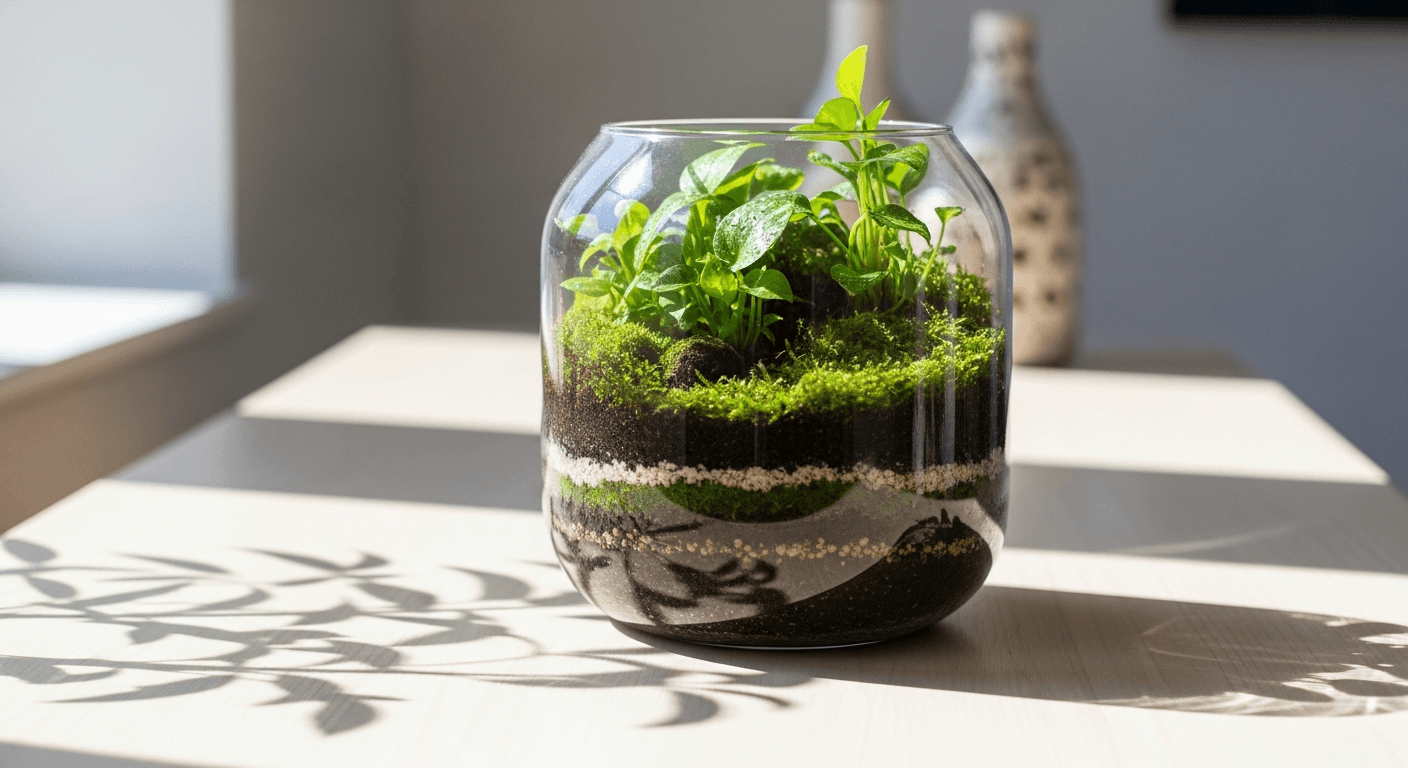
In this article
A terrarium is a tiny garden sealed inside glass: a miniature green world that sits on your desk and, once it finds its balance, very nearly runs itself. The first one I built was a recycled pickle jar stuffed with moss I'd lifted from a shady corner of the garden, and two years later it was still going — I'd only opened it a handful of times. That's the magic that hooks people: a closed terrarium recycles its own water, so the job stops being "keep this alive" and becomes "watch this ecosystem settle in." This is the complete guide to building one from scratch, choosing the right plants, and reading the signals it sends you afterward.
Open or closed terrarium: which to choose
The very first decision shapes everything else — the plants, the watering, even where you put it on the shelf:
- Closed: a container with a lid. It traps moisture and recreates a humid, almost self-sufficient micro-jungle, ideal for moss, ferns and small tropicals. You water it rarely, sometimes only once or twice a year.
- Open: no lid, with free airflow. Built for cacti, succulents and anything that rots in stagnant humidity. It dries out like a normal pot and needs occasional watering.
If you're unsure, start with a closed one full of jungle plants. They're the most spectacular, the most forgiving once balanced, and they show off the whole "it makes its own rain" trick that makes terrariums feel alive.
Here's the quick comparison I give anyone deciding:
| Feature | Closed terrarium | Open terrarium |
|---|---|---|
| Best plants | Fittonia, moss, dwarf ferns, pilea | Succulents, cacti, air plants |
| Humidity | Very high (80-100%) | Low to moderate |
| Watering | A few times a year | When the soil dries out |
| Light | Bright, indirect — never direct sun | Bright, can take a little morning sun |
| Self-sustaining | Yes, once balanced | No, behaves like a potted plant |
| Difficulty | Easy once set, fiddly to balance | Very easy |
Is your plant looking off and you are not sure why?
Free AI diagnosisWhat you'll need
Gather everything before you start — building a terrarium with damp hands and no spare charcoal is a recipe for frustration:
- A clear glass container (a jar, a fishbowl, a wide bottle, a cookie jar with a lid). Wider mouths are far easier for a first build.
- Gravel or expanded clay (LECA) for drainage.
- Activated charcoal — the aquarium or terrarium kind, not barbecue briquettes.
- Potting mix suited to your plants (more on the recipe below).
- Small plants and, if you like, live moss or a sheet of preserved moss.
- A long spoon, chopsticks or tweezers, plus a spray bottle.
- Optional decoration: stones, twigs, cork bark or a tiny figurine.
A quick note on activated charcoal: it isn't strictly magic, and a healthy terrarium can survive without it. What it does is help adsorb odors and impurities from the water that has nowhere to drain, which keeps a closed jar from turning swampy. It's cheap insurance, so I always include a thin layer.
The ideal plants for a closed terrarium
Look for small, slow-growing, humidity-loving species that won't outgrow the glass in a month:
- Fittonia (nerve plant): the undisputed queen of the terrarium, with electric white or pink veins, and it genuinely prefers the swampy air a closed jar provides. To get to know it properly, read our fittonia care guide.
- Dwarf ferns and live moss, which carpet the floor in green and thrive on constant moisture — a small Boston fern division works if you keep it trimmed.
- Pilea, baby's tears (Soleirolia), small peperomia (some peperomia stay compact and love humidity) or ivy seedlings for a bit of trailing variety.
Mix textures and one or two heights rather than five different plants fighting for the same space — restraint reads as lush, clutter reads as a jar of weeds.
Avoid succulents and cacti in a closed terrarium. The trapped humidity that keeps fittonia happy rots them within weeks; those belong in an open build with gritty soil and airflow. If you want the desert look, our cactus care guide covers an open setup.
The soil layers, explained
Because a closed container has no drainage holes, you're building a system to manage water that can never escape. From bottom to top:
- Drainage (1-1.5 in): gravel or LECA. Excess water sinks here, away from the roots — your false water table.
- Charcoal (a thin scatter): the odor-and-impurity filter described above.
- Barrier (optional): a layer of sphagnum moss or fine mesh stops the soil from washing down into the gravel over time.
- Substrate (2-3 in): the soil the roots actually live in.
For tropical terrarium plants I mix roughly two parts coco coir or peat-free potting soil, one part fine orchid bark, and a handful of perlite for air. It holds moisture without going to concrete. If you want to understand why ingredient choice matters so much in a sealed system, our guide to potting soil breaks down each component.
Step-by-step assembly
- Drainage layer: add 1-1.5 inches of gravel or expanded clay. Tilt the jar and pour slowly so you don't crack the glass.
- Charcoal layer: sprinkle a thin, even scatter of activated charcoal over the gravel.
- Substrate: add 2-3 inches of your soil mix, sloped higher at the back if you want a sense of depth — that single trick makes a flat jar look like a hillside.
- Plant from the back forward: scoop a hole with a spoon, gently tease the plant out of its nursery pot, knock off excess soil, set it in, and firm the substrate around the roots with a chopstick. Largest plants at the back, smallest at the front.
- Moss and decoration: press live moss over the bare soil (it needs good contact to take), then tuck in stones, twigs or bark. Wipe each leaf clean as you go.
- First watering: mist until the substrate is evenly damp but never pooling — for a small jar that's often just 30-50 sprays. Then wipe the inside of the glass with a paper towel to clear soil splashes so you can actually see in.
Give a brand-new closed terrarium a few hours with the lid off before you seal it, so the foliage isn't dripping wet when it closes — wet leaves in a sealed jar are how mold gets its first foothold.
How to care for it afterward
The single most important rule: do not overwater. A closed terrarium recycles its own moisture — vapor condenses on the cool glass and rains back down — so it needs a tiny fraction of the water a normal pot does. Most beginners kill terrariums by drowning, not by neglect.
- Watering: a balanced closed jar may go months between mistings; add water only when condensation stops appearing on the glass entirely. An open one is watered when the top of the soil dries out.
- Light: plenty of bright, indirect light — never direct sun. The curved glass works like a magnifying lens and will literally cook the plants and superheat the air inside. A spot near a north or east window, or a couple of feet back from a brighter one, is ideal. If your room is dim, a small LED grow light on a timer works well.
- The condensation test: a little fog in the morning that clears by midday is perfect. Constant heavy fog you can't see through means too wet; bone-dry glass for days means too dry. More on managing this in our guide to humidity for plants.
- Maintenance: every few weeks, open it up, trim anything overgrown, and pull dead leaves before they rot. Pruning keeps the balance and stops one bully plant from shading out the rest.
The first few weeks: settling in
Don't panic during the break-in period. It's normal for a leaf or two to yellow and drop as plants adjust to nursery-shock and the new humidity, and for the condensation to swing high before it levels off. Give it two to four weeks to find equilibrium before you judge whether it's too wet or too dry. Once it settles, a good closed terrarium is one of the lowest-maintenance plant projects you'll ever own.
Troubleshooting: symptom, cause, fix
| Symptom | Likely cause | Fix |
|---|---|---|
| Glass always fully fogged, can't see in | Too much water / not enough air | Open the lid for a day to vent; remove a little soil moisture if it persists |
| White or gray fuzzy mold | Excess water + stagnant air | Remove the affected part, ventilate, cut back watering; see the botrytis guide |
| Powdery white coating on leaves | Powdery mildew from poor airflow | Trim affected leaves, increase ventilation, more here |
| Mushy stems, sour smell | Roots rotting in waterlogged soil | Open up, let it dry, remove rot — read about root rot |
| Leggy, stretched, pale growth | Not enough light | Move to a brighter (still indirect) spot or add a grow light |
| Yellow lower leaves | Usually overwatering | Vent, stop watering, let it dry between mistings |
| Algae greening the glass | Too much light + nutrients in the water | Reduce light slightly, wipe the inside walls |
If something looks off and you can't pin down the cause, snap a photo and run it through our AI plant diagnosis — it's handy for spotting fungal issues early, when a closed jar can otherwise hide a problem until it's spread.
Common mistakes to avoid
- Skipping the dry-down before sealing — wet foliage in a closed jar invites mold on day one.
- A container that's too small or narrow — your hand and tweezers need room; cramped jars are miserable to plant and to maintain.
- Mixing humidity-lovers with succulents — the most common request I get, and the fastest way to lose half the plants.
- Direct sunlight — even an hour of focused sun through the glass can scorch leaves and spike the internal temperature past what any plant tolerates.
- Watering on a fixed schedule — read the condensation, not the calendar.
- Burying the crowns — set plants so the base of the stem sits at soil level, not beneath it, or they'll rot at the neck.
A project that lasts for years
A well-built, well-placed terrarium can thrive for years on a few minutes of attention a season. It's the perfect way to bring living green to a desk, a shelf or a bright bathroom, and there's a real quiet pleasure in watching a sealed little world find its own rhythm. Start simple, resist the urge to overwater, and let the ecosystem teach you its pace. You'll be amazed how little it asks for in return for how much it gives.
Related articles
The Best Trailing and Hanging Indoor Plants
The best hanging indoor plants: pothos, string of hearts, ivy, spider plant and more, with quick care notes to fill your shelves with cascading green.
The Best Large Indoor Plants for a Corner
The best large indoor plants to fill a corner: bird of paradise, fiddle leaf fig, Monstera, kentia and more, with their real light needs and care notes.
The Best Plants for the Bedroom
The best plants for the bedroom: easy, low-light tolerant and low-maintenance species for a healthier, calmer and more relaxing room you will truly love.
Trouble with your plant?
AI diagnosis