Trailing Plants That Really Form a Curtain of Green
The best hanging indoor plants: pothos, string of hearts, ivy, spider plant and more, with quick care notes to fill your shelves with cascading green.
In this article
- What to look for in a hanging plant
- Quick comparison: light, water and pet safety
- The best hanging plants
- 1. Pothos (Epipremnum)
- 2. String of hearts (Ceropegia woodii)
- 3. Ivy (Hedera)
- 4. Spider plant (Chlorophytum)
- 5. Tradescantia
- 6. String of pearls (Senecio rowleyanus)
- 7. Heartleaf philodendron
- 8. Boston fern (Nephrolepis)
- 9. Peperomia (trailing types)
- How to set up a hanging plant properly
- Care that keeps them full, not stringy
- Common mistakes and how to fix them
- If you have pets
- A quick word on watering and root rot
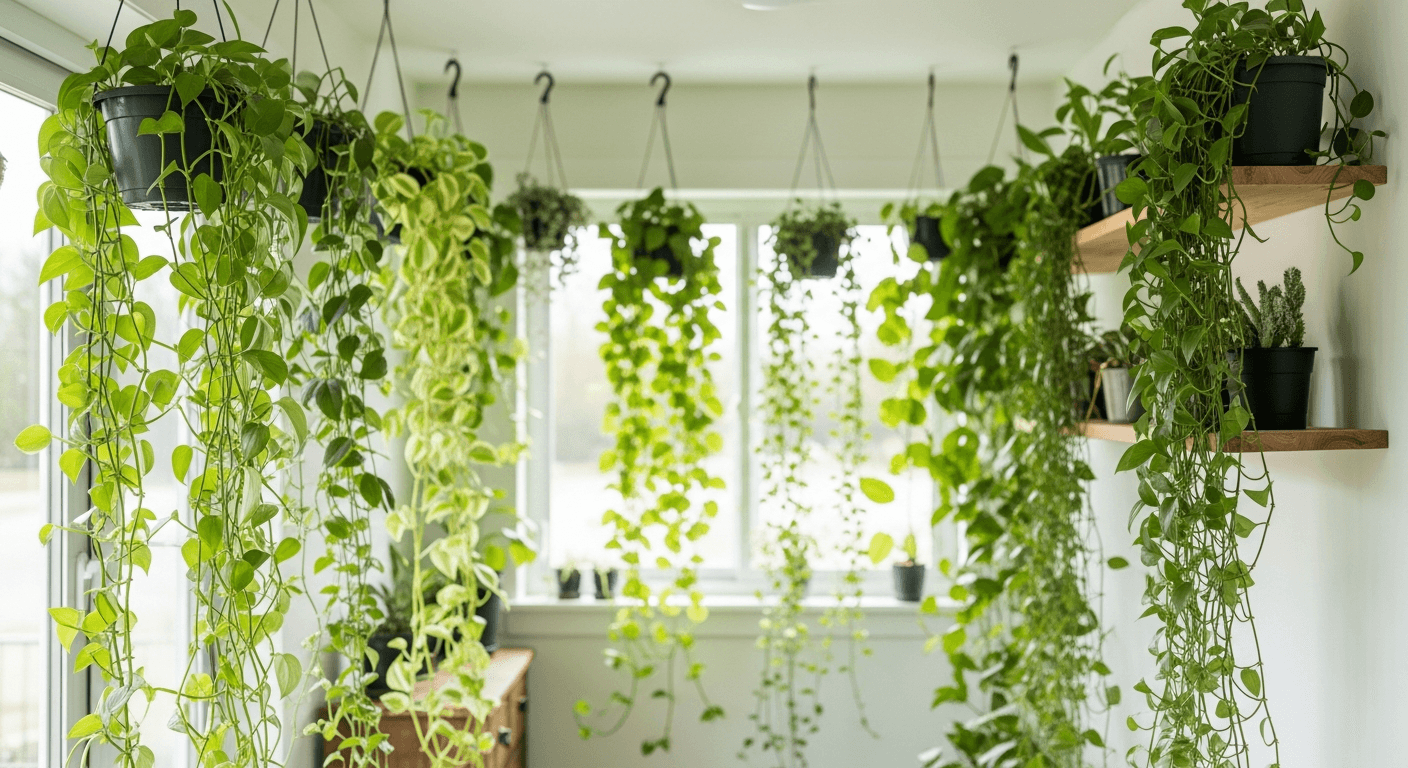
Hanging plants are the easiest way to use vertical space and create those curtains of foliage everyone loves on shelves, raised pots and ceiling hooks. Better still, many of the most popular trailers practically look after themselves once you give them the right spot. I learned that the hard way: my first string of pearls turned to mush in a month because I treated it like a fern, and a pothos in a dim hallway stretched into sad, leggy strings. The plants weren't the problem. The placement was. So this guide is as much about reading your room as it is about the plant list. Here's my pick of the best hanging indoor plants, with honest care notes and the troubleshooting I wish I'd had at the start.
What to look for in a hanging plant
Before the list, a few pointers that make the difference between a lush cascade and a bare stem with three leaves clinging to the end:
- Stems that trail or climb: species with long, flexible runners drape best. Plants with stiff upright stems just look awkward suspended in the air.
- Suited to your actual light: some tolerate shade; others sulk anywhere but a bright window. This is the single biggest predictor of success.
- Easy to propagate: so you can tuck cuttings back into the same pot and make it fuller, or start new plants for free.
- Pet-safe if you have animals, since trailers dangle temptingly within reach of curious cats and the leaves are right at nose height.
- Weight when watered: a soaked Boston fern in a ceramic pot is heavy. Match the hook and anchor to the loaded weight, not the dry one.
Is your plant looking off and you are not sure why?
Free AI diagnosisQuick comparison: light, water and pet safety
Use this as a cheat sheet before you commit a plant to a particular hook. "Bright indirect" means within a metre or two of a window with no harsh midday sun on the leaves; "low to medium" means it survives a few metres back from the glass.
| Plant | Light | Water | Pet-safe? | Difficulty |
|---|---|---|---|---|
| Pothos | Low to bright indirect | When top 3-4 cm dry | No | Very easy |
| Heartleaf philodendron | Low to bright indirect | When top 3-4 cm dry | No | Very easy |
| Spider plant | Medium to bright indirect | Keep lightly moist | Yes | Very easy |
| Tradescantia | Bright indirect | When top 2-3 cm dry | No | Easy |
| String of hearts | Bright, some direct | Sparingly, dry between | Yes | Easy |
| String of pearls | Bright, some direct | Sparingly, dry between | No | Moderate |
| Ivy (Hedera) | Medium, cool air | Keep lightly moist | No | Moderate |
| Boston fern | Bright indirect | Consistently moist | Yes | Moderate |
The best hanging plants
1. Pothos (Epipremnum)
The easiest trailer in the world, and the one I recommend to anyone who has killed a plant before. Its vines, loaded with heart-shaped leaves, can fall a metre or more, it lives in medium to low light, and it forgives almost any lapse. Let the top 3-4 cm of soil dry between waterings; pothos hates sitting wet and will tell you with yellow leaves if you overdo it. It roots effortlessly in a glass of water, so every prune is a free plant. Toxic if chewed. Golden, marble queen and neon are all the same easygoing plant in different outfits.
2. String of hearts (Ceropegia woodii)
Fine trailing strands with silver-marbled heart-shaped leaves, often a metre long from a high shelf. It's semi-succulent, so the rules flip: bright light, including a little gentle direct sun, and water only when the soil is properly dry. Those firm, waxy leaves store water, so the fastest way to kill one is kindness. Spectacular cascading from a high shelf, and it grows little tubers along the strands you can pot up. Conveniently, it's also pet-safe.
3. Ivy (Hedera)
Classic and vigorous, with lobed leaves that trail or climb. It prefers medium light and cool, fresh air; this is the one plant on the list that genuinely dislikes a warm, dry living room. In hot, stuffy spots it's a magnet for spider mites, so check the undersides of the leaves for fine webbing and pale stippling. A monthly shower in the sink keeps mites at bay and the foliage clean. Toxic to pets.
4. Spider plant (Chlorophytum)
One of the most rewarding trailers you can grow: it sends out arching stems tipped with "pups" that dangle like little spiders, ready to plant the moment they sprout roots. It tolerates a wide range of light, forgives the odd missed watering, and on top of that is reliably pet-safe. If the leaf tips go brown, it's usually fluoride or salt buildup from tap water or fertilizer; flush the pot thoroughly every couple of months and the new growth comes in clean.
5. Tradescantia
Fast-growing, with colourful leaves in green, purple, silver and pink stripes that look gorgeous spilling over an edge. It needs good bright light to keep that colour; in dim spots the variegation fades and the stems go leggy. It propagates astonishingly easily (every piece of stem roots in water or straight into soil), so pinch it back hard and replant the tips to keep it bushy rather than stringy.
6. String of pearls (Senecio rowleyanus)
Strands of little green "beads" that hang like a necklace, and probably the most photographed trailer on the internet. It's a true succulent, so it wants plenty of bright light, fast-draining gritty soil and very infrequent watering, roughly every two to three weeks and even less in winter. Shrivelled, deflated pearls mean thirst; mushy, translucent ones mean overwatering and the start of rot. Delicate but unmistakable, and worth the slightly fussier care.
7. Heartleaf philodendron
Similar to pothos but with thinner, softer, slightly glossier leaves. It's even more tolerant of low light, grows fast, and trails elegantly without much fuss. It roots in water just like pothos, so the two are interchangeable propagation buddies. If you want to compare the wider family and pick a favourite, our philodendron care guide covers the climbers and uprights too. Toxic if chewed.
8. Boston fern (Nephrolepis)
For anyone after volume and that classic lush, feathery look. It wants high humidity and bright indirect light, which makes it ideal in a steamy bathroom with a window. The catch is moisture: it likes its soil consistently damp and crisps up fast in dry air, so it's the one plant here you cannot afford to forget. If your home runs dry, read up on raising humidity for plants before you commit, and for the full routine see our dedicated Boston fern guide.
9. Peperomia (trailing types)
A quieter pick worth knowing about. Trailing peperomias like Peperomia prostrata (string of turtles) stay compact and don't take over a shelf, with small patterned leaves on delicate stems. They're semi-succulent, so they want bright indirect light and a dry-out between waterings, much like string of hearts. Great for a small space where a pothos would quickly become a jungle; our peperomia guide has the details.
How to set up a hanging plant properly
Getting the plant right is only half the job. The mount matters just as much, and a pot that drips on the floor or a hook that pulls out of plaster will sour the whole thing fast.
- Choose the support before the plant. A macramé hanger, a wall bracket or a ceiling hook all work, but the anchor is what counts. Drill into a joist or use a proper toggle bolt rated well above the loaded weight of the pot. A wet fern can weigh three or four kilos.
- Solve drainage first. A hanging pot with no drainage hole is a slow death by root rot. Use a pot with a hole and a clip-on drip tray, or pot the plant in a plastic nursery pot that lifts out of a decorative cover for watering.
- Pick the right size. Trailers like to be a little snug; an oversized pot holds wet soil they can't use. When you do repot, go up just one size. Our guide on choosing the right pot walks through materials and sizing.
- Hang it, then watch the light for a week before deciding it's permanent. The plant will tell you within days if the spot is too dim (longer gaps between leaves) or too bright (scorched patches).
Care that keeps them full, not stringy
- Water by weight and feel, not by calendar. Hanging pots dry out faster than ones on a table because air moves around them on all sides. Lift the pot: light means thirsty. If you're unsure of the basics, brush up with our guide on how to water indoor plants.
- Take the heavy ones down to water. Watering a trailer in place either soaks the floor or, worse, never reaches the soil because you're being cautious. Lift it to the sink, drench it until water runs out the bottom, let it drain ten minutes, and rehang.
- Rotate a quarter-turn every week or two so growth fills out evenly all the way around instead of leaning toward the light.
- Prune long bare runners and tuck the cuttings back into the top of the same pot. This is the single best trick for a full, bushy trailer rather than a few long stringy vines. If yours has already gone sparse, see why plants get leggy and how to fix it.
- Feed lightly in spring and summer with a balanced houseplant fertilizer at half strength, monthly. Trailers in small pots exhaust their soil quickly, but too much feed burns the roots and tips.
- Propagate the easy ones constantly. Pothos, philodendron, tradescantia and spider plants all root in water in a couple of weeks. Our propagation guide covers cuttings, water versus soil, and how to get roots reliably.
Common mistakes and how to fix them
Most trailing-plant problems trace back to a mismatch between the plant and its spot. Here's how to read the warning signs before you lose the plant, which is exactly the habit that saved mine.
| Symptom | Likely cause | What to do |
|---|---|---|
| Long gaps between small leaves (leggy) | Too little light | Move closer to a window or add a grow light; prune and replant tips |
| Yellowing lower leaves, soggy soil | Overwatering or no drainage | Let it dry out fully; check for a drainage hole; repot if roots smell sour |
| Crispy brown leaf tips | Dry air, salt buildup, or underwatering | Raise humidity, flush the pot, water more consistently |
| Faded variegation on tradescantia or pothos | Not enough light | Brighten the spot; colour returns on new growth |
| Mushy, translucent pearls or hearts | Overwatering a succulent type | Stop watering, improve drainage, remove rotted strands |
| Fine webbing and pale speckling | Spider mites (common on ivy) | Shower the plant, isolate it, treat undersides repeatedly |
The biggest mistake of all, and the one I made twice, is hanging a trailing succulent (string of pearls, string of hearts) in a dark corner because it looks pretty there. They stretch, drop leaves and slowly fade. Be realistic about each spot's light and choose accordingly. If a corner is genuinely dim, reach for a pothos or heartleaf philodendron instead, or browse our roundup of plants for low-light spots.
If you have pets
Several plants on this list (pothos, ivy, philodendron, tradescantia, string of pearls) are toxic if chewed, and trailing, they dangle right in view. If your cat patrols the shelves, lean on the genuinely safe options like the spider plant, string of hearts and Boston fern, or hang the risky ones well out of jumping range. There are more animal-friendly ideas in our guide on pet-safe plants.
A quick word on watering and root rot
Because hanging pots are easy to ignore up near the ceiling, the two failure modes I see most are opposite extremes: forgotten ferns that crisp, and "loved" succulents that rot. If you can never quite tell whether you're giving too much or too little, the breakdown in overwatering versus underwatering shows how to tell them apart, since the symptoms can look surprisingly similar from a distance.
Is your favourite trailer yellowing, drying out, or stretching and you can't tell why? Take a clear photo of the affected leaves and run it through our AI diagnosis tool. It's the same shortcut I use now instead of guessing, and catching a problem early is usually the difference between a quick fix and starting over.
With one or two of these trailers well placed and watered with a little attention, you'll fill your shelves with green and create that cascade effect that brings any corner to life.
Related articles
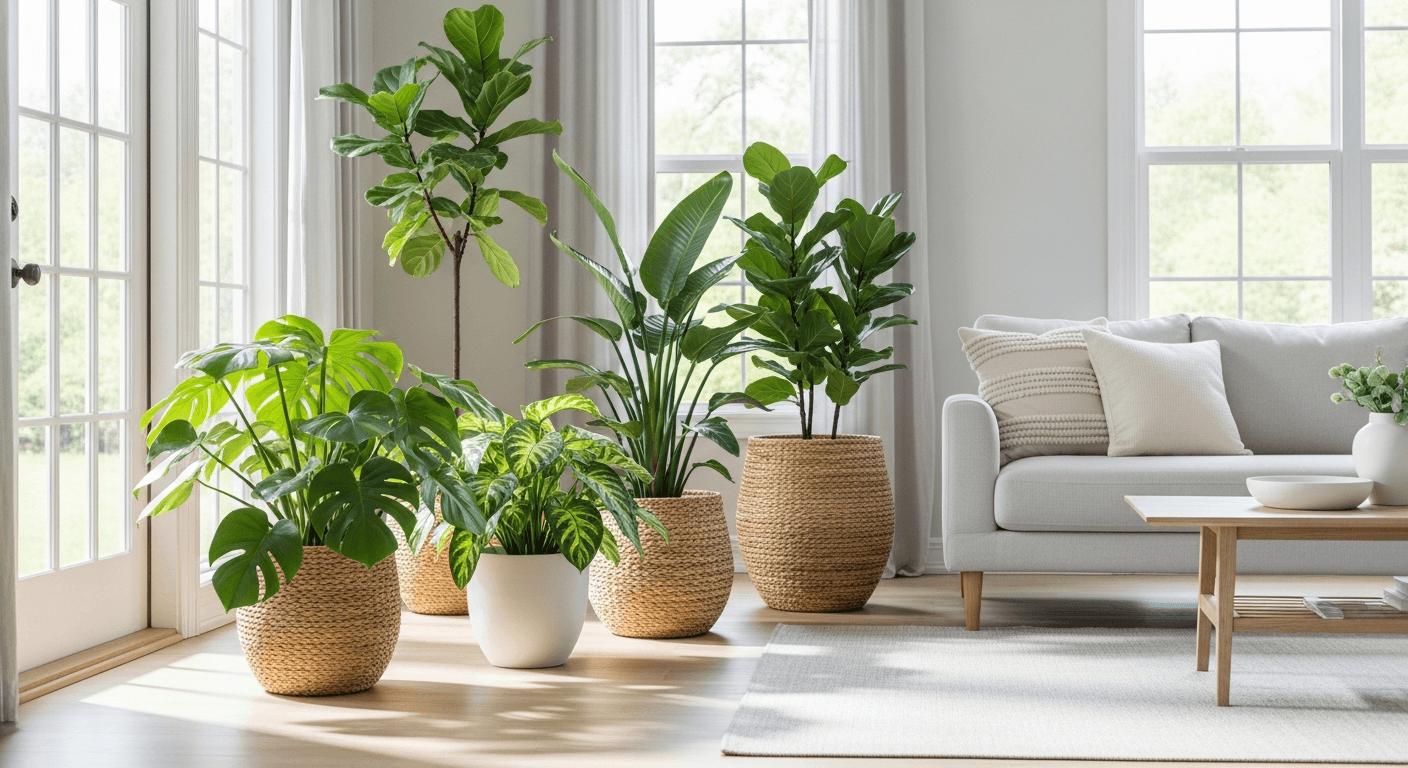
The Best Large Indoor Plants for a Corner
The best large indoor plants to fill a corner: bird of paradise, fiddle leaf fig, Monstera, kentia and more, with their real light needs and care notes.
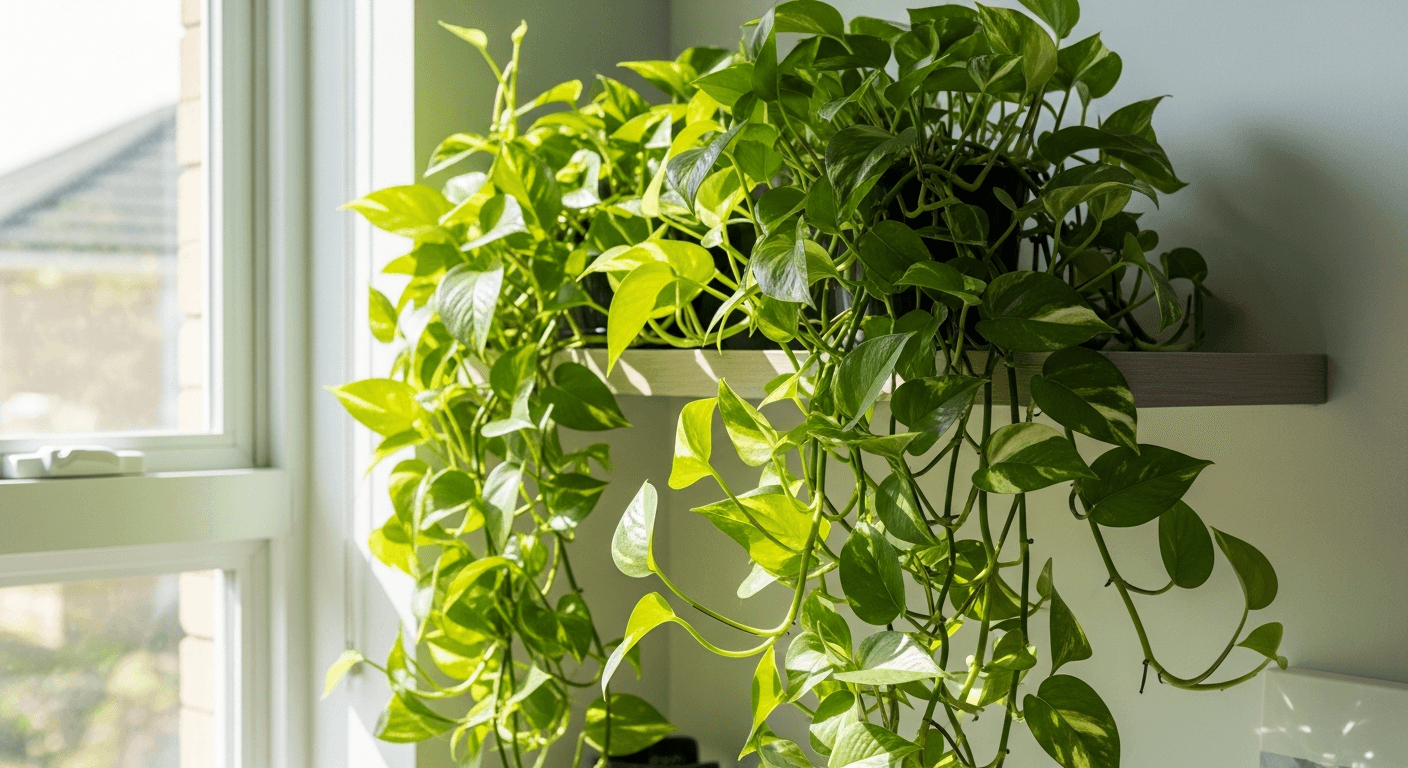
Fast-Growing Houseplants (Rewarding Results Fast)
The best fast-growing houseplants: pothos, tradescantia, spider plant and philodendron. How to speed up growth with light, feeding and timely repotting.
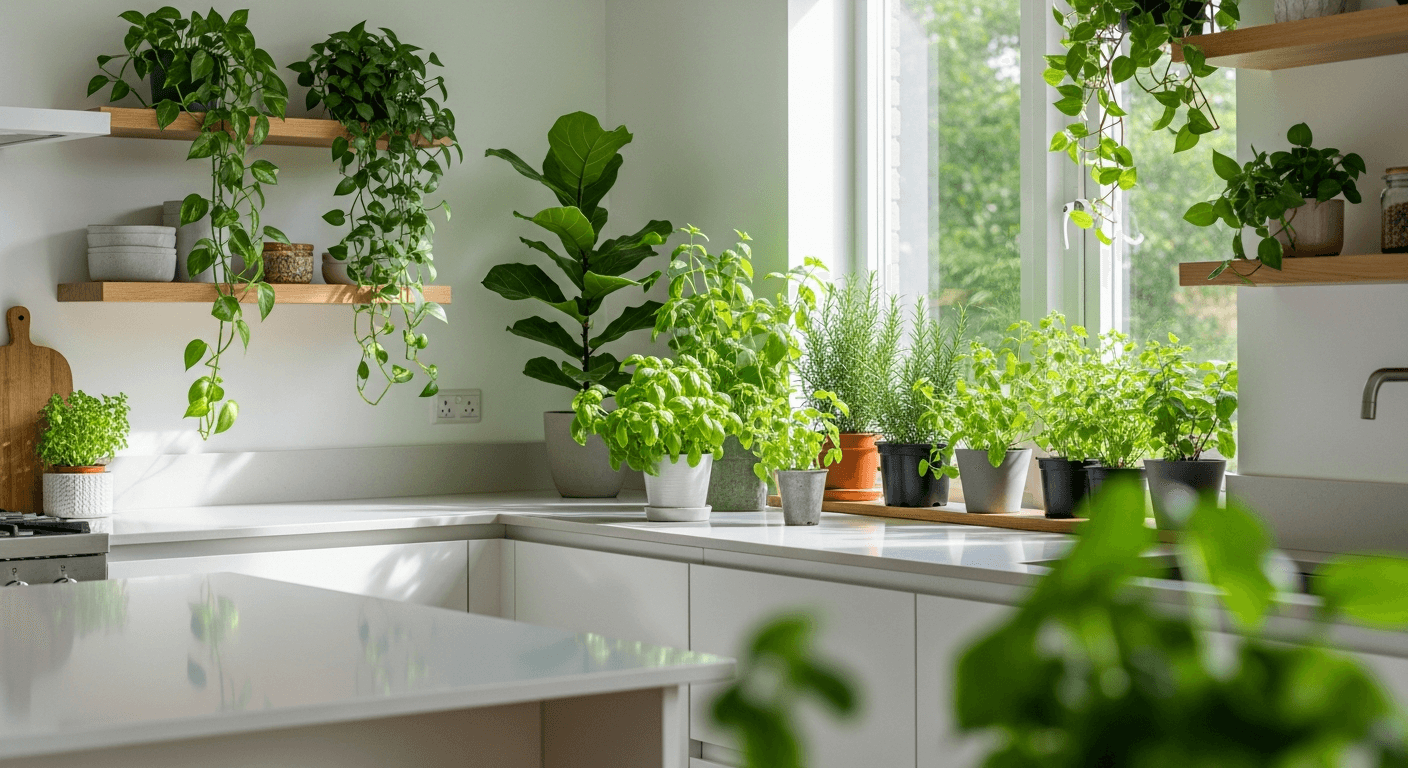
The Best Plants for the Kitchen (and Where to Put Them)
The best plants for the kitchen: easy herbs plus houseplants that tolerate humidity and low light. What to avoid near heat and how to care for them here.
Trouble with your plant?
AI diagnosis