Hibiscus: Plenty of Light and Potassium for Constant Flowers
Hibiscus (Hibiscus rosa-sinensis) care in pots: full sun, watering and feeding for big blooms, pruning, and how to overwinter it indoors. Full guide.
In this article
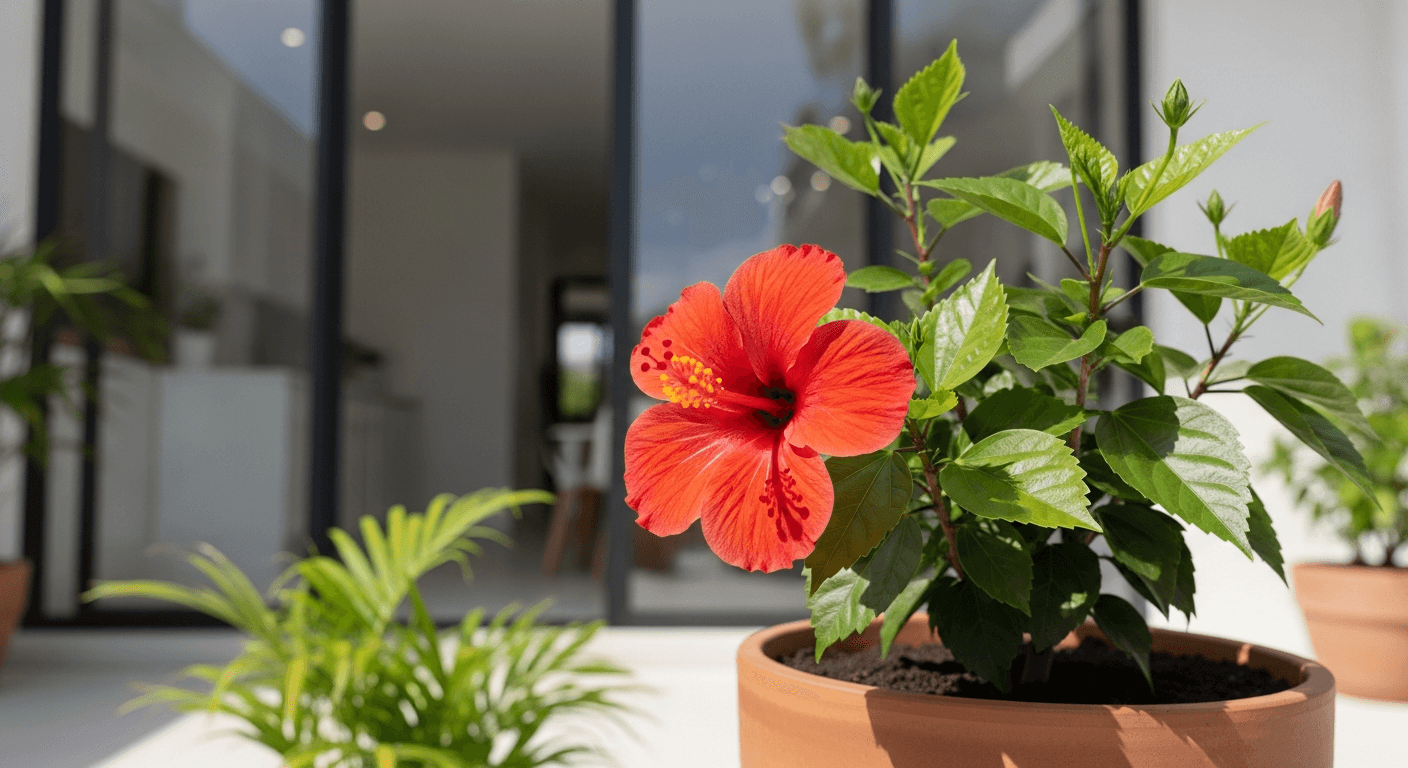
The hibiscus (Hibiscus rosa-sinensis) is one of the most spectacular flowering shrubs you can grow in a pot. Its huge, vividly colored flowers last only a day or two, but the plant keeps pushing out buds all summer long if you give it what it needs: sun, water and food. It's tropical, so in cold climates it's grown in a pot that can be moved to safety.
Basic care, point by point
Light: more sun, more flowers
Hibiscus needs lots of direct light to bloom:
- Ideal: full sun, at least 6 hours a day, on a patio or by a very bright window.
- Tolerates: morning sun with light afternoon shade in very hot climates.
- Avoid: shade — without enough sun it grows but barely flowers.
If your hibiscus is healthy and green but won't bloom, it's almost always not enough light.
Is your plant looking off and you are not sure why?
Free AI diagnosisWatering
In full bloom it drinks a lot. Keep the soil moist but not waterlogged:
- In summer, water often: a pot in the sun can dry out daily.
- Check the top inch of soil; if it's dry, water.
- In winter, cut back hard, especially if it's resting indoors.
Flowers and buds that drop before opening usually mean stress — from drought, overwatering or a sudden change of location.
Feeding: the key to big flowers
Hibiscus is a heavy feeder. For continuous blooms:
- Feed every 1-2 weeks in spring and summer with a potassium-rich fertilizer (bloom or tomato feeds work beautifully).
- Reduce to half strength in autumn and stop in winter.
Good feeding is the difference between a few flowers and a plant covered in them. If you want to make sense of the numbers on the bottle (NPK), see our guide to fertilizing plants.
Soil and pot
Use a fertile, free-draining mix with some perlite. Choose a pot with drainage holes and a generous size: cramped roots limit flowering, but don't jump straight into an enormous pot either. Repot each spring or every other year.
Pruning
Pruning keeps the hibiscus compact and triggers new shoots, which is where the flowers form:
- Prune in late winter or early spring, before growth restarts.
- Cut back about a third of the branches and remove any growing inward.
- Pinch the tips in spring to encourage branching and more buds.
How to overwinter it
Hibiscus won't survive frost. If you live in a cold climate:
- Before the first frost, bring it indoors to a very bright, cool spot.
- Water much less and don't feed.
- It's normal for it to drop a few leaves; it will flush again in spring.
- Move it back outside once frost risk is gone, easing it into the sun gradually.
How to propagate it
Hibiscus roots well from cuttings in spring or summer:
- Cut a semi-woody stem tip about 4-6 inches long, just below a node.
- Strip the lower leaves and leave only two or three at the top.
- Plant the cutting in a light, moist mix and keep it warm with good indirect light.
- It should root in 6-8 weeks. Take several, since not all of them will take.
Having your own backup plants is genuinely useful: if one specimen has a rough winter, you'll always have a replacement ready to go.
Quick care table
| Care | Hibiscus |
|---|---|
| Light | Full sun, 6+ h/day |
| Water | Moist but not soggy |
| Feed | Potassium-rich, every 1-2 weeks |
| Difficulty | Medium |
| Pets | Non-toxic ✅ |
To flower non-stop it needs steady feeding right through the season: you'll find the schedule and the doses in how to fertilize plants. Its two usual pests are aphids on the buds and whitefly on the undersides of the leaves.
Common problems
- Yellow leaves: over- or underwatering, or a sudden temperature swing.
- Dropping buds: water stress, or aphids/whitefly on the buds.
- Few flowers: not enough sun or feed.
- Sticky leaves: usually aphids or whitefly; check the undersides.
Not sure what's wrong with your hibiscus? Upload a photo to our AI diagnosis tool to identify the cause before you treat it.
With sun in abundance, generous watering and frequent feeding, the hibiscus will reward you with a parade of tropical flowers all summer long. Yours looking off? Try the AI diagnosis tool.
Related articles
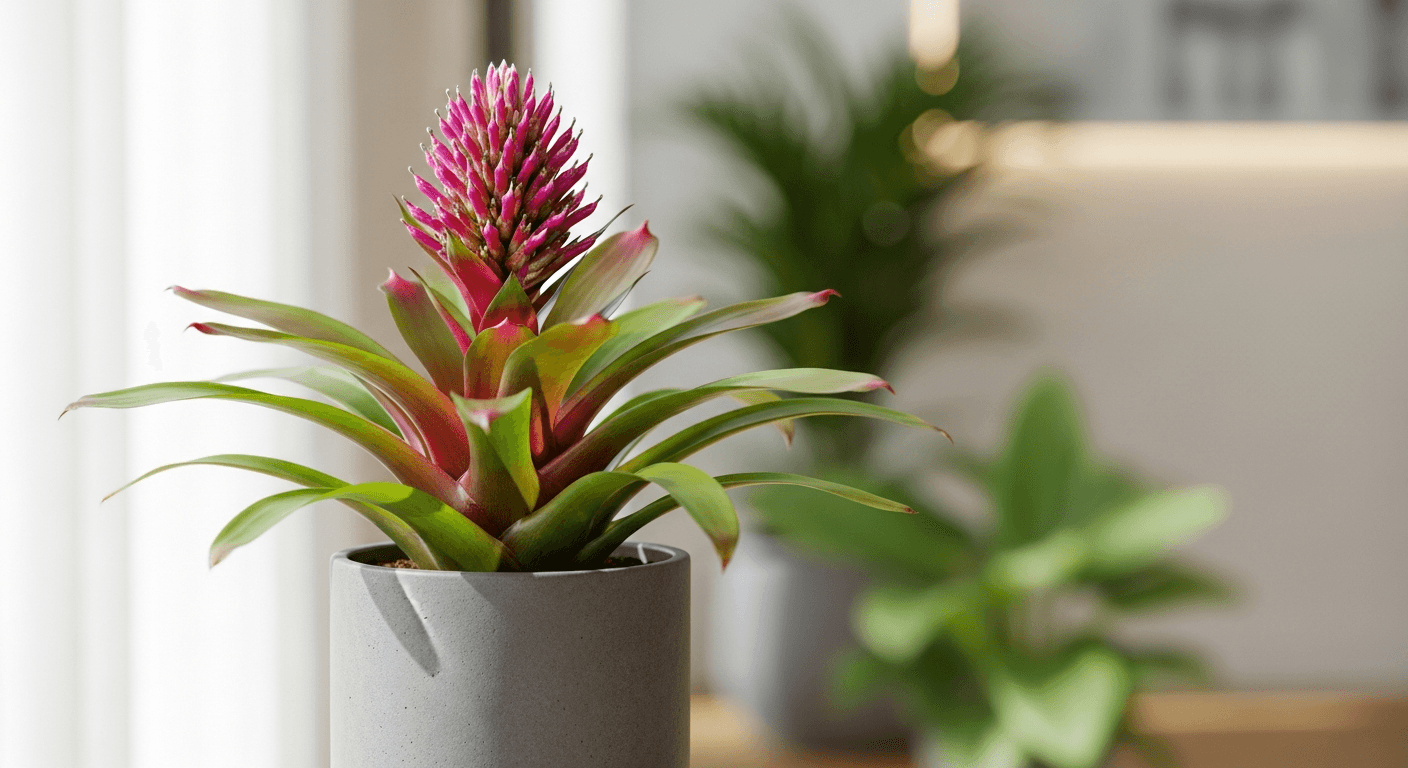
Bromeliad Care: Watering the Central Cup and Pups
Bromeliad care: watering the central cup, bright indirect light, humidity and what to do with the pups when the plant flowers and dies. Full guide.
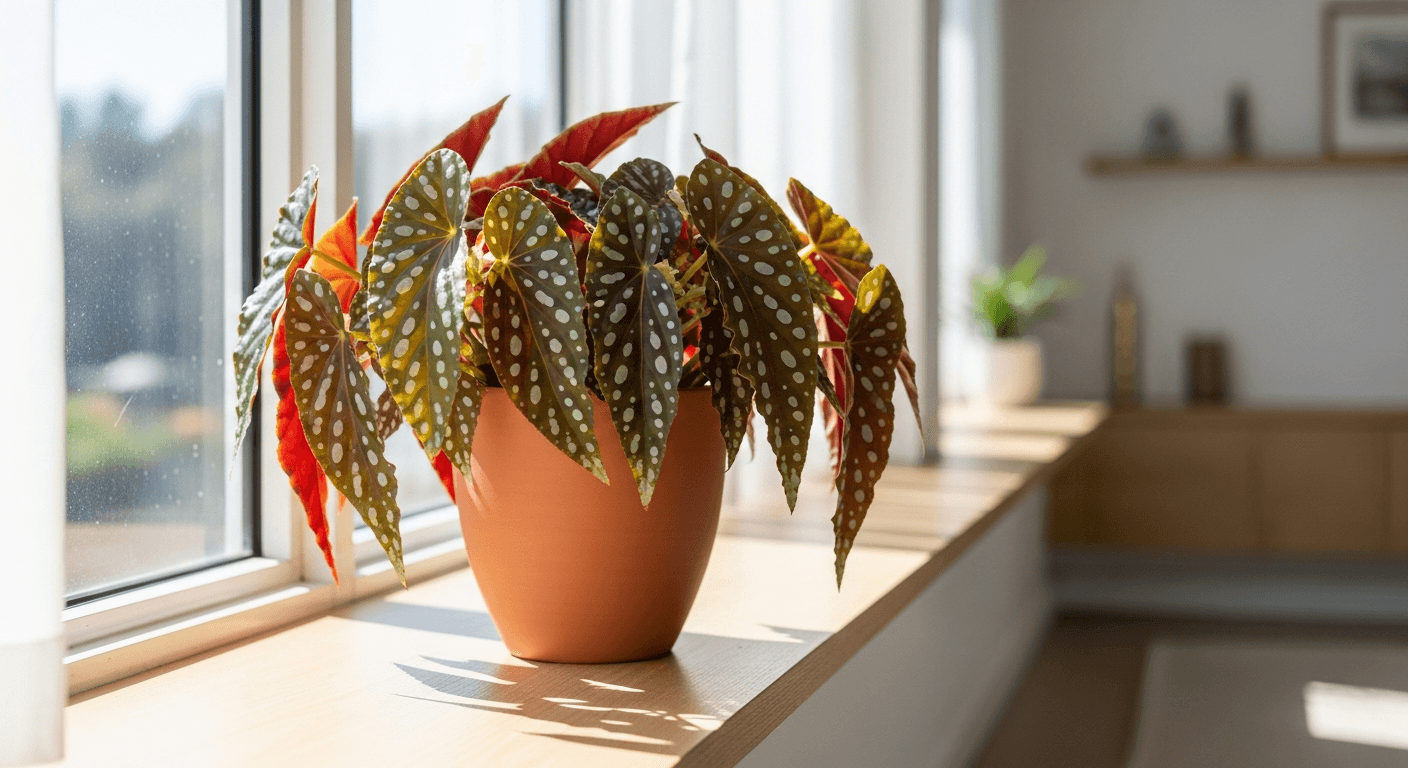
Begonia Care: Rex and Maculata (Polka Dot) Begonias
Begonia rex and maculata care: bright indirect light, watering without wetting the leaves, humidity, propagation and why it's toxic to pets. Full guide.
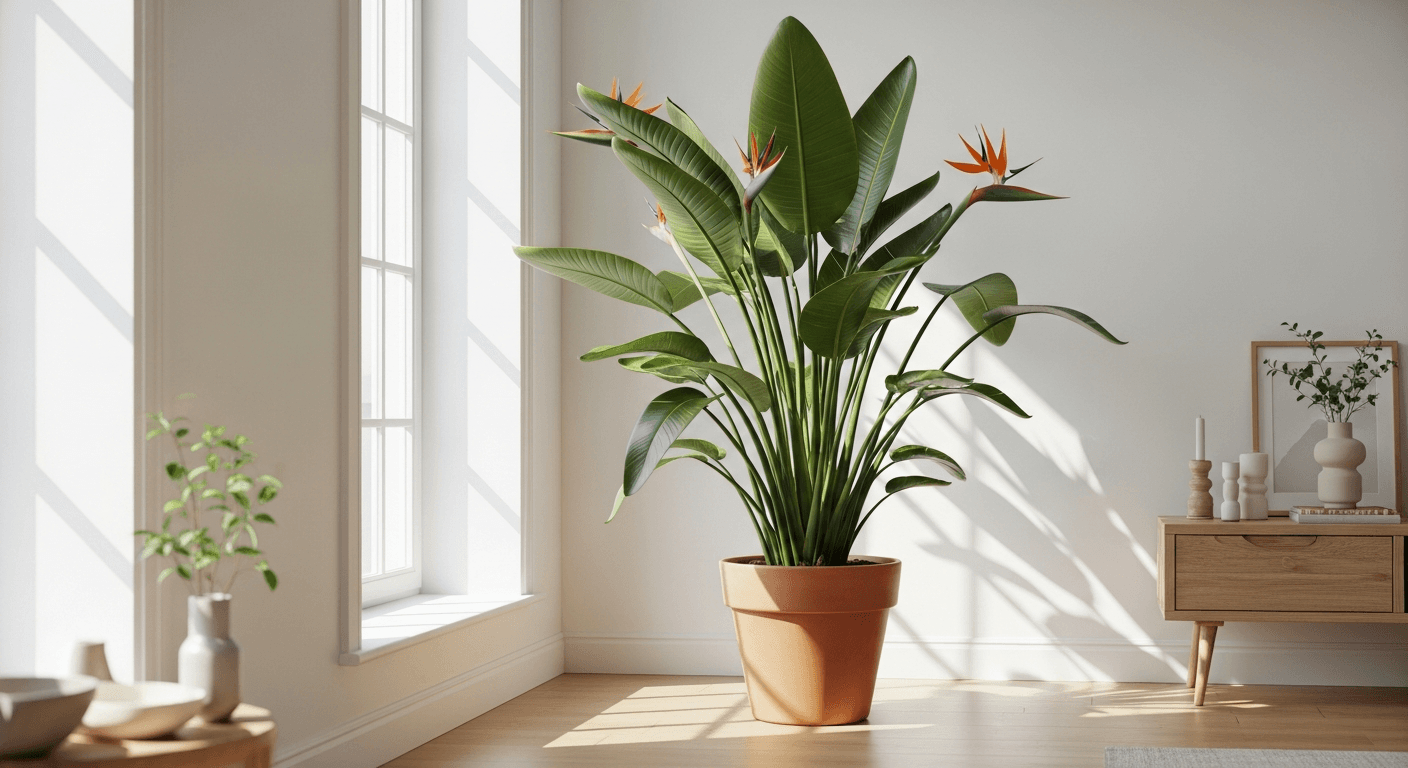
Bird of Paradise (Strelitzia): Care, Light and How It Blooms
Strelitzia (bird of paradise) care: lots of bright light, watering, why the leaves split naturally, and how to get it to bloom indoors. Full guide.
Trouble with your plant?
AI diagnosis