Money Tree: The Braided Trunk and What It Needs
Care for the money tree (Pachira aquatica): light, watering, the braided trunk, why its leaves turn yellow and whether it's safe for pets.
In this article
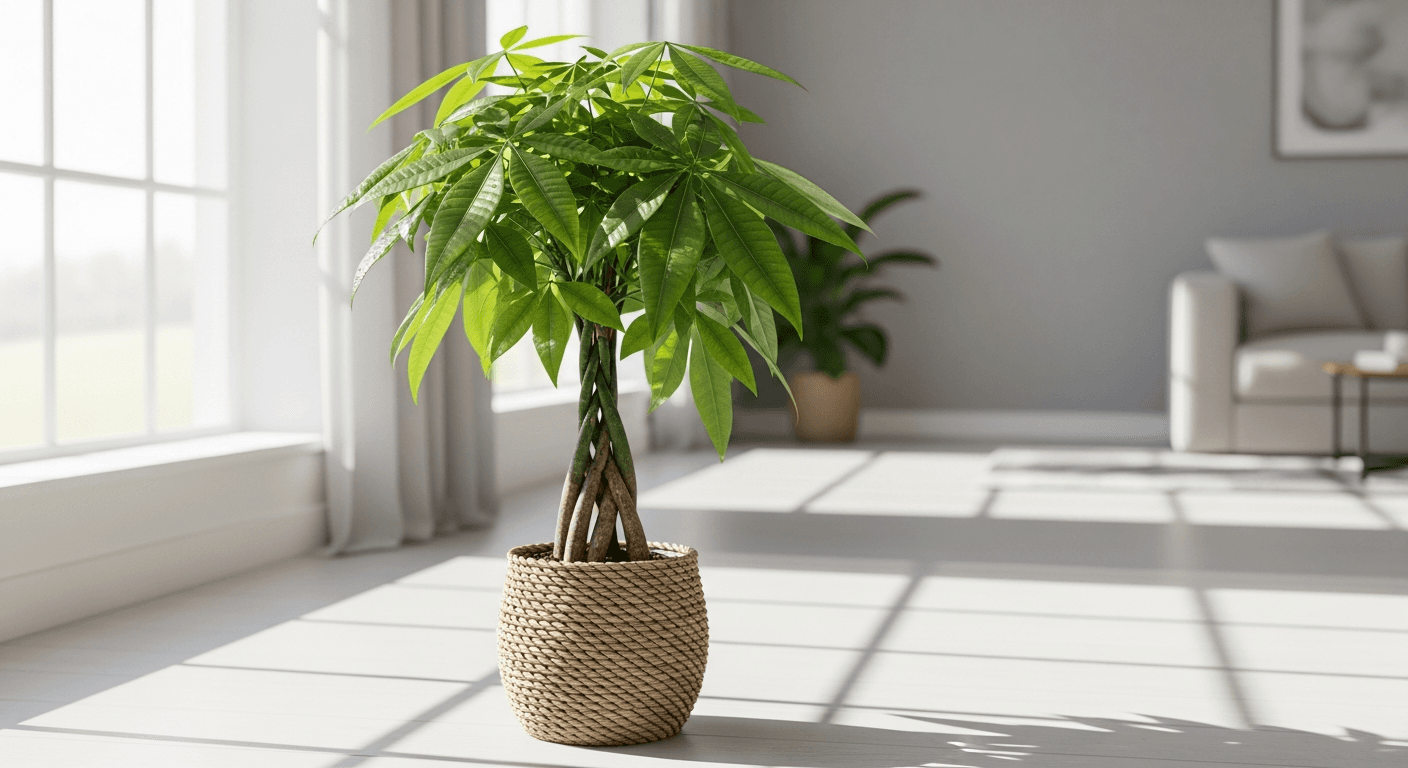
The Pachira aquatica, popularly known as the money tree, is a highly decorative houseplant thanks to its braided trunk and its crown of glossy, palm-like green leaves. It's said to bring good luck — but for me the best part is that it pairs that exotic look with very manageable care. And a huge plus: it's non-toxic, so it fits perfectly in homes with pets.
Origin and the braided trunk
It comes from the wetlands of Central and South America. The signature braided trunk isn't natural: several young, flexible stems are woven together at the nursery and stay braided as they thicken. It's purely decorative and doesn't harm the plant. So a braided Pachira is really several plants sharing one pot.
Is your plant looking off and you are not sure why?
Free AI diagnosisBasic care, point by point
Light
| Light level | Result |
|---|---|
| Bright indirect (filtered) | Firm leaves and healthy growth ✅ |
| Some shade | Grows more slowly |
| Harsh midday sun | Scorches the leaves |
Rotate the pot every few weeks so it grows evenly, since it tends to lean toward the light. See the light guide.
Watering
Here's the trick with the money tree: despite a scientific name (aquatica) that hints at water, in a pot it hates being waterlogged.
- Water when the top 2 inches of soil are dry.
- In spring and summer, roughly every 7-10 days.
- In winter, space waterings out much further.
The number-one mistake with this plant is overwatering. Always empty the saucer after watering; standing water rots the base. The method is in the watering guide.
Humidity and temperature
It appreciates medium-to-high humidity, in keeping with its tropical origin (see the humidity guide). Keep it between 65 and 80 °F (18-27 °C), away from cold drafts. If the air is very dry from heating, group plants together.
Why the leaves turn yellow
This is the most common question about this plant. The usual causes are:
- Overwatering: the number-one cause; leaves yellow and drop, and the base goes soft.
- Too little light: weak growth and pale leaves.
- A change of spot: it often drops a leaf or two while adjusting, which is normal.
If you see lots of yellow leaves at once, go through the yellow leaves guide and check for root rot.
Soil and repotting
Use a well-draining mix: a quality all-purpose soil with perlite. Repot every 2 years in spring, into a slightly larger pot with drainage holes. Don't jump to a much bigger pot all at once, since excess soil holds water.
Feeding
During spring and summer, feed every 3-4 weeks with a balanced liquid fertilizer diluted to half strength. In autumn and winter, stop feeding.
Can I separate the braided trunk?
Yes, but carefully. Since it's several plants, at repotting you can try to separate them by untangling the roots; some may break. If you just want to keep the braid tidy, prune the leaves and guide the growth. For a fuller plant, pinch the tips: it'll branch.
Quick care table
| Care | Money tree |
|---|---|
| Light | Bright indirect |
| Water | When dry (2 in) |
| Humidity | Medium-high |
| Difficulty | Easy |
| Pets | Non-toxic ✅ |
Common problems
| Symptom | Likely cause | Fix |
|---|---|---|
| Yellow leaves | Overwatering | Let it dry; check drainage |
| Brown, crispy leaves | Very dry air or too much sun | Raise humidity; move off sun |
| Soft stems at the base | Rot from waterlogging | Cut back on water immediately |
| White cotton / webbing | Mealybugs or spider mites | Check undersides and treat |
| Leans to one side | Reaching for light | Rotate the pot |
Is it pet-safe?
Good news: the Pachira aquatica is considered non-toxic to dogs and cats, making it a great choice if you have animals at home (it's among the pet-safe plants). Even so, discourage chewing to keep the plant intact. It's also an excellent office plant.
With bright light, careful watering and a free-draining soil, the money tree will grow healthy and lush for many years. Yours looking off? Try the AI diagnosis tool.
Related articles
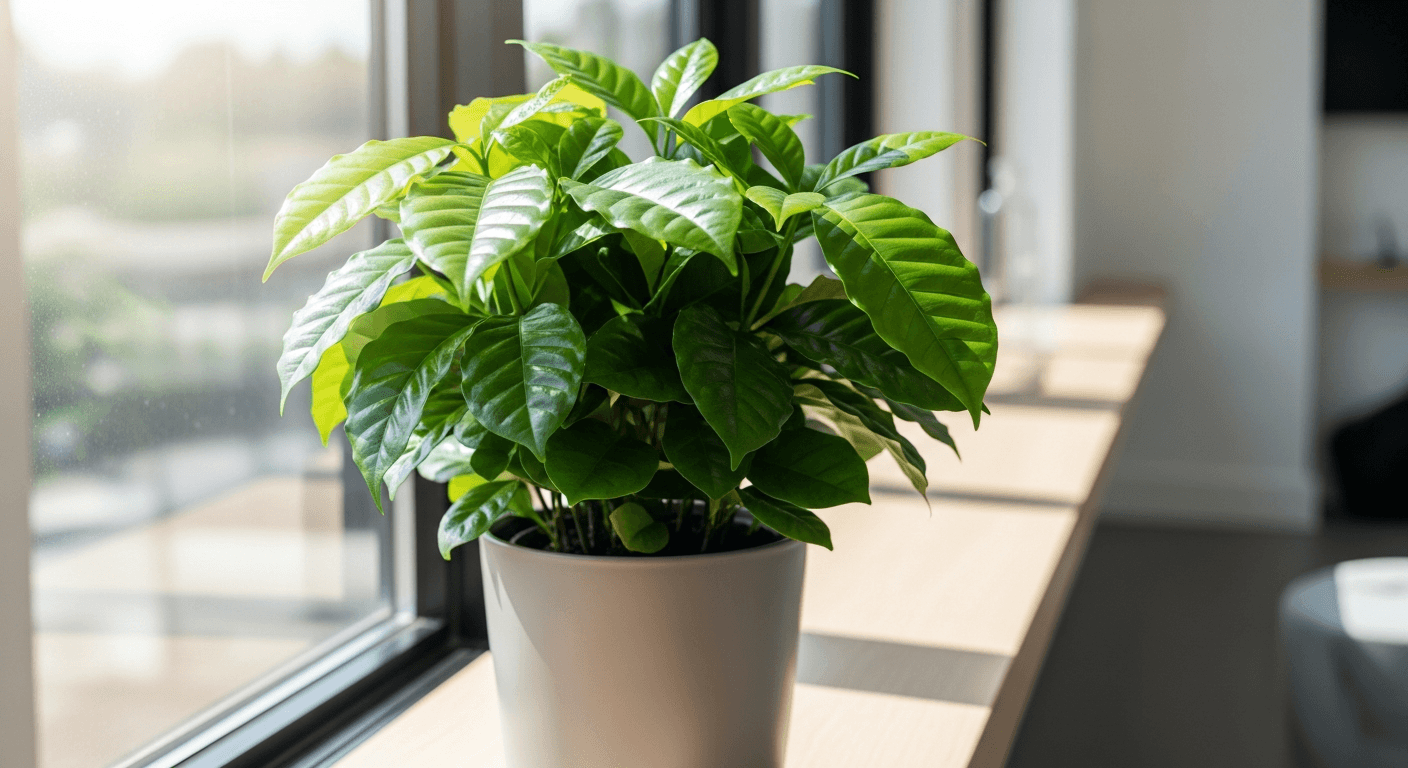
Coffee Plant Care: Growing Coffea at Home
Coffee plant (Coffea arabica) care as a houseplant: bright indirect light, humidity, watering, and whether you can really harvest your own coffee beans.
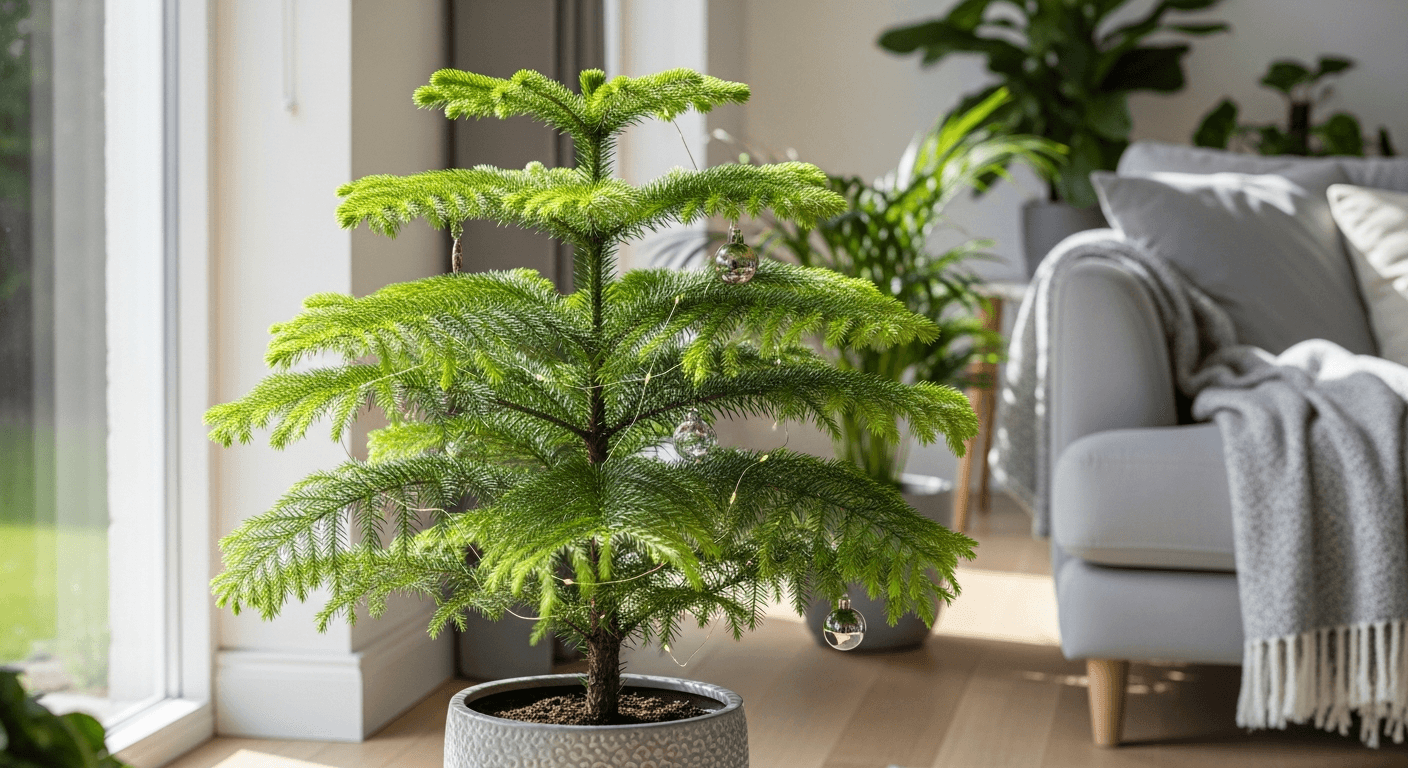
Norfolk Island Pine Care: The Living Christmas Tree
Norfolk Island pine (Araucaria heterophylla) care: light, watering, humidity and why its branches turn brown and drop. The living indoor Christmas tree guide.
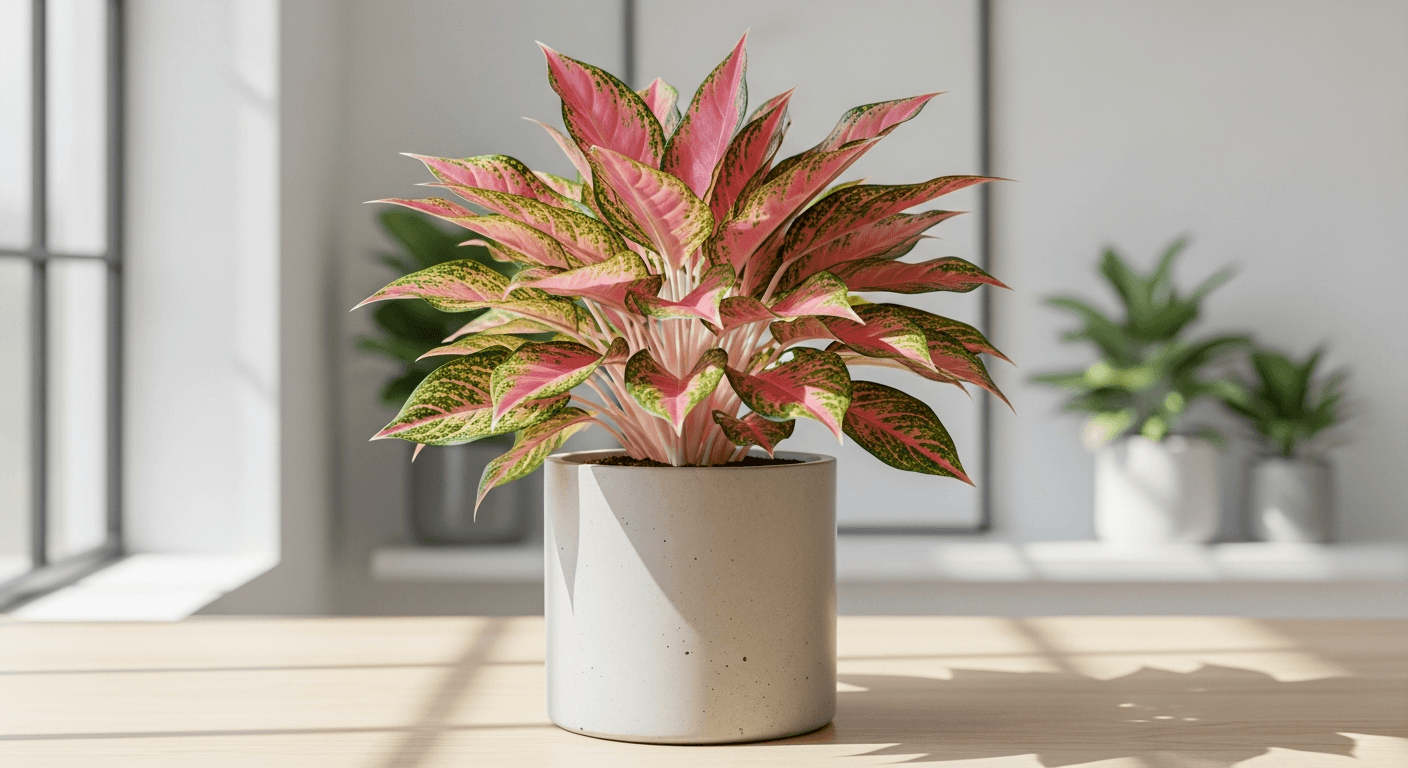
Aglaonema (Chinese Evergreen): The Complete Care Guide
Care guide for the Aglaonema or Chinese evergreen: light for the pink varieties, watering, humidity, propagation by division and its toxicity to pets.
Trouble with your plant?
AI diagnosis