Prayer Plant: The One That Folds Its Leaves at Night
Care for the maranta or prayer plant: water quality, humidity, medium indirect light, why its leaves curl, and the fact that it's safe for pets.
In this article
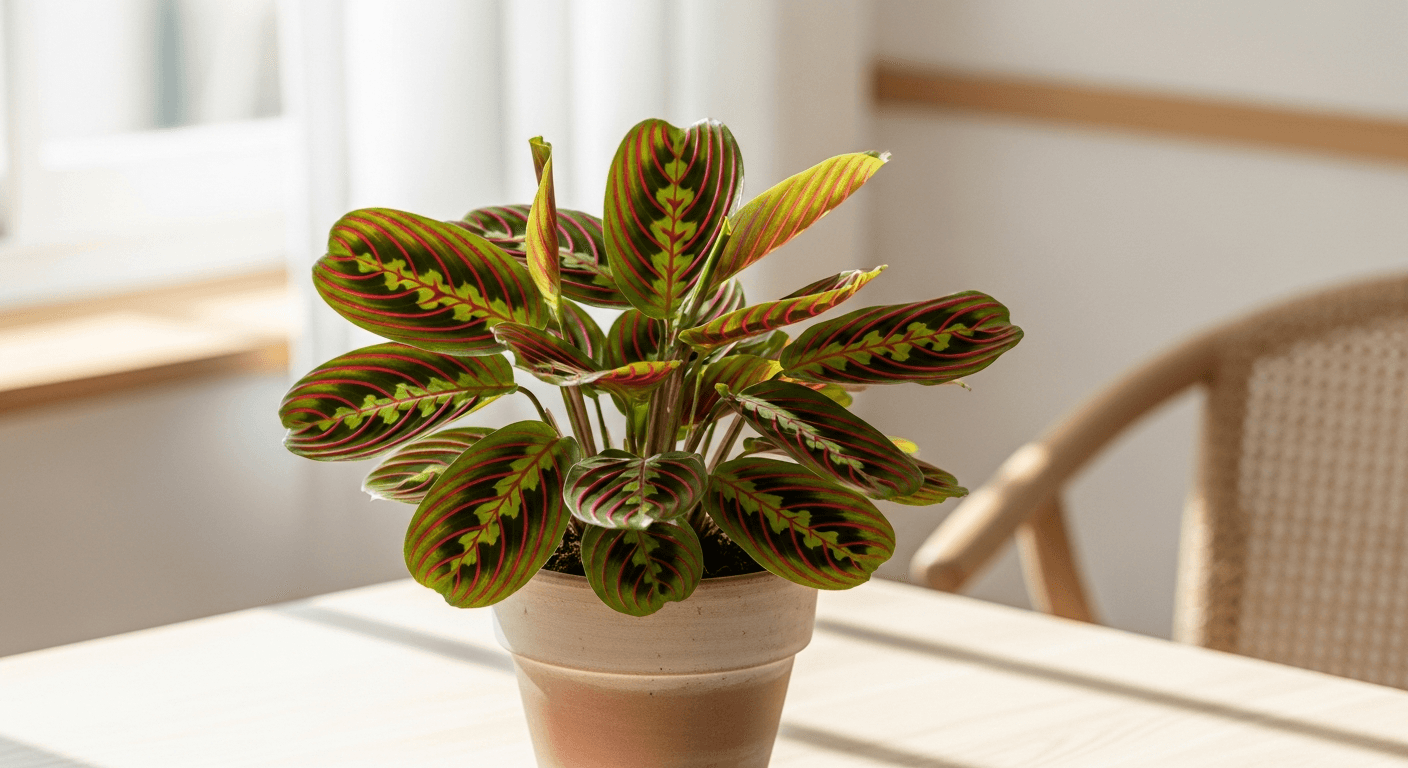
The maranta (Maranta leuconeura), known as the prayer plant, is one of the most fascinating foliage plants. Its leaves, marked with red or pink veins over green, fold upward at dusk like hands in prayer and open again at dawn. That movement, called nyctinasty, is a real spectacle.
The leaf movement
The leaves move thanks to water-filled joints at their base called pulvini. By day they open to capture light; at night they close. If your maranta stops moving, it's usually a sign of too little light or water stress.
Is your plant looking off and you are not sure why?
Free AI diagnosisBasic care, point by point
Light
- Ideal: medium to bright indirect light, but filtered.
- Tolerates: some shade better than most plants.
- Avoid: direct sun, which bleaches and scorches its decorative leaves.
Water quality: the key detail
The maranta is sensitive to chlorine, fluoride and the lime in tap water, which cause brown tips and edges.
- Use filtered water, rainwater, or tap water left to stand for 24 hours.
- Keep the soil slightly moist, never soggy.
- Water at room temperature.
Humidity and temperature
It's tropical and needs high humidity to look its best. Below 50% you'll see dry edges. Raise humidity by grouping plants, using a humidifier, or a pebble tray with water. Keep it between 65 and 79 °F, away from cold drafts.
Why the leaves curl
This is the most common question about this plant:
- Curled, dry leaves: lack of water or air that's too dry.
- Curled leaves but moist soil: possibly too much light or overwatering.
- Brown edges: almost always the lime or chlorine in the water.
If you can't identify the cause, try it in the AI diagnosis tool to settle the matter.
Soil and repotting
Use an airy mix that holds some moisture: coco coir or peat with perlite. Repot every 1-2 years in spring. It's a good time to divide the plant and propagate it.
Upkeep
- Feed every 3-4 weeks in spring and summer, diluted to half strength.
- Wipe dust off the leaves with a soft damp cloth.
- Remove yellow or badly damaged leaves at the base.
Quick care table
| Care | Maranta |
|---|---|
| Light | Medium indirect, filtered (tolerates low light) |
| Water | Slightly moist soil; lime-free water |
| Humidity | High (60%+) |
| Difficulty | Medium |
| Pets | Non-toxic ✅ |
Is it toxic?
No. The maranta is safe for dogs and cats (it's among the pet-friendly plants), a big plus if you share your home with pets.
If you love decorative foliage, don't miss its cousins: the calathea, with showier leaves, and the colorful fittonia, which share much of the same care.
With quality water, high humidity and indirect light, the maranta will open and close its leaves every day and become one of your favorite plants.
Related articles
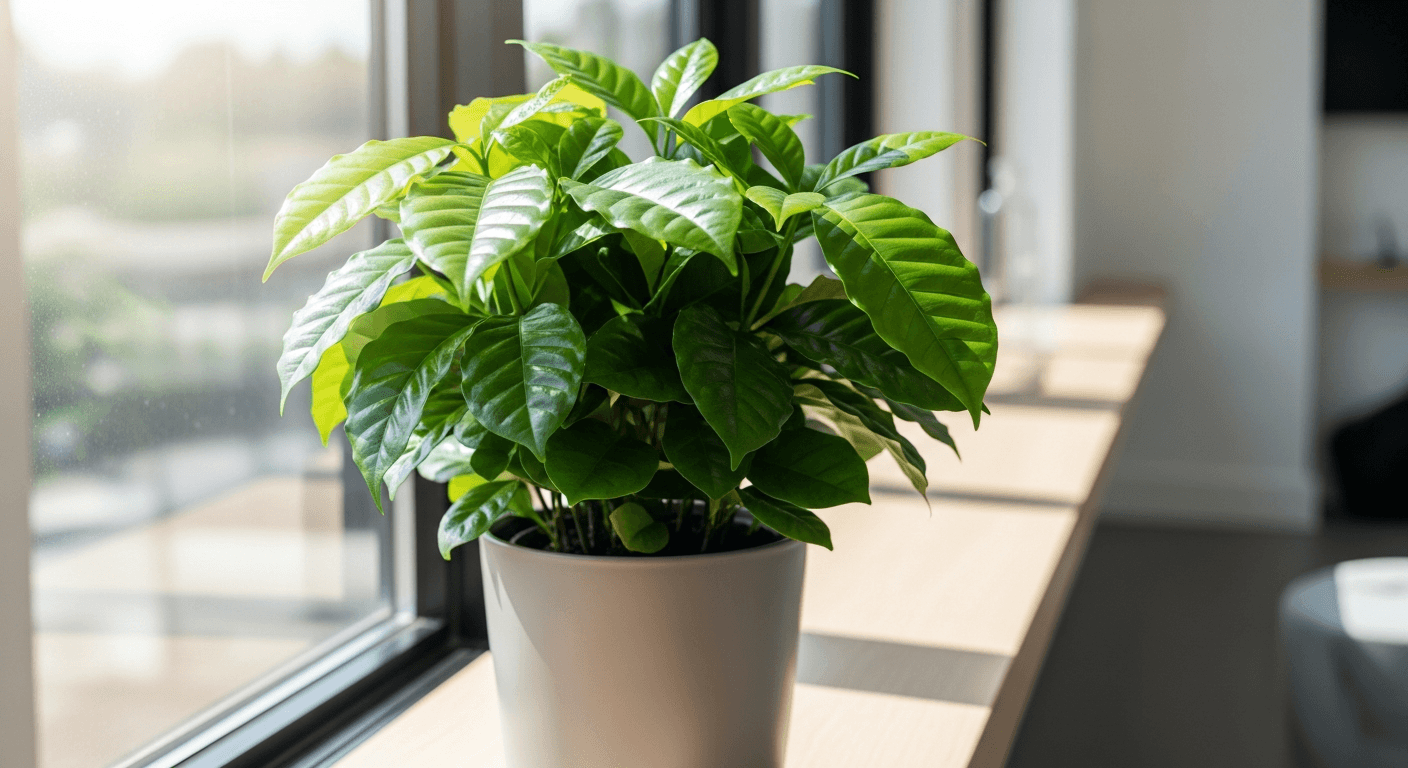
Coffee Plant Care: Growing Coffea at Home
Coffee plant (Coffea arabica) care as a houseplant: bright indirect light, humidity, watering, and whether you can really harvest your own coffee beans.
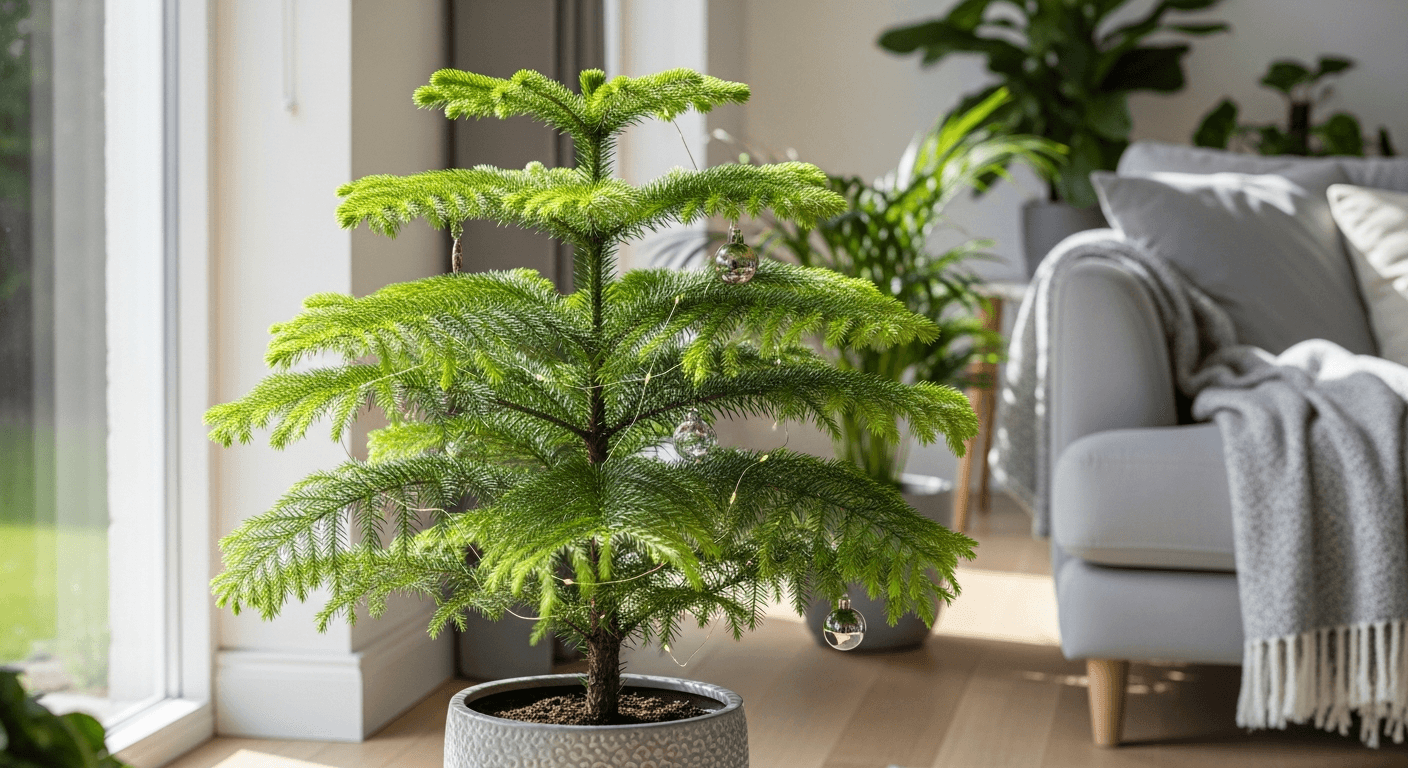
Norfolk Island Pine Care: The Living Christmas Tree
Norfolk Island pine (Araucaria heterophylla) care: light, watering, humidity and why its branches turn brown and drop. The living indoor Christmas tree guide.
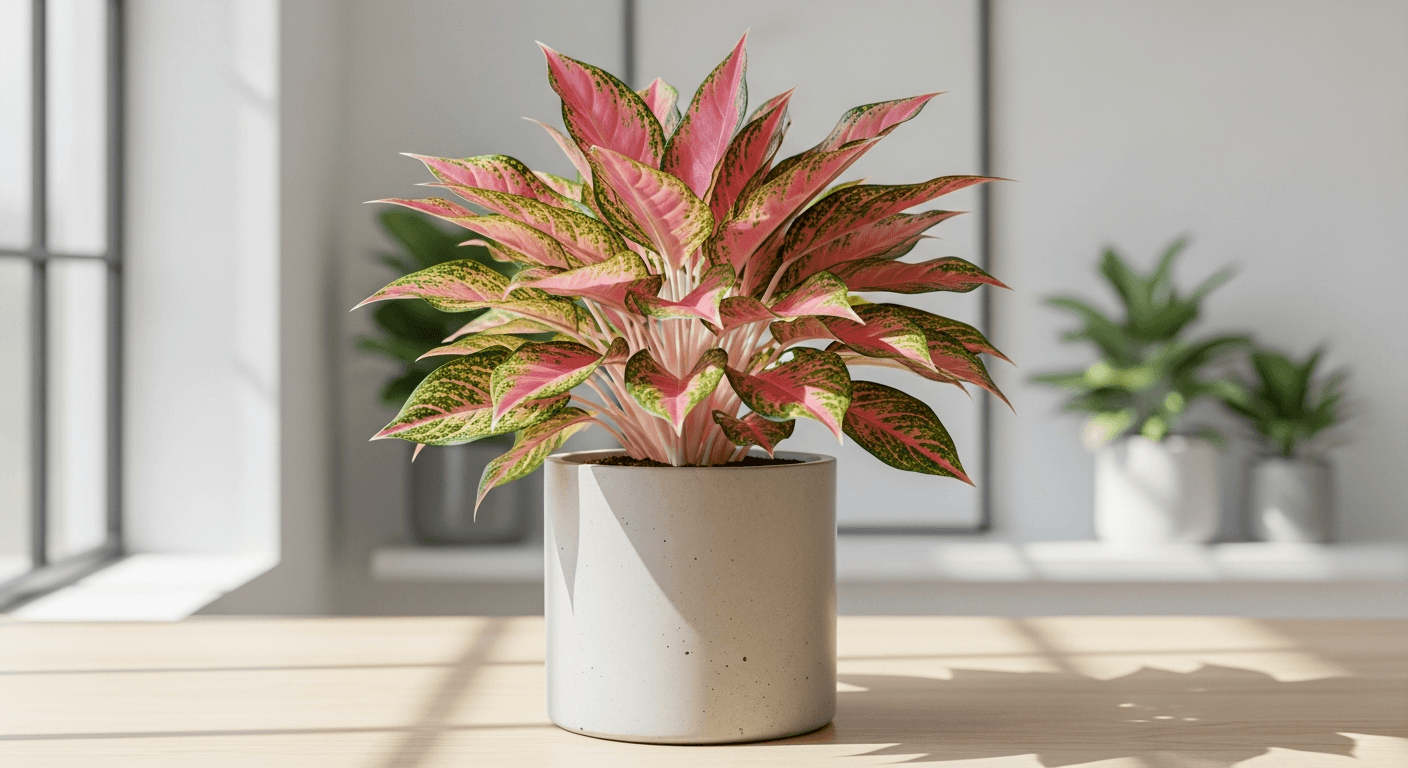
Aglaonema (Chinese Evergreen): The Complete Care Guide
Care guide for the Aglaonema or Chinese evergreen: light for the pink varieties, watering, humidity, propagation by division and its toxicity to pets.
Trouble with your plant?
AI diagnosis