Fiddle Leaf Fig: Why It Drops Leaves and How to Stop It
Fiddle leaf fig (Ficus lyrata) care: light, watering, why it drops leaves and how to get it to grow tall and bushy. The elegant diva, demystified.
In this article
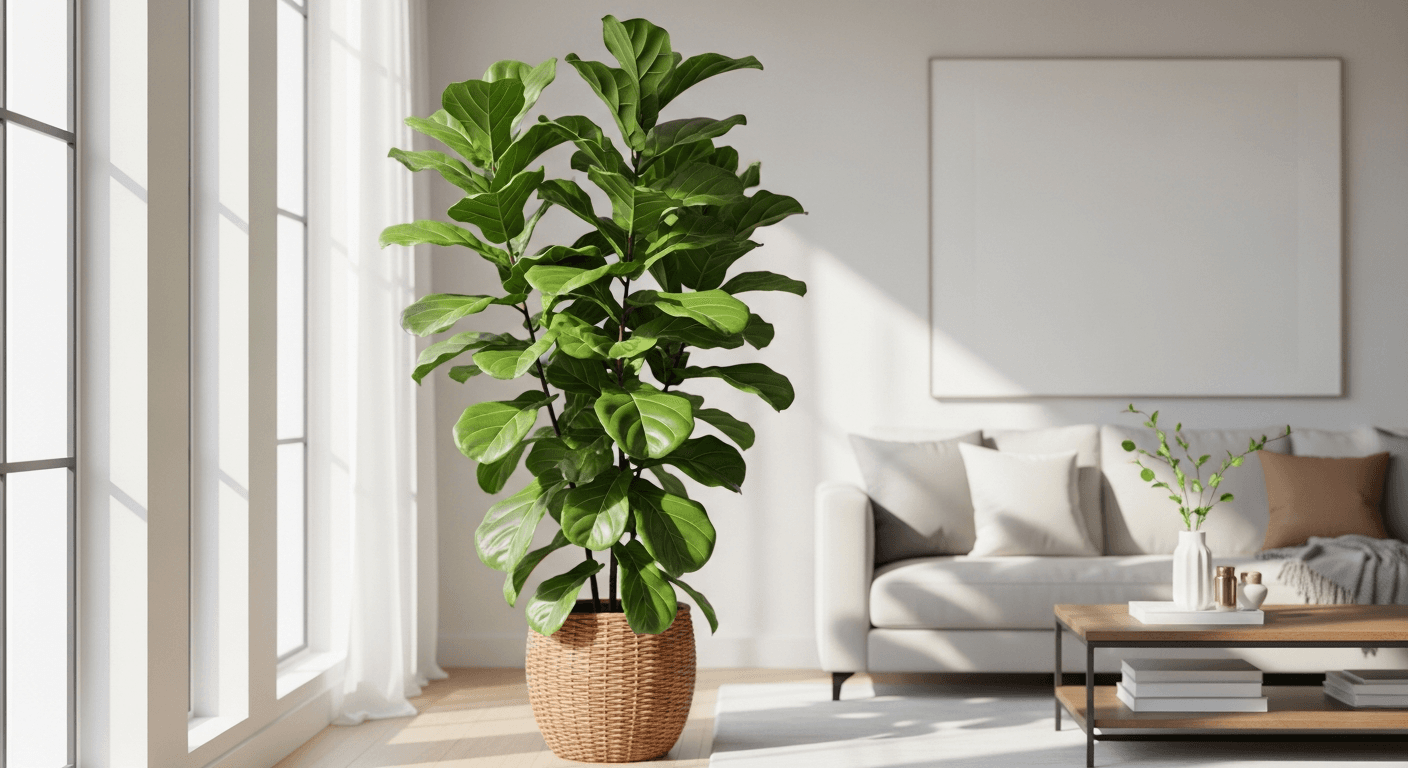
The fiddle leaf fig (Ficus lyrata) is the most photographed houseplant on Instagram: its huge violin-shaped leaves look stunning in any room. But it has a "dramatic" reputation: it hates change and, when something's off, it drops leaves. The good news, and what I want to prove in this guide, is that it's stable and happy once you grasp one idea: it hates change and loves routine.
The key: stability and light
The fiddle leaf hates abrupt changes in location, watering or temperature. In the wild it's a huge tree from West Africa that gets tons of light; at home, what it needs most is very bright indirect light next to a window. Once you find its ideal spot, don't move it: every change costs it weeks of adjustment, and it often pays with dropped leaves. Internalize this and 80% of problems disappear.
Is your plant looking off and you are not sure why?
Free AI diagnosisBasic care, point by point
Light
| Light level | Result |
|---|---|
| Very bright indirect (by an E/W window) | Big new leaves and a stable plant ✅ |
| Some gentle morning sun | Well tolerated |
| Dark corner | Slow growth, leaf drop (mistake #1) |
| Harsh midday sun | Scorches the leaves |
Rotate the pot a quarter turn each week so it grows straight and doesn't lean toward the light. See the light guide.
Watering
Water when the top 1-2 inches of soil are dry, thoroughly, until it runs from the drainage holes, then let it drain. It's usually once a week in summer and much less in winter. It's very sensitive to overwatering (brown spots in the center of the leaf) and to total drought (dry edges and leaf drop). The finger method is your best ally: regularity matters more than amount.
Why it drops leaves (the million-dollar question)
Almost always a change or stress. Run through this list:
- You just bought or moved it: it's acclimating; give it 2-4 weeks untouched.
- Irregular watering: too much (dark central spots) or drought (crispy edges).
- Cold draft or dry heat: keep it away from doors, AC and radiators.
- Too little light: it drops the lower leaves first.
The fix is almost always the same: set the light, watering and location and don't change them. One lost leaf isn't an emergency; several in a row mean something on that list is off.
Humidity and cleaning
It appreciates medium-high humidity (see the humidity guide). And a key detail for its big leaves: wipe them with a damp cloth every 1-2 weeks. Dust blocks the light it so badly needs; the method is in cleaning leaves.
Soil and repotting
Airy, free-draining soil (quality all-purpose + perlite). Repot every 1-2 years in spring, into a pot 1-2 inches larger, always with holes. Since it hates change, do it carefully and don't expect immediate growth after repotting; I'll guide you in how to repot a plant.
How to make it bushier
Left alone it grows as a vertical "stick." To get it to branch:
- Pinch/prune the tip: cut the apex above a node once it reaches the height you want; it'll sprout from the sides (latex will ooze; wipe it, it irritates skin).
- Notching: a small notch above a node can activate a side shoot without cutting the tip.
Varieties
- Standard lyrata: tall tree with giant leaves.
- Bambino: dwarf, smaller rounder leaves, more compact.
- Compacta: bushy habit with closer-set leaves.
Quick care table
| Care | Fiddle leaf fig |
|---|---|
| Light | Very bright indirect |
| Water | When dry (1-2 in), regular |
| Location | Fixed; hates change |
| Difficulty | Medium |
| Pets | Toxic sap |
Common problems
| Symptom | Likely cause | Fix |
|---|---|---|
| Brown spots in the leaf center | Overwatering / damaged roots | Let it dry; check root rot |
| Brown, dry edges and tips | Lack of water or very dry air | Water regularly; raise humidity |
| Lower leaf drop | Stress, change or low light | Set conditions; more light |
| Leans to one side | Reaching for light | Rotate it weekly |
| Grows like a stick | No pruning | Pinch the tip to branch |
Is it toxic?
Yes, the milky sap of ficus irritates the skin and is toxic to pets and children if chewed. Wear gloves when pruning and keep it out of reach. If you like its tree habit, its cousin the rubber plant is considerably more forgiving. It's also one of the best large indoor plants.
Give it bright light, a stable routine and a little patience, and the fiddle leaf will reward you with those sculptural leaves that made it famous. Yours dropping leaves? Try the AI diagnosis tool and rule out the cause.
Related articles
Coffee Plant Care: Growing Coffea at Home
Coffee plant (Coffea arabica) care as a houseplant: bright indirect light, humidity, watering, and whether you can really harvest your own coffee beans.
Indoor Jasmine Care: White, Fragrant Flowers
Indoor jasmine care: lots of bright light, a support to climb, watering, and the tricks to get those fragrant white blooms. Full houseplant guide.
Norfolk Island Pine Care: The Living Christmas Tree
Norfolk Island pine (Araucaria heterophylla) care: light, watering, humidity and why its branches turn brown and drop. The living indoor Christmas tree guide.
Trouble with your plant?
AI diagnosis