Tradescantia: Pinch Often or It Goes Bare
How to care for tradescantia (zebrina, purple heart): bright light for color, watering, pinching to keep it full, super easy propagation, and toxicity.
In this article
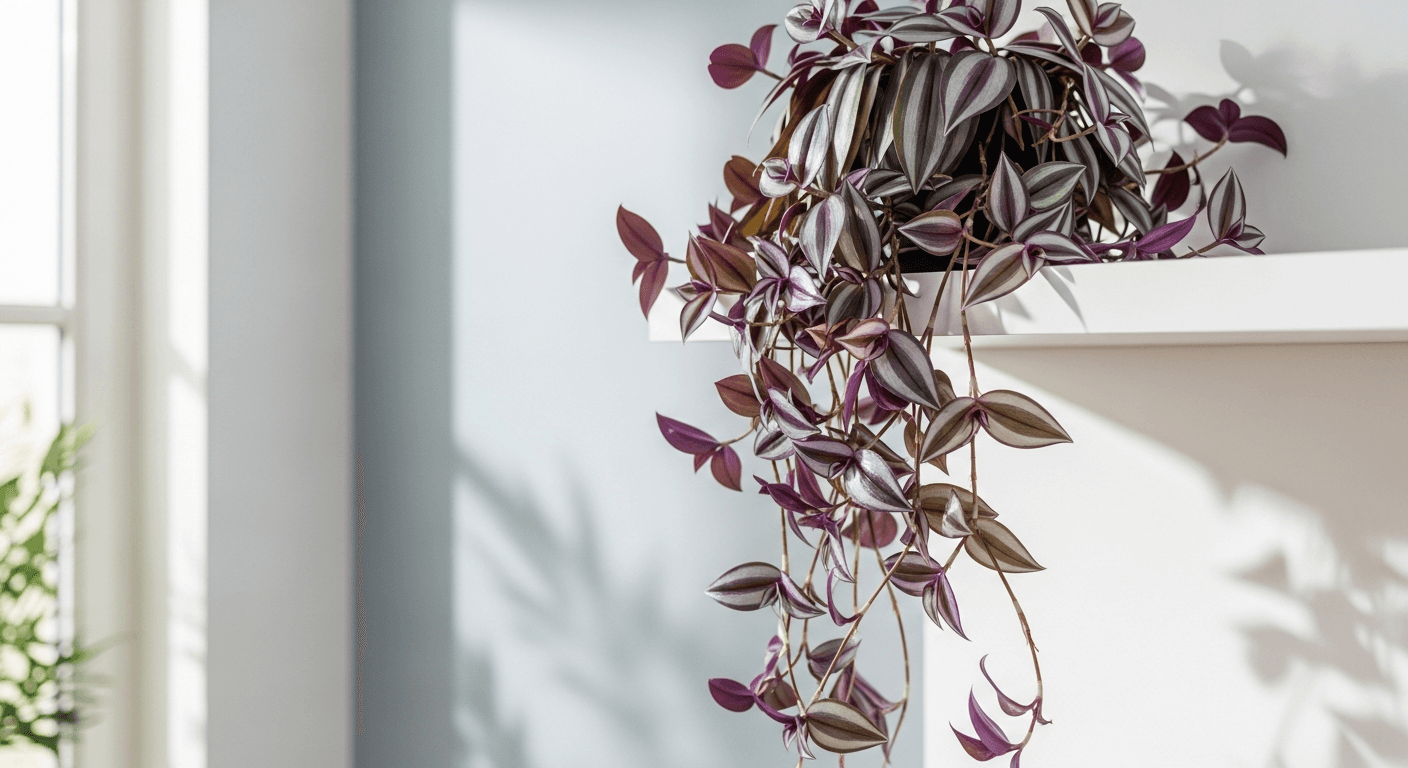
Tradescantia, known as the wandering dude or inch plant, is a fast-growing trailing plant with intensely colored leaves: purples, silvers, pinks and greens depending on the variety. It's one of the easiest plants to propagate and rewards simple care generously. If you want showy, fast results — and cuttings to spare for giving away — it's perfect to start with. It's one of my top picks among trailing plants.
Popular varieties
- Tradescantia zebrina: leaves with silver stripes and a deep purple underside.
- Tradescantia pallida (purple heart): long, deep-purple leaves, often grown outdoors.
- Tradescantia fluminensis / 'Nanouk': variegated in green, cream and pink, very trendy.
- 'Sitara' / 'Bubblegum': vibrant pinks and purples.
They all share very similar care, so this guide works for any of them.
Is your plant looking off and you are not sure why?
Free AI diagnosisBasic care, point by point
Light: the key to color
| Light level | Result |
|---|---|
| Very bright indirect + some gentle sun | Vivid purples and pinks ✅ |
| Medium light | Grows, but loses color intensity |
| Low light | Greener leaves, leggy stems, spaced-out nodes |
The more light (without harsh midday sun), the more vivid the colors. If it looks dull and "stretched," it almost always needs more light: move it closer to the window. See the light guide.
Watering
It likes soil that's slightly moist, more than a succulent would:
- Water when the top inch or two is dry.
- In spring and summer, that's usually 1-2 times a week.
- In winter, space the watering out.
Wrinkled or crispy leaves usually mean it's too dry; soft, translucent leaves mean overwatering. The finger method guides you.
Humidity, temperature and outdoors
It handles normal home conditions well, though it appreciates some humidity. Keep it above 54 °F (12 °C) and away from cold drafts. In mild climates it can live outdoors in light shade over summer, where the brighter light deepens its colors — just bring it back inside before the first cold nights, as it doesn't tolerate frost.
Soil and pot
All-purpose soil with good drainage and a pot with holes. It grows so fast that it isn't fussy; what matters is that it drains so the base doesn't rot.
How to keep it full
Tradescantia tends to go bald on top if it isn't pruned, leaving long stems with leaves only at the tips. The fix is pinching: snip the tips often, just above a node. Each cut makes the stem branch and the plant grow denser. Don't toss the trimmings — use them to propagate and fill the same pot.
Propagation: nearly foolproof
It's one of the most rewarding plants to multiply:
- Cut a 3-4 inch (8-10 cm) stem with several nodes.
- Strip the lower leaves.
- Put it in water or straight into damp soil.
- In 1-2 weeks you'll have roots.
For a full pot, plant several cuttings together. Master the technique with our propagation guide.
Feeding and renewal
Because it grows fast, tradescantia appreciates feeding in peak season. From spring to summer, apply a balanced liquid fertilizer for foliage plants every 2-3 weeks, diluted. In winter, hold off.
Over time, even when well cared for, it tends to lose vigor and go woody at the base. The good news is that it renews itself: when it looks dull or too bare, take healthy tip cuttings, root them and replant. That way you always have a young, compact plant. It's one of the few houseplants worth "restarting" every year or two.
Quick care table
| Care | Tradescantia |
|---|---|
| Light | Very bright indirect (for color) |
| Water | Slightly moist soil |
| Growth | Very fast |
| Difficulty | Very easy |
| Pets | Mildly toxic |
Common problems
| Symptom | Likely cause | Fix |
|---|---|---|
| Bare center, leaves only at the tips | Too little light and no pinching | More light + pinch often |
| Dull, greener color | Too little light | Move it closer to the window |
| Soft, dark leaves at the base | Overwatering | Let it dry; improve drainage |
| Brown, crispy tips | Very dry air or soil too dry | Water regularly; some humidity |
| Woody, old base | Normal age | Renew with tip cuttings |
Is it toxic?
Yes, mildly. Its sap can irritate skin and is toxic to dogs and cats if chewed. Wash your hands after pruning and keep it out of pets' reach; if you have them, see pet-safe plants like the spider plant. Other easy, showy trailers are the pothos or the string of hearts.
Plenty of light for color, regular watering and frequent pinching: do that and you'll have a lush tradescantia — plus cuttings to spare for giving away. Yours looking off? Upload a photo to our AI diagnosis tool.
Related articles
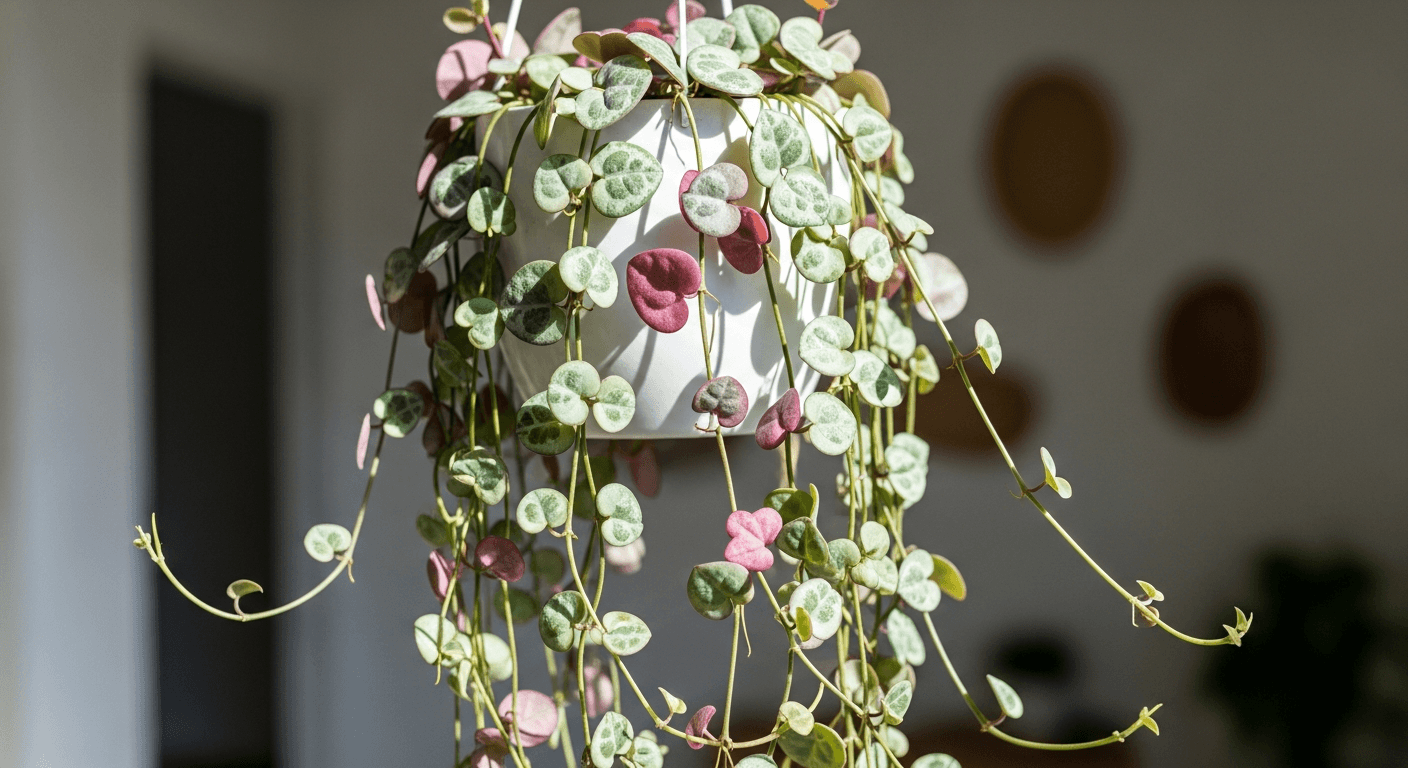
String of Hearts (Ceropegia woodii): Care and Propagation
String of hearts (Ceropegia woodii) care: bright light, semi-succulent watering, soil, super easy propagation and why it gets leggy. Full guide.
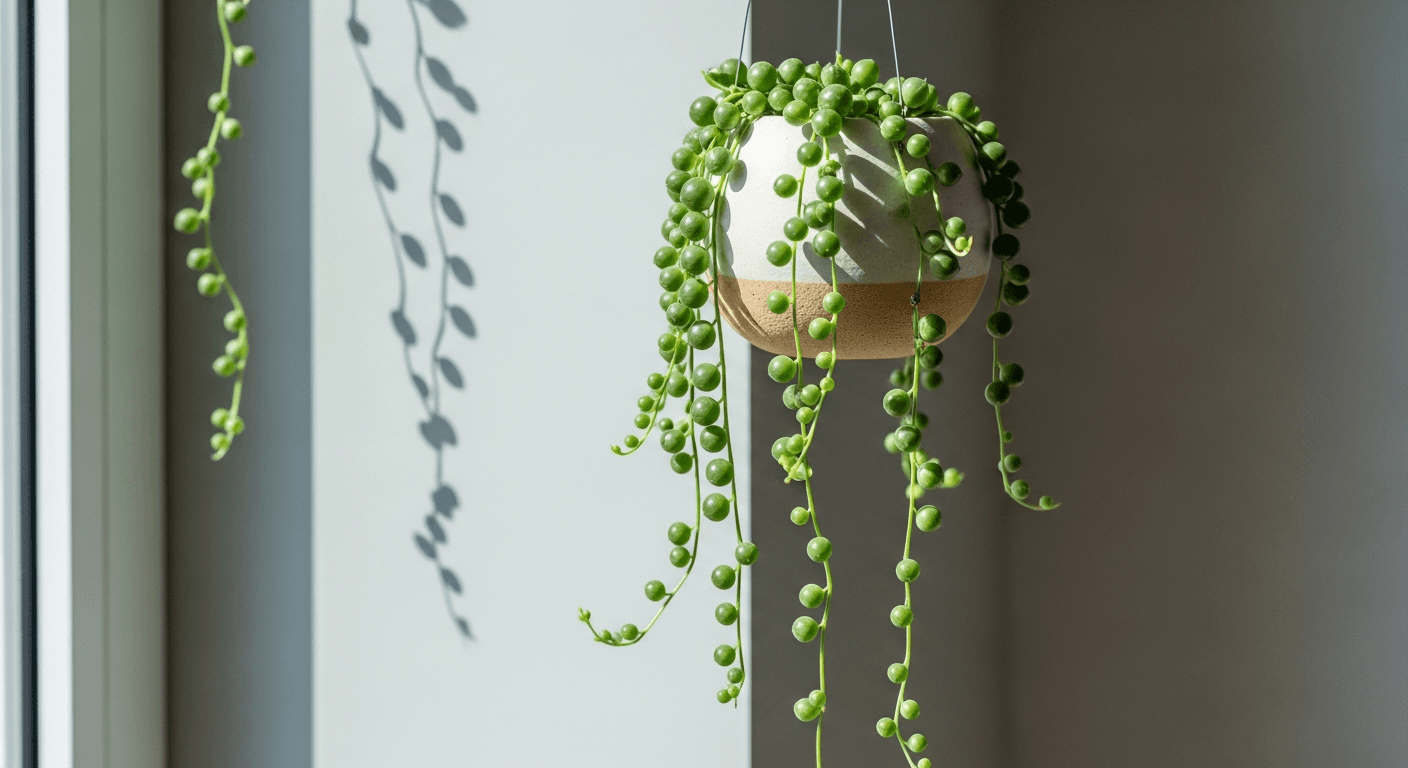
String of Pearls (Senecio): Care Guide
How to care for string of pearls (Senecio rowleyanus): bright light, careful watering so it doesn't rot, well-draining soil, easy propagation and toxicity.
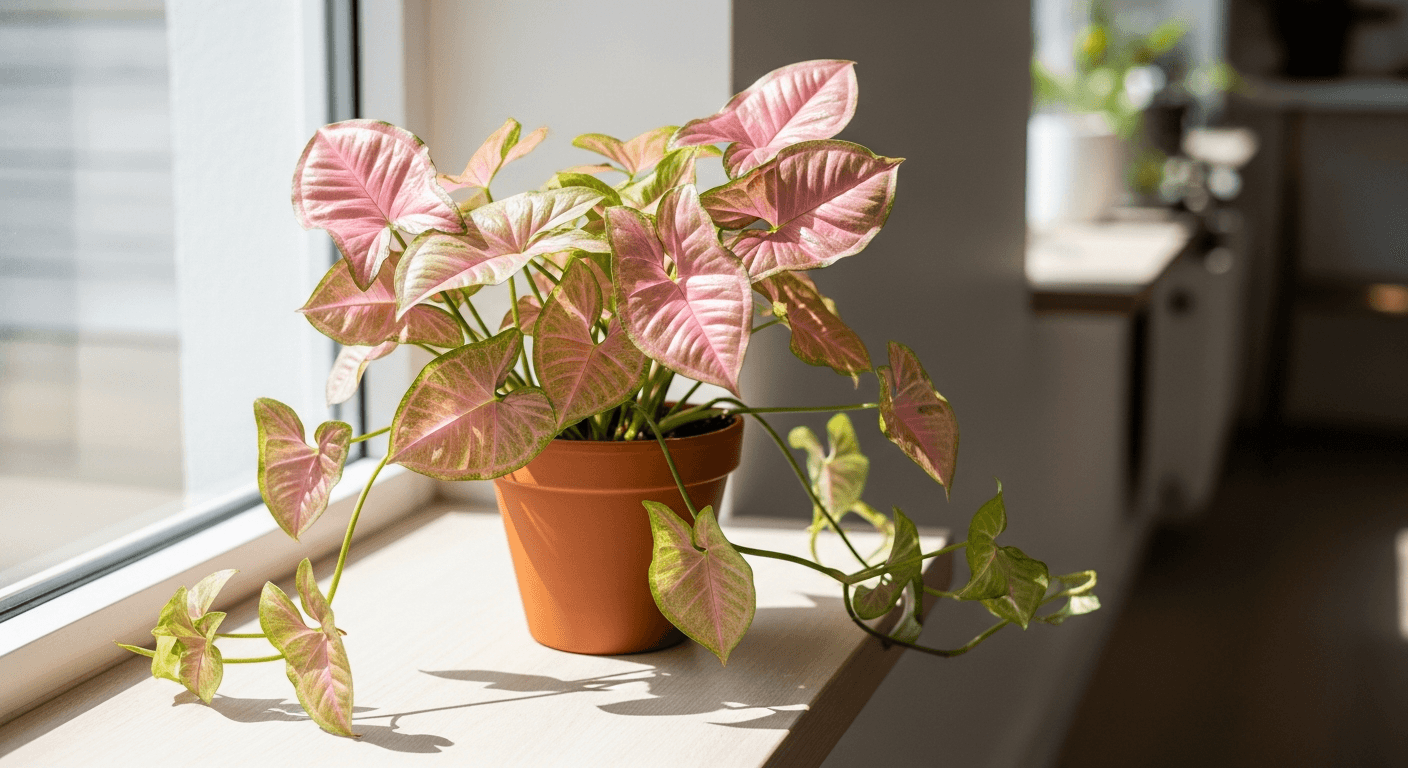
Syngonium (Arrowhead Plant): Care Guide
How to care for syngonium (arrowhead plant): light for variegation, watering, training it to climb or stay bushy, easy propagation, and toxicity to pets.
Trouble with your plant?
AI diagnosis