Phalaenopsis Orchid: Watering, Roots and Reblooming
Moth orchid (Phalaenopsis) care: how to water it without rot, light, what to do when the flowers fall, and how to get it to rebloom year after year.
In this article
The moth orchid (Phalaenopsis) is the best-selling orchid in the world and, despite its difficult reputation, one of the easiest once you realize it's not a normal plant: its roots live in the air, clinging to trees, not buried in soil. I lost a couple before that clicked; once it did, they bloomed for months and rebloomed year after year. Here's everything, no myths.
Why it's not a normal plant
In the wild, Phalaenopsis is epiphytic: it grows on the branches of tropical trees, with its roots dangling in the air and gripping the bark. It isn't a parasite; it just uses the tree as support and feeds on rain, humidity and falling debris. Understanding this explains everything: why it lives in bark rather than soil, why its roots need air, and why overwatering kills it.
Is your plant looking off and you are not sure why?
Free AI diagnosisWhy its pot is clear
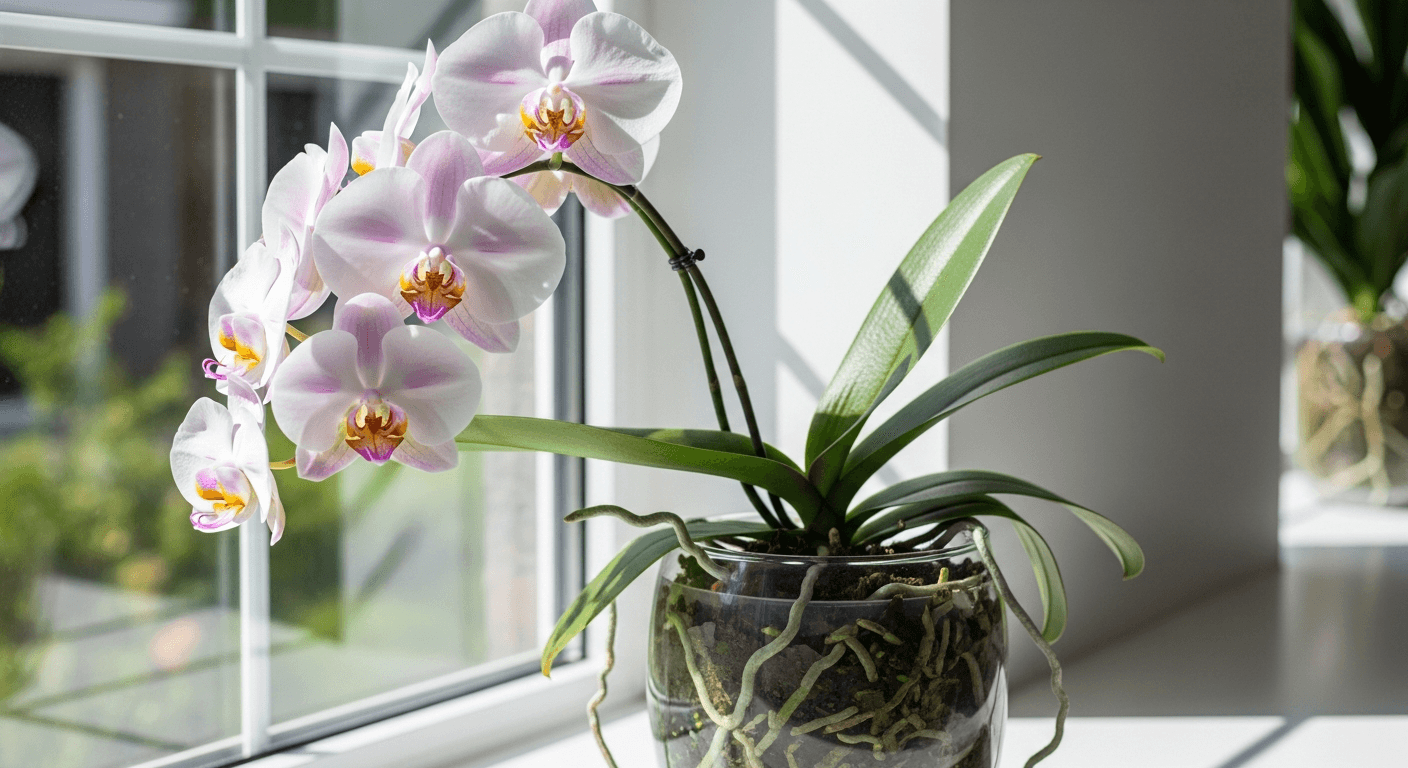
Its roots are photosynthetic (green when hydrated) and need air and some light. That's why they sit in bark inside a transparent pot: you can check their condition at a glance.
- Green/silvery, firm roots = healthy and hydrated.
- Brown, mushy, hollow roots = overwatered and rotting.
Basic care, point by point
Light
| Light level | Result |
|---|---|
| Bright indirect (E/W window with a sheer) | Blooming and light-green leaves ✅ |
| Medium indirect | Survives; blooms less |
| Direct sun | Scorches leaves: spots and soft patches |
If the leaves look very dark green, it lacks the light to bloom; if they have reddish tones, it's getting too much. Light is the number-one factor for reblooming. See the indoor light guide.
Watering: the mistake that kills orchids
90% of orchids die drowned, not thirsty. Forget the "ice cube" or "a little every day." The right method is soak-watering:
- Every 7-10 days, soak the pot (with the plant) in room-temperature water for 10-15 minutes.
- Drain it completely: never leave water at the bottom or pooled in the crown (the central rosette).
- Water again only when the roots are silvery and the bark is dry to the touch.
Never leave the pot in a saucer of water. Use rested or rainwater if yours is very hard. More technique in the watering guide.
Humidity, temperature and feeding
It's tropical: it appreciates 50-70% humidity (grouping plants or a humidifier helps, see humidity). Keep it between 65 and 80 °F (18-27 °C). Feed with an orchid-specific fertilizer at half strength, every 2-3 waterings during growth (more in how to fertilize).
When the flowers fall
Don't throw it out! That's its normal cycle, and the plant is still alive. Look at the flower spike:
- If it's still green and firm, cut it an inch above a lower node (the second or third): it sometimes pushes a new spike from there.
- If it's brown and dry, cut it at the base; the plant will save energy for a completely new spike.
How to get it to rebloom
The classic trigger for Phalaenopsis is a nighttime temperature drop. In fall-winter, a few weeks with nights of 60-65 °F (15-18 °C) (for example, near a cool window) usually induce a new spike. Combine that with good indirect light and orchid fertilizer, and you'll get flowers again.
Repotting: when and into what
Repot every 2-3 years or when the bark breaks down (it holds water and rots roots). Do it after flowering: remove the old bark, trim dead roots (brown and hollow) with sterilized scissors, and replant in orchid bark, never in regular soil.
Quick care table
| Care | Phalaenopsis |
|---|---|
| Light | Bright indirect, no direct sun |
| Water | Soak every 7-10 days |
| Medium | Bark, not soil |
| Difficulty | Medium |
| Pets | Non-toxic ✅ |
Common problems
| Symptom | Likely cause | Fix |
|---|---|---|
| Wrinkled, soft leaves | Roots damaged by overwatering | Unpot, check roots, replant |
| Brown, hollow roots | Rot from waterlogging | Trim the rot; water less |
| Yellow leaves | Overwatering or direct sun | Adjust watering and spot |
| No blooms | Too little light or no temp drop | More light + cool nights |
| White cotton on leaves | Mealybugs | Wipe with alcohol; isolate |
| Aerial roots outside the pot | Normal in epiphytes | Don't bury them |
Is it toxic to pets?
Good news: Phalaenopsis is considered non-toxic to dogs and cats, a rarity among flowering houseplants. Even so, keep them from chewing it so you don't spoil the blooms. For more safe options, see pet-friendly plants.
Soak-water it, give it good light and a little patience, and your orchid will reward you with spectacular blooms that return every year. Unsure how it looks? Upload a photo to the AI diagnosis tool and we'll point you the right way.
Related articles
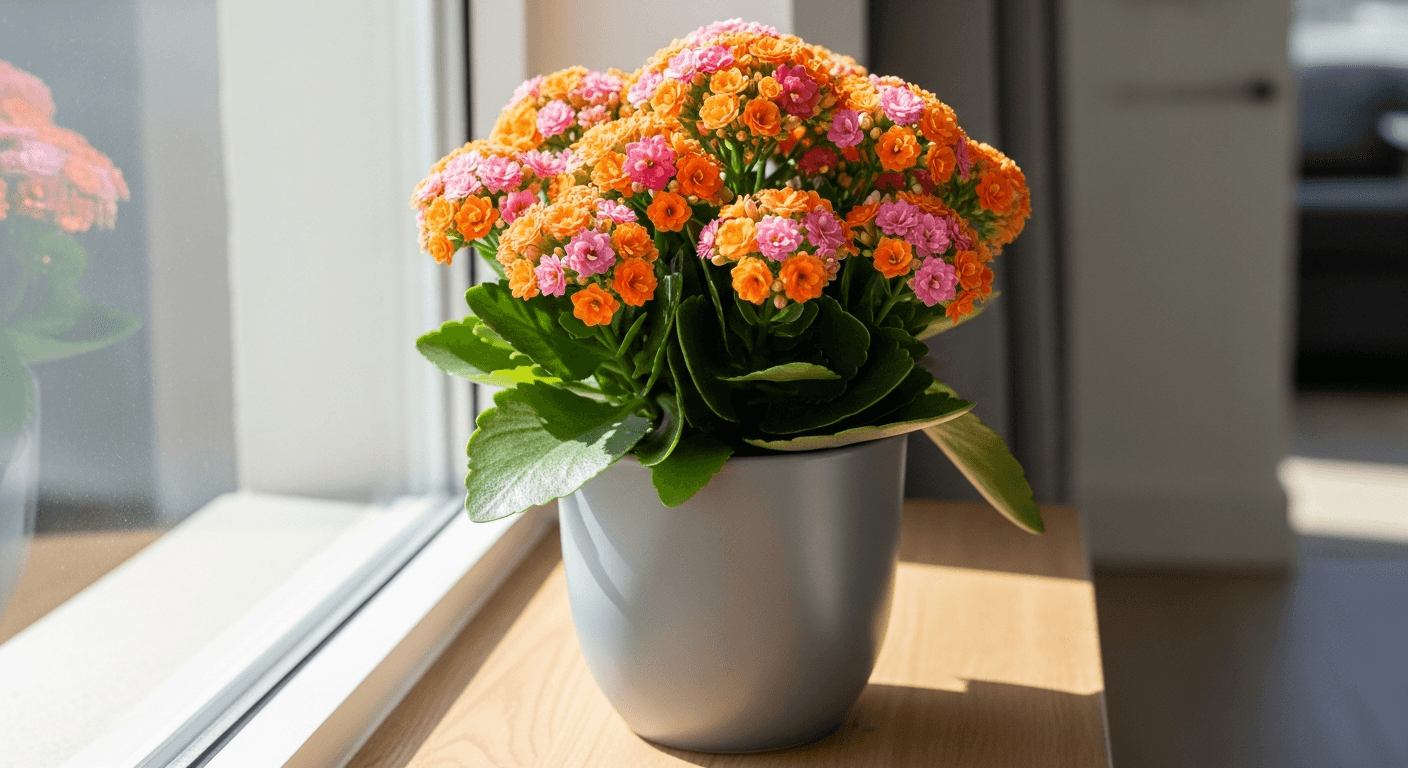
Kalanchoe: Care for the Succulent That Blooms All Year
Kalanchoe care: light, watering and the darkness trick to make it rebloom. A bright-flowering succulent that's easy and tough, ideal for beginners.
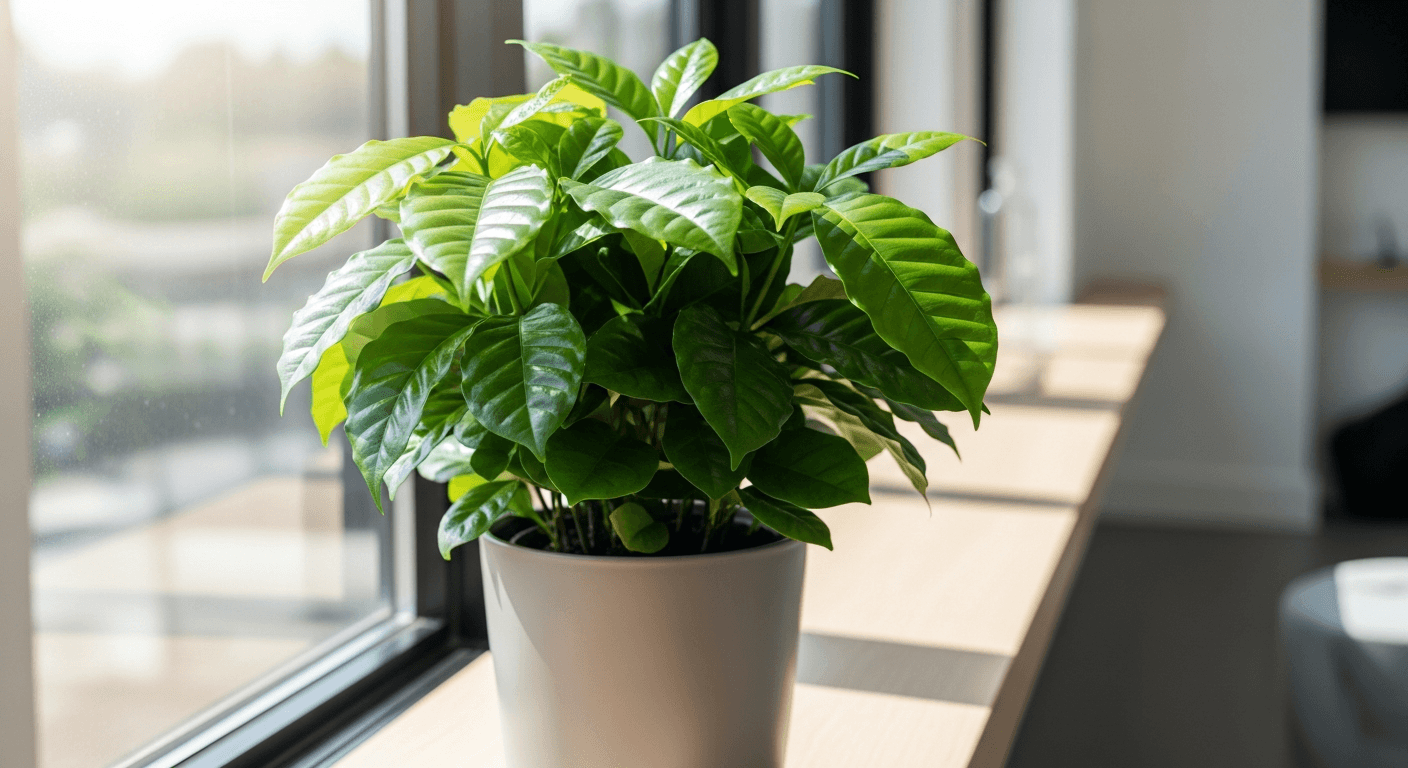
Coffee Plant Care: Growing Coffea at Home
Coffee plant (Coffea arabica) care as a houseplant: bright indirect light, humidity, watering, and whether you can really harvest your own coffee beans.
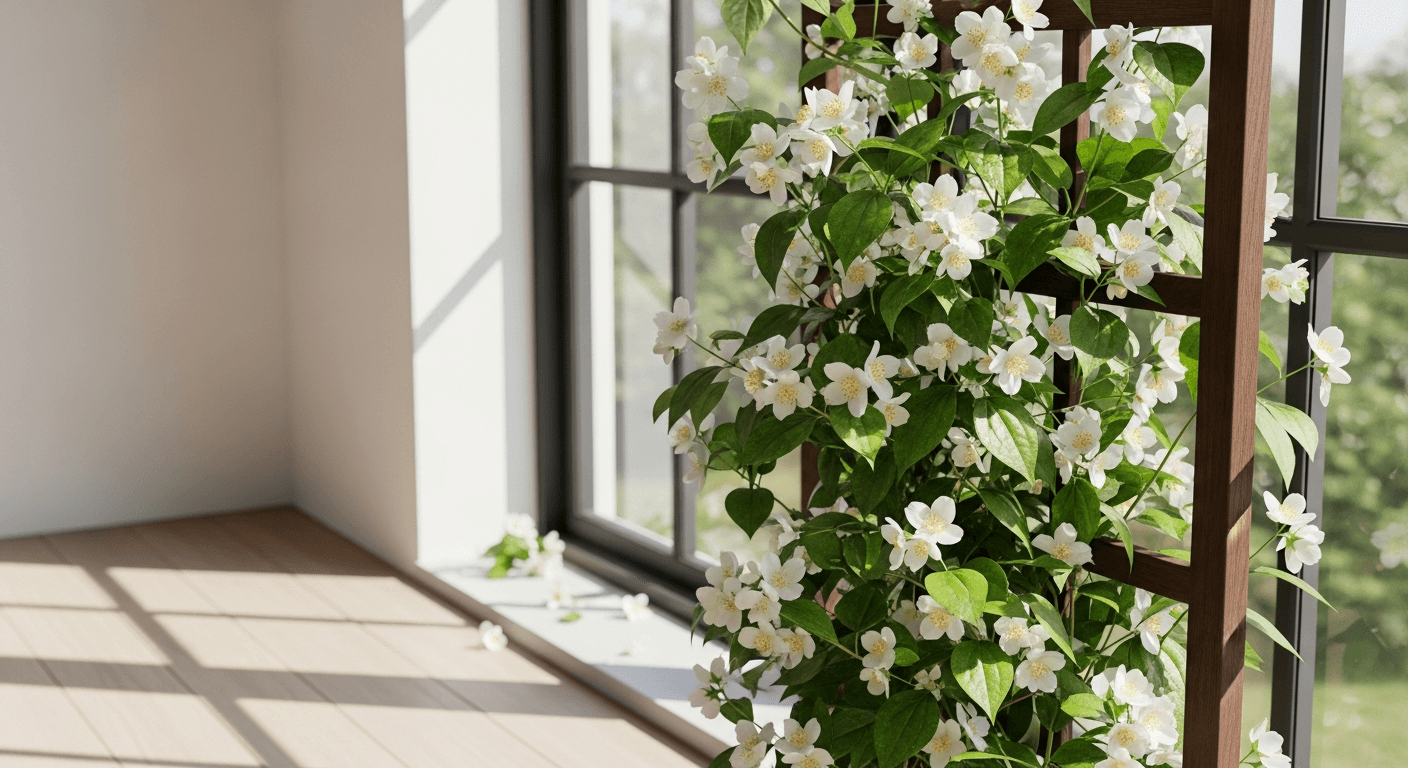
Indoor Jasmine Care: White, Fragrant Flowers
Indoor jasmine care: lots of bright light, a support to climb, watering, and the tricks to get those fragrant white blooms. Full houseplant guide.
Trouble with your plant?
AI diagnosis