Cyclamen: Keep It Cool and Water From Below
Cyclamen care so it blooms all winter: cool temperatures, light, watering from below to avoid crown rot, and how to handle its summer dormancy.
In this article
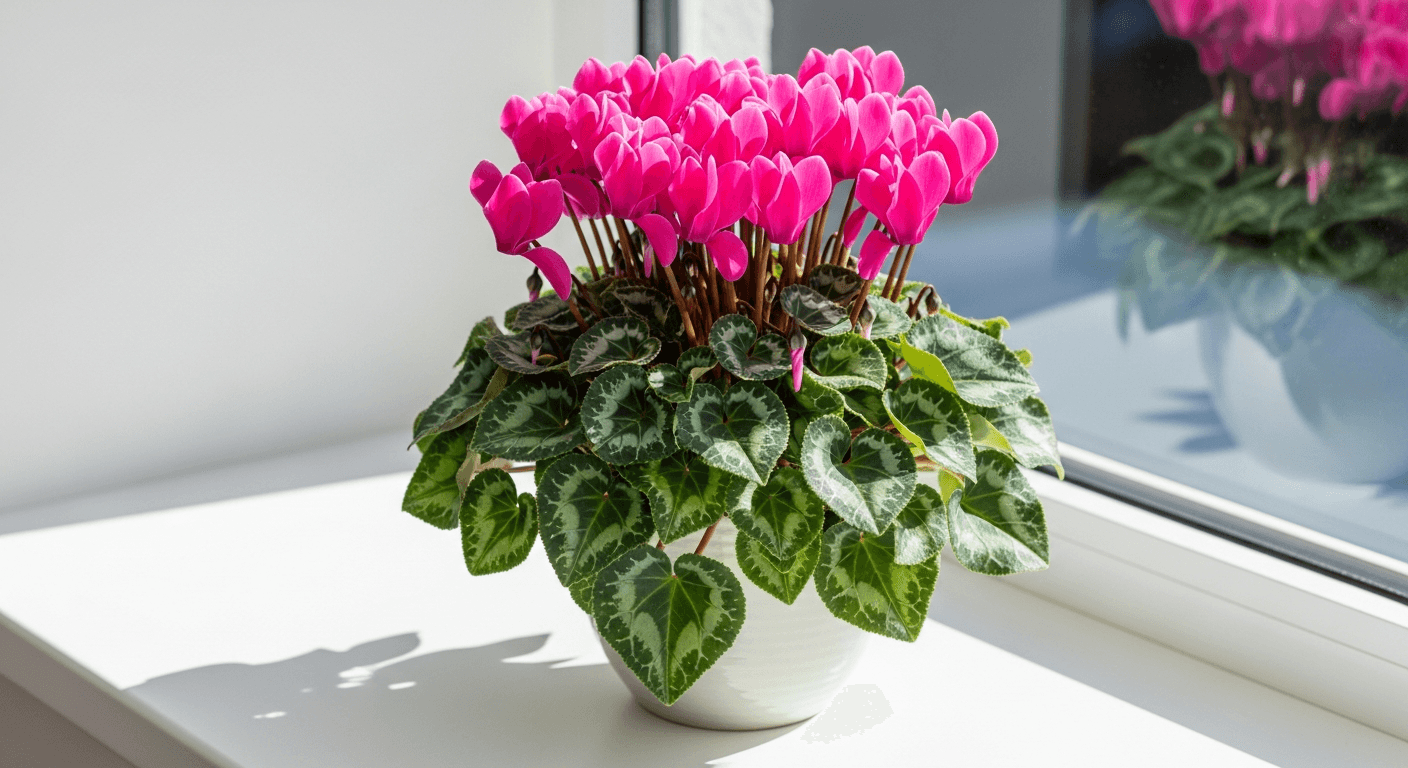
The cyclamen is the star of autumn and winter tables: it blooms just when almost everything else is resting, with upswept flowers in white, pink, magenta or red rising above heart-shaped leaves marbled with silver. It's a bit fussier than a foliage plant, but once you grasp its two basic rules — cool and careful watering — everything clicks.
Quick-care snapshot
- Light: bright indirect, no harsh direct sun.
- Watering: from below, when the soil feels dry to the touch.
- Temperature: cool, 50–60 °F (10–16 °C); hates heat.
- Bloom: autumn to spring; dormant in summer.
- Difficulty: medium. Toxicity: the tuber is toxic to pets.
Is your plant looking off and you are not sure why?
Free AI diagnosisOrigin and why it's a "winter" plant
The cyclamen (Cyclamen persicum) comes from the Mediterranean basin, where it grows and flowers in the cool, damp months and goes dormant through the dry summer. At home it keeps that rhythm: it typically blooms from autumn to spring and rests in summer. It isn't dying — it's just following its natural calendar.
Basic care, point by point
Temperature: the key to everything
This is the hardest thing to get right in a heated home. Cyclamen wants cool:
- Ideal: between 50 and 60 °F (10–16 °C).
- Hates heat: above 68 °F (20 °C) the flowers fade fast and the plant tends to yellow and go dormant early.
- Keep it away from radiators, heaters and direct heat.
A cool hallway or an unheated room near a window is the perfect spot.
Light
It needs bright indirect light. A bright window without harsh direct sun is ideal. In low light it flowers less and stretches.
Watering: always from below
Here's the most common mistake. The center of a cyclamen is a tuber with the crown of leaves right on top; if water sits there, it rots easily.
- Set the pot in a saucer with an inch or so of water.
- Let it soak up from the base for 15-20 minutes.
- Tip out the excess so it isn't left waterlogged.
Water this way when the soil feels dry to the touch, never wetting the crown or leaves. For more on getting watering right, our how to water indoor plants guide will help.
Keeping it in bloom
- Remove spent flowers by twisting and pulling them gently from the base of the stalk, don't cut them: this stops the rest from rotting.
- Pull off yellowing leaves the same way.
- A diluted liquid bloom fertilizer every 2-3 weeks during flowering prolongs the show.
Summer dormancy
When the heat arrives, the cyclamen yellows and stops blooming. That's normal. You have two options:
- Let it rest: cut watering right back, remove the dry leaves and keep the tuber in its pot somewhere cool and dry. In autumn, start watering gradually again to wake it up.
- Many people treat it as a seasonal plant and replace it each year; both approaches are valid.
Common problems
- Yellow leaves in midwinter: almost always too warm or overwatered.
- Soft or moldy tuber: you've wet the crown; always water from below.
- Collapsing flowers: lack of water or air that's too warm.
If you're not sure what's wrong, upload a photo to our AI diagnosis tool. And if you like colorful plants for the cold months, take a look at the poinsettia.
Is it toxic?
Yes: the tuber is the most toxic part and is dangerous to pets if chewed. Keep it out of reach.
Give it cool air, light and watering from below, and your cyclamen will reward you with flowers for months — right when that color is most welcome.
Related articles
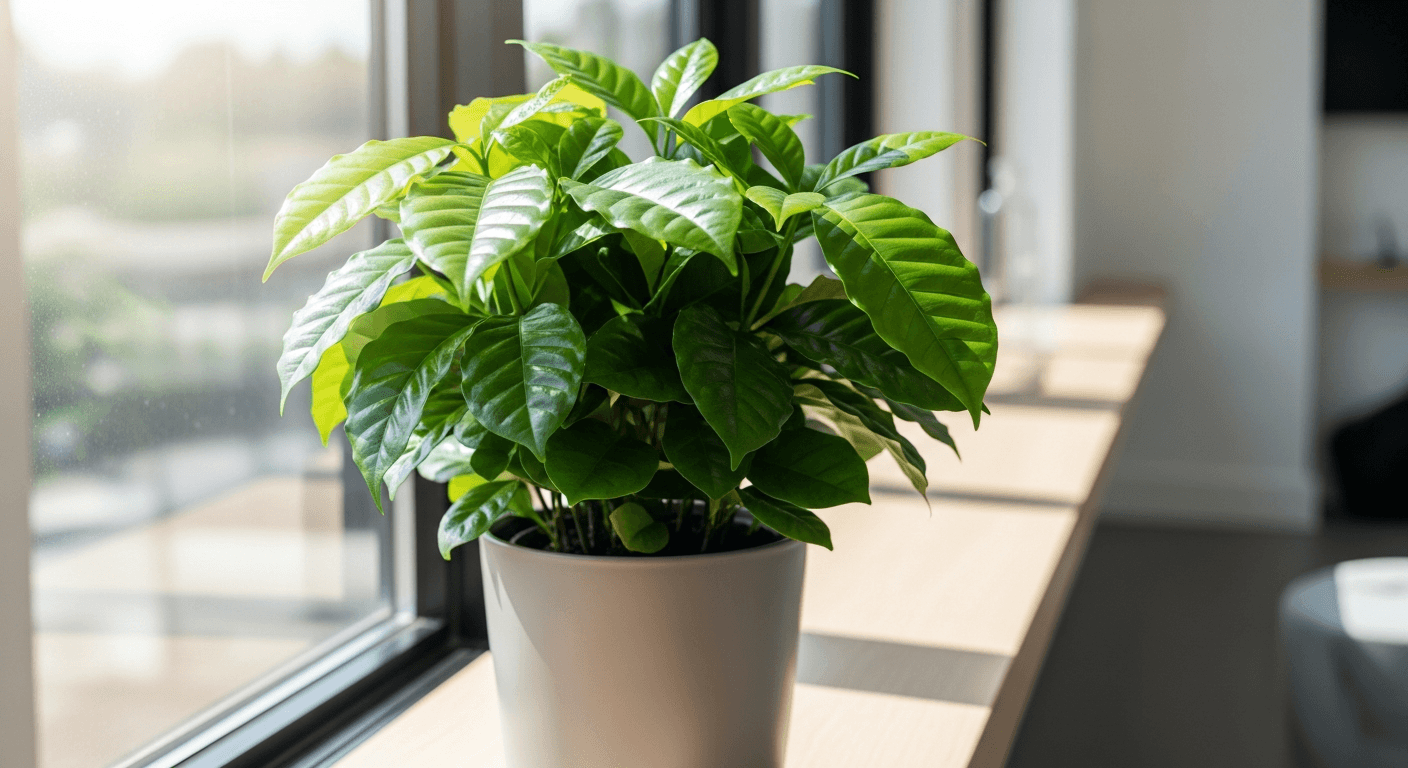
Coffee Plant Care: Growing Coffea at Home
Coffee plant (Coffea arabica) care as a houseplant: bright indirect light, humidity, watering, and whether you can really harvest your own coffee beans.
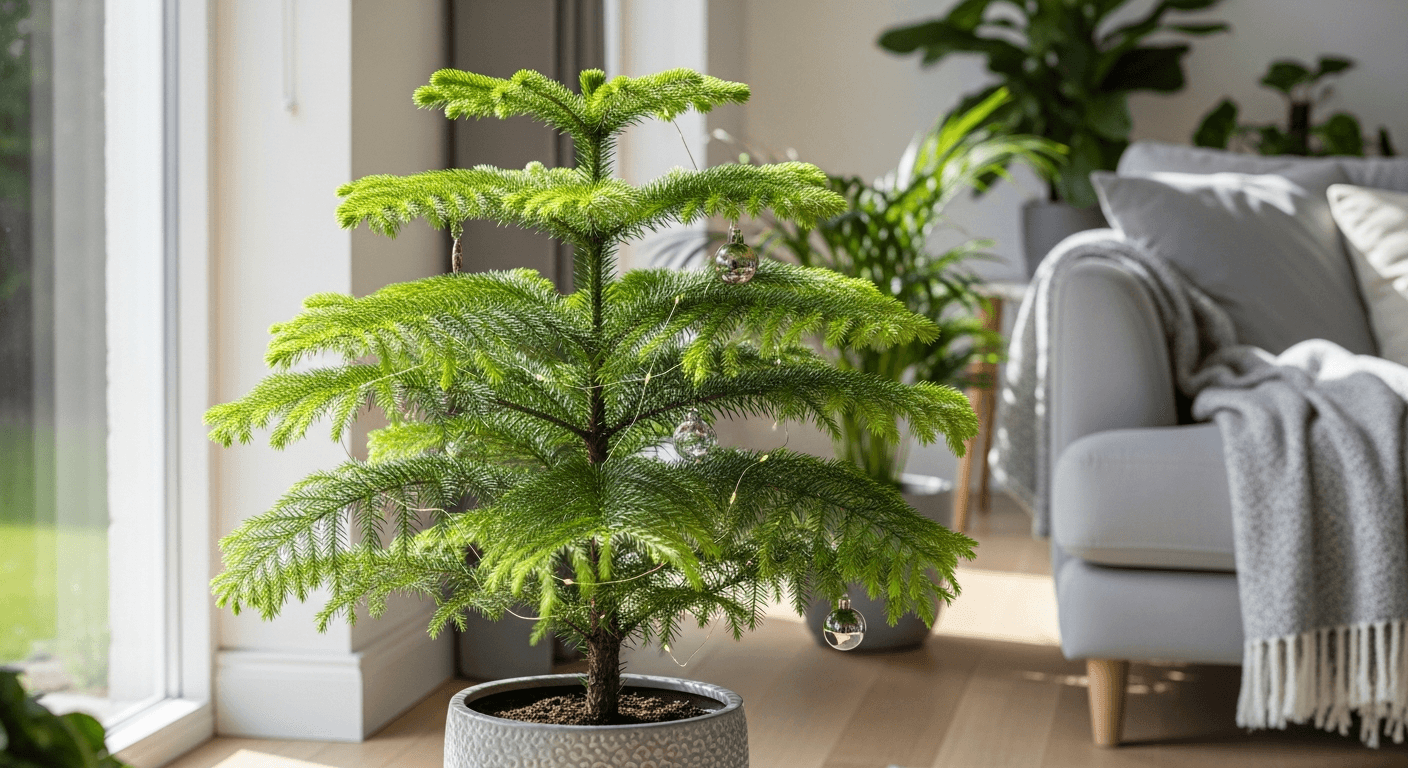
Norfolk Island Pine Care: The Living Christmas Tree
Norfolk Island pine (Araucaria heterophylla) care: light, watering, humidity and why its branches turn brown and drop. The living indoor Christmas tree guide.
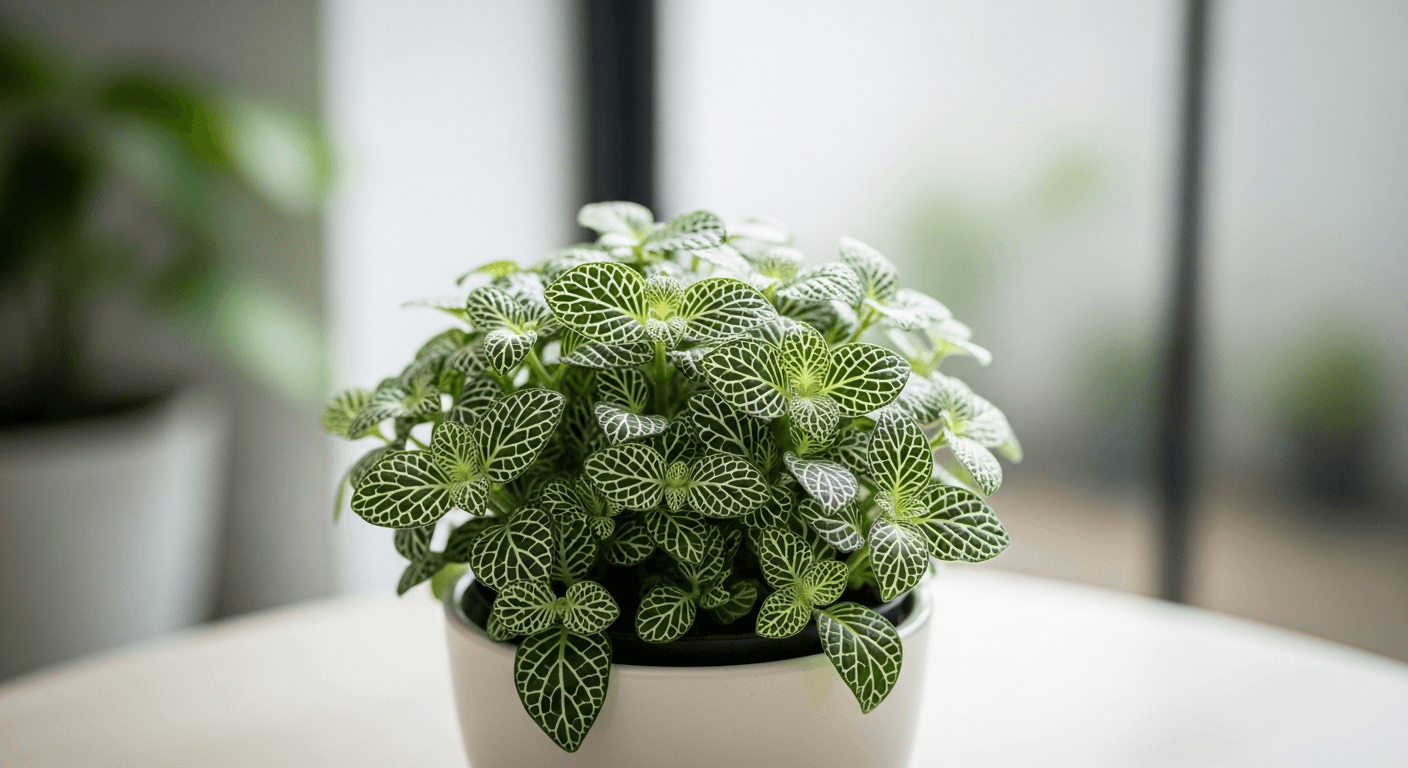
Fittonia (Nerve Plant): Care and Humidity Guide
Fittonia or nerve plant care: high humidity, indirect light, keeping it moist, and why it dramatically wilts and revives. Pet-safe. Complete guide.
Trouble with your plant?
AI diagnosis