Poinsettia: How to Make It Turn Red Again
Poinsettia (Christmas star) care: light, watering, the darkness trick to make it turn red again at Christmas, and the truth about its mild toxicity.
In this article
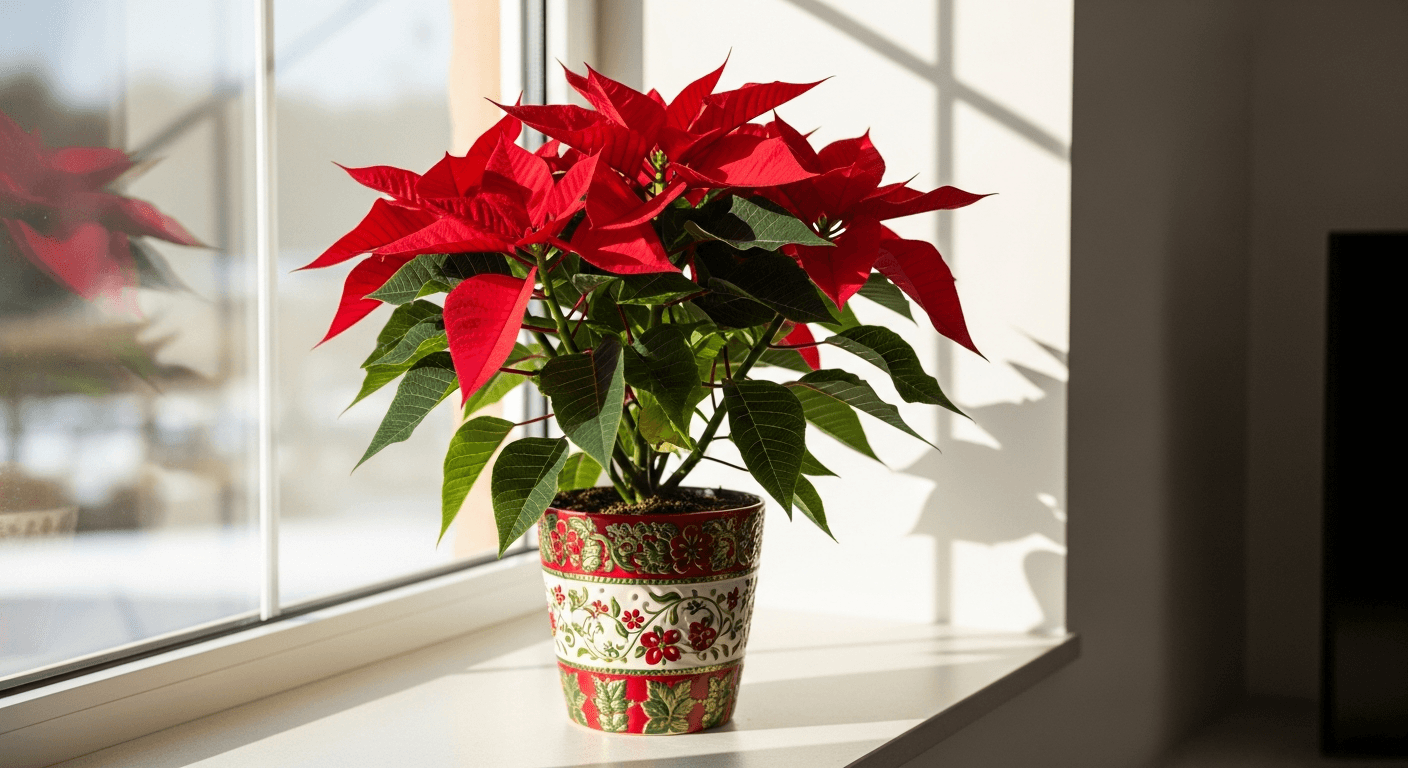
The poinsettia (Euphorbia pulcherrima) is the star plant of Christmas. What we take for red flowers are actually bracts — modified leaves that change color; the real flowers are the little yellow buds in the center. With a bit of know-how you can keep it alive long past the holidays and, if you're up for it, get it to blush red again the following year.
| Care | Need |
|---|---|
| Light | Bright indirect |
| Watering | Surface dry; never waterlogged |
| Temperature | 60-72 °F, no cold drafts |
| Re-coloring | Nights of 14-16 h total darkness |
| Toxicity | Mildly toxic (irritating sap) |
Choosing a healthy plant
In the shop, look for central yellow buds that are closed or barely open: that means the plant is young and will last longer. Avoid any sitting near drafty doors. Protect it well from cold on the way home — just a few minutes of icy draft is enough to make it drop its leaves.
Is your plant looking off and you are not sure why?
Free AI diagnosisBasic care, point by point
Light
It wants bright, indirect light. Place it by a luminous window, but out of scorching direct sun. Too little light makes it shed leaves and the bracts fade.
Watering
Watering is the number-one cause of failure. Water when the soil surface starts to dry, but never leave it standing in a saucer of water.
- If it came wrapped in gift foil or decorative plastic, remove it: it traps water and rots the roots.
- Check the pot's weight: light = time to water.
Golden rule: a poinsettia drowns before it goes thirsty. Always provide drainage.
Temperature and drafts
It's very sensitive to cold. Keep it between 60 and 72 °F, away from icy windows, doors and the direct blast of heating. Sudden changes and drafts are what make it drop leaves fastest.
After Christmas: do I toss it?
No need. When the bracts fade, around March, prune the stems back to about 4-6 inches and cut back on watering. In spring and summer it'll resprout; you can move it to a bright spot and feed it every few weeks so it grows strong.
A bit of history
The poinsettia is native to Mexico, where it grows wild as a shrub that can top ten feet. Its link to Christmas comes from there, and its English name recalls Joel Poinsett, the American diplomat who introduced it abroad in the 19th century. The potted varieties we buy today are compact versions selected for indoor life.
The darkness trick to turn red again
The poinsettia is a short-day plant: it only re-colors its bracts if it gets long, completely dark nights. From late October, for about 8 weeks:
- Give it 14-16 hours of total darkness each night (a closet or a box covers it well).
- During the day, return it to bright light.
- Any light at night — a streetlamp, the TV — interrupts the process.
It's demanding, but watching it turn red again at home is addictive. If you love plants with Christmas charm, take a look at the Christmas cactus too, which blooms around the same time with similar care.
If your poinsettia drops its leaves the moment it gets home, it's almost always the abrupt change in conditions and the draught from the door: I cover it in acclimating a new plant. December is also the month when most plants are lost between the cold outside and the dry air of central heating, so look over winter plant care.
Common problems
- Massive leaf drop: almost always cold, a draft or erratic watering.
- Yellow leaves that fall: overwatering or waterlogging.
- Bracts turning greenish or pale: not enough light.
Looking rough and not sure if it's water, cold or a pest? Try our AI diagnosis tool to identify the problem.
Is it toxic?
Its reputation as deadly poisonous is exaggerated. The milky sap of the euphorbia family can irritate skin and mouths, and cause drooling or mild digestive upset in pets if chewed, but it's not the lethal danger of the legend. Even so, handle it with care and keep it out of reach of children and animals.
With light, careful watering and shelter from the cold, your poinsettia can be with you for far more than a single Christmas.
Related articles
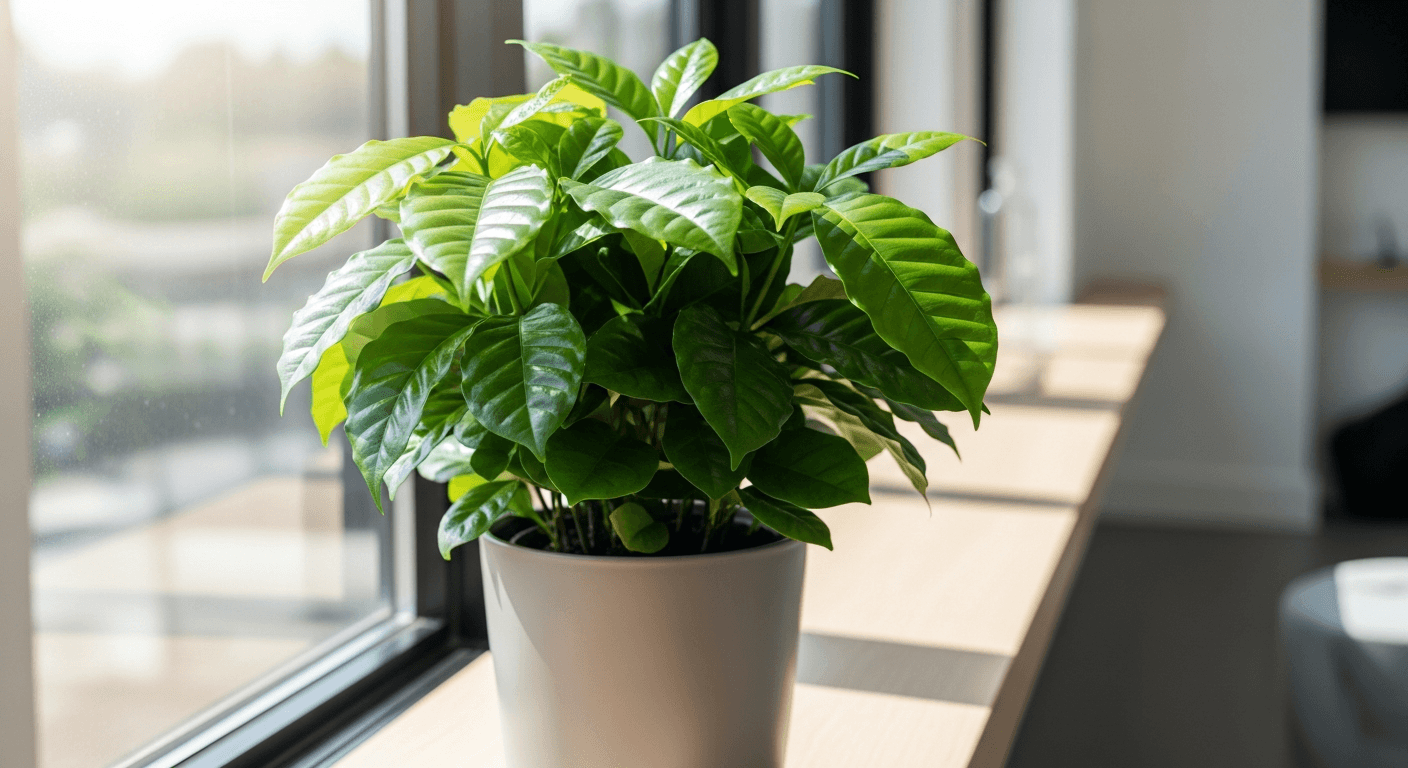
Coffee Plant Care: Growing Coffea at Home
Coffee plant (Coffea arabica) care as a houseplant: bright indirect light, humidity, watering, and whether you can really harvest your own coffee beans.
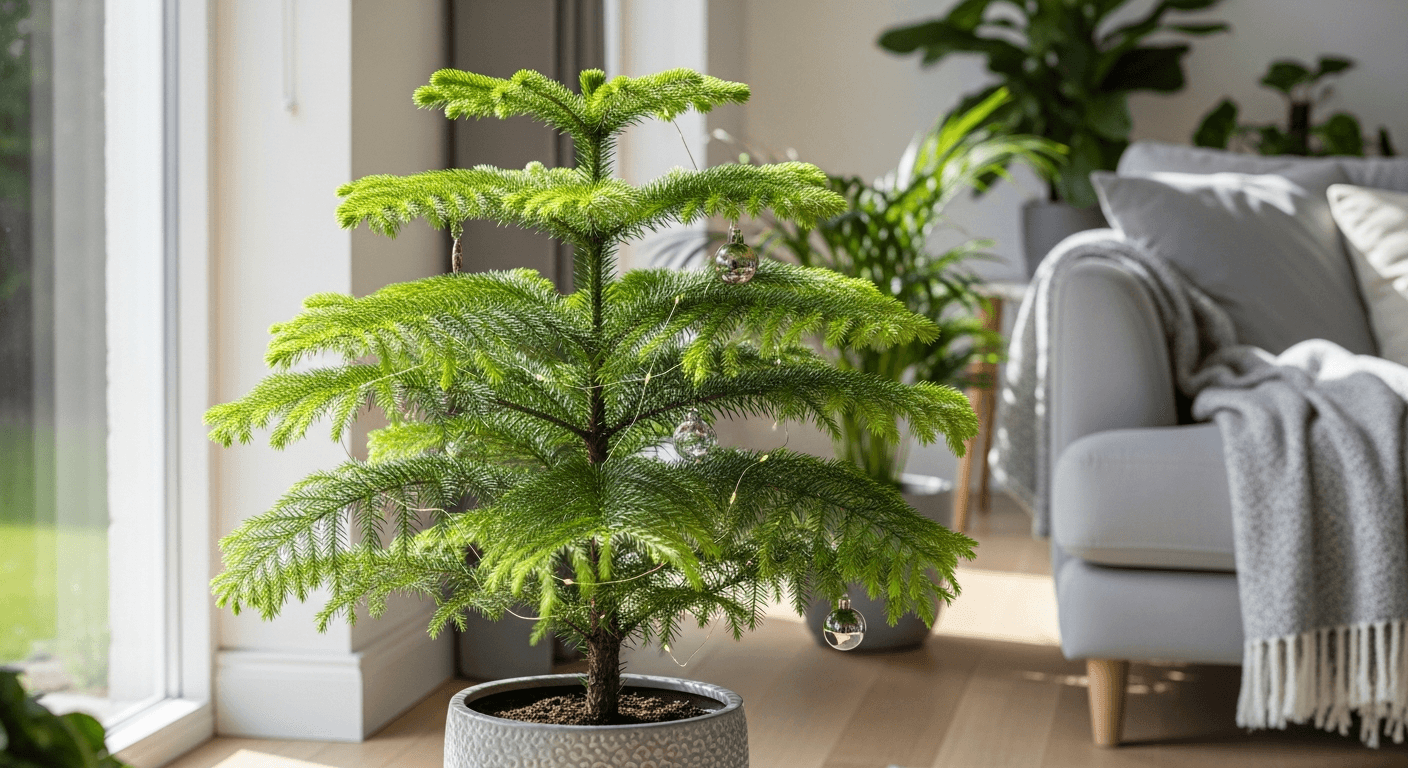
Norfolk Island Pine Care: The Living Christmas Tree
Norfolk Island pine (Araucaria heterophylla) care: light, watering, humidity and why its branches turn brown and drop. The living indoor Christmas tree guide.
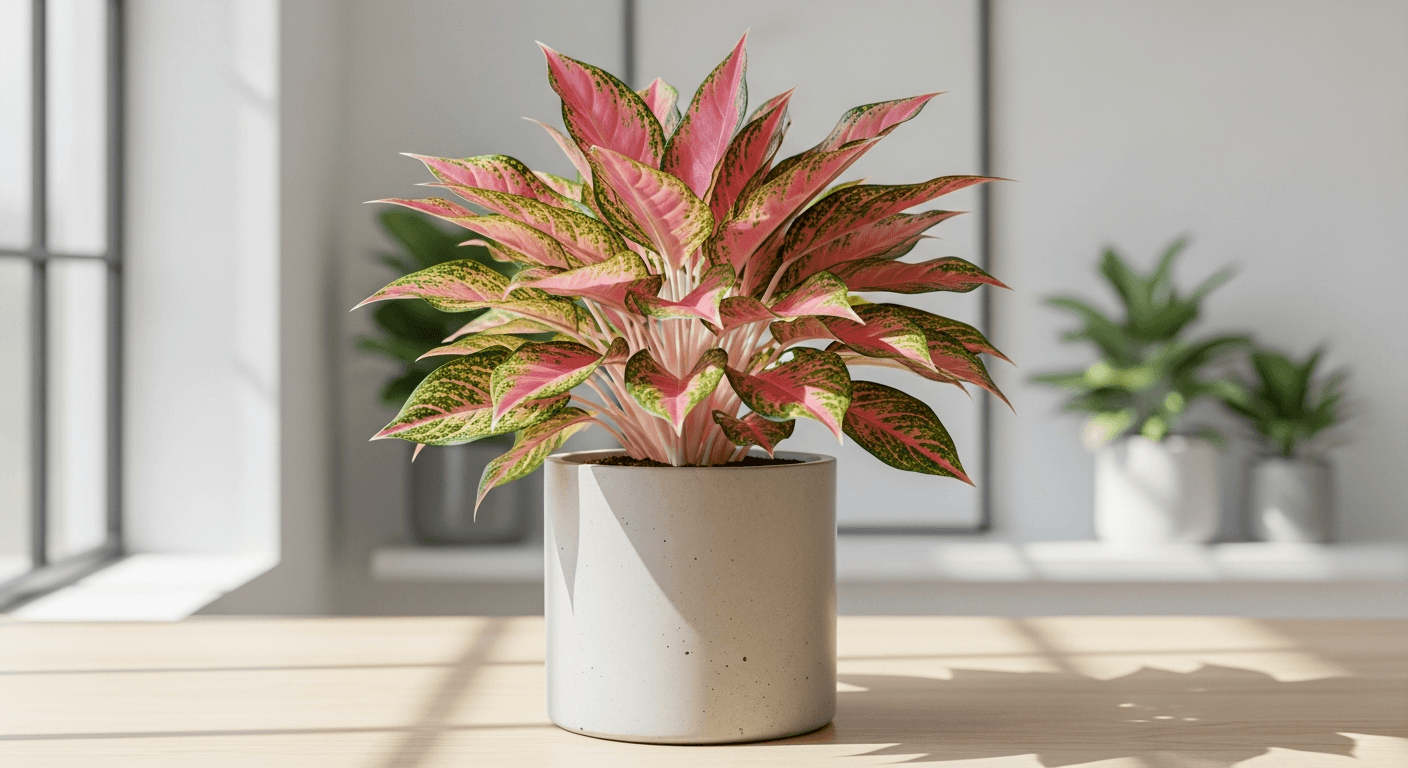
Aglaonema (Chinese Evergreen): The Complete Care Guide
Care guide for the Aglaonema or Chinese evergreen: light for the pink varieties, watering, humidity, propagation by division and its toxicity to pets.
Trouble with your plant?
AI diagnosis