Coleus: The Pinching That Keeps Colour and Shape
Coleus care guide: bright light for vivid colorful leaves, pinching to keep it bushy, steady watering, and super-easy propagation in a glass of water.
In this article
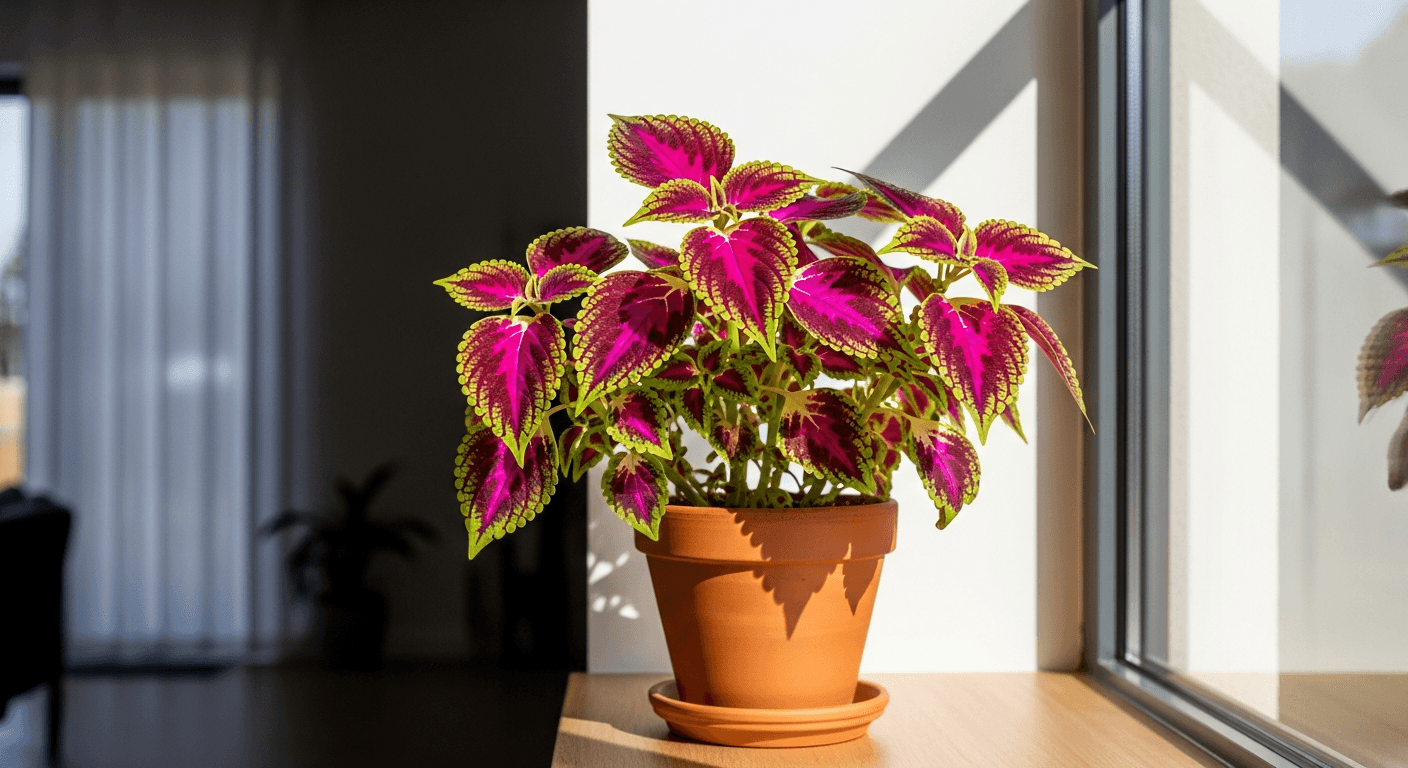
Coleus (Coleus, now Plectranthus scutellarioides) doesn't need flowers to be spectacular: the color is in its leaves, in impossible combinations of lime green, burgundy, pink, orange and near-black. It's a fast, rewarding plant that's dirt-cheap to multiply — perfect for a bright spot indoors or for pots outside in the warm season.
Quick-care snapshot
- Light: bright for vivid color; some gentle morning sun.
- Watering: keep the soil evenly moist; it's thirsty.
- Maintenance: pinch the tips and remove flowers to keep it bushy.
- Temperature: warm; no tolerance for cold or frost.
- Difficulty: easy. Toxicity: mildly toxic to dogs and cats.
Is your plant looking off and you are not sure why?
Free AI diagnosisOrigin and why it has those colors
It comes from Southeast Asia. Unlike most plants, its appeal isn't the flowers but the pigment in the leaves, which varies enormously by cultivar. How intense that color gets depends heavily on the light it receives.
Basic care, point by point
Light: the key to color
- Intensely colored varieties: want bright light, even some gentle morning sun, to bring out their full color.
- In low light the leaves lose vibrancy, turn greener, and the plant stretches.
- Avoid harsh midday summer sun, which can scorch the more delicate leaves.
Find the balance: plenty of light for color, without burning. If you're unsure about exposure, see our indoor plant light guide.
Watering
Coleus is thirsty and soft-leaved: it wants the soil evenly moist, never soggy. In real heat a small pot may need water daily. If it dries out it collapses dramatically, but usually bounces back once watered.
Wilted, drooping leaves almost always mean thirst. Water and watch it revive.
Pinching: the secret to a bushy plant
Left alone, coleus stretches and gets leggy. The fix is pinching:
- With your fingers or scissors, remove the growing tips every few weeks.
- This forces it to branch, making the plant dense and compact.
- Also remove the flower spikes as soon as they appear: flowering saps vigor and leaf color.
Temperature
It's very cold-sensitive: it tolerates no frost and suffers below 50 °F (10 °C). In temperate climates it's grown as a seasonal plant outdoors and brought inside before the cold, or kept as a cutting for the next spring.
Super-easy propagation
It's one of the simplest plants to multiply:
- Cut a stem about 4 inches long below a node.
- Strip the lower leaves and put it in a glass of water.
- In a week or two you'll have roots; move it to soil.
That's how you keep your favorite varieties going all winter. There are more methods in our how to propagate plants guide.
Common problems
- Faded color and long stems: not enough light.
- Wilted leaves: lack of water.
- Scorched edges: direct sun that's too intense.
- Straggly plant: it needs pinching.
If something doesn't add up, upload a photo to our AI diagnosis tool to identify the cause.
Is it toxic?
Yes, mildly: it's toxic to dogs and cats if chewed, and its sap can irritate sensitive skin. Keep it out of reach.
With plenty of light, steady watering and a few well-timed pinches, coleus will give you an explosion of color all season for next to nothing.
Related articles
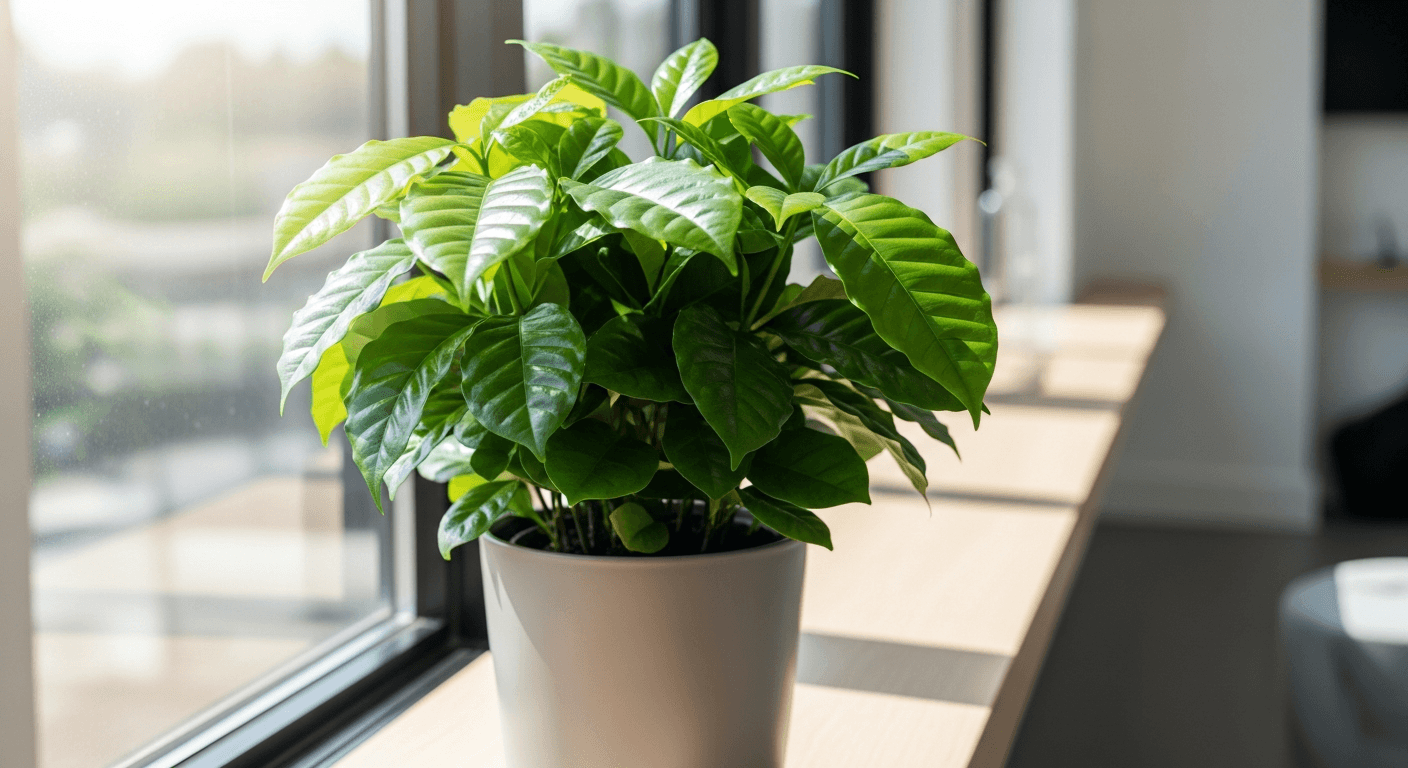
Coffee Plant Care: Growing Coffea at Home
Coffee plant (Coffea arabica) care as a houseplant: bright indirect light, humidity, watering, and whether you can really harvest your own coffee beans.
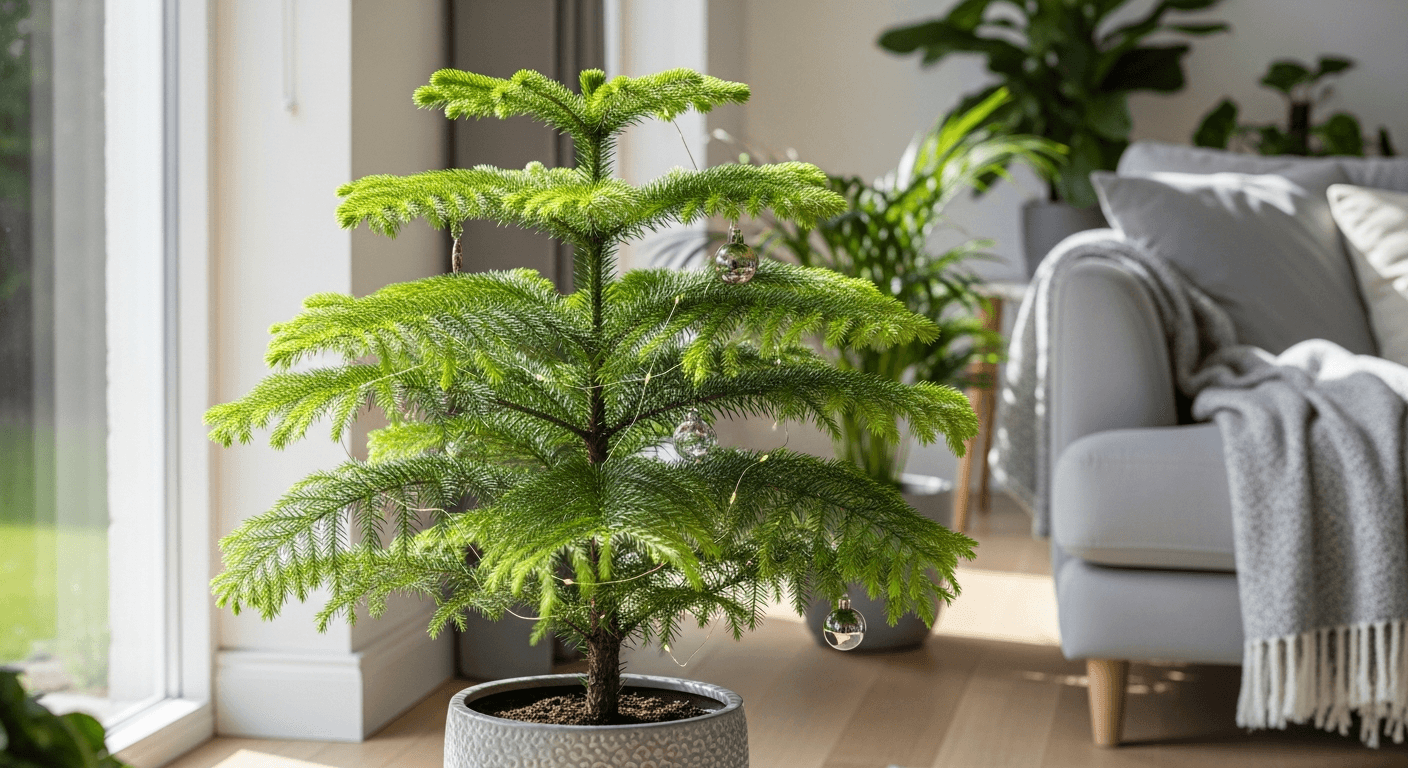
Norfolk Island Pine Care: The Living Christmas Tree
Norfolk Island pine (Araucaria heterophylla) care: light, watering, humidity and why its branches turn brown and drop. The living indoor Christmas tree guide.
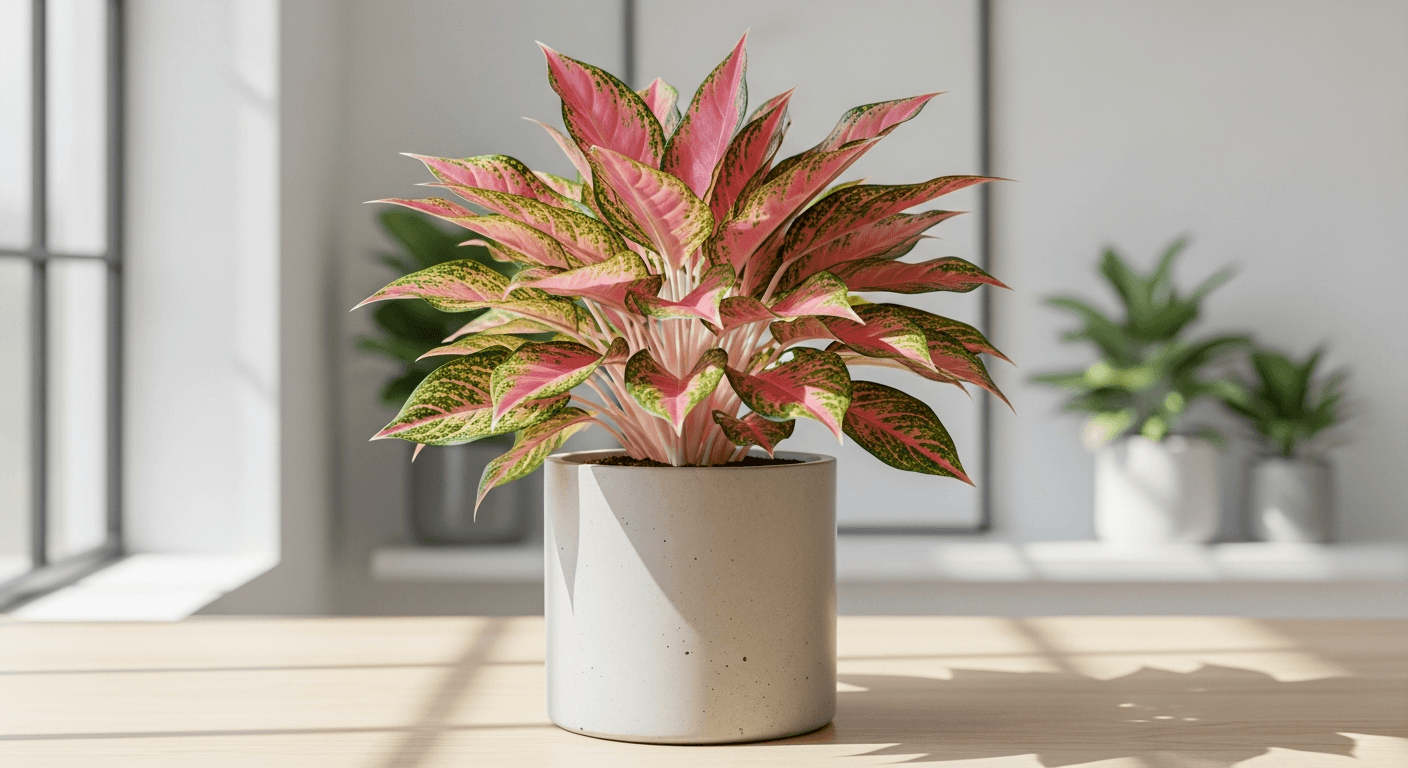
Aglaonema (Chinese Evergreen): The Complete Care Guide
Care guide for the Aglaonema or Chinese evergreen: light for the pink varieties, watering, humidity, propagation by division and its toxicity to pets.
Trouble with your plant?
AI diagnosis