My Plant Wilted After Repotting: What to Do Now
Your plant droops or drops leaves after repotting. Learn what transplant shock is, why it happens and how to help it recover with shade, water and patience.
In this article
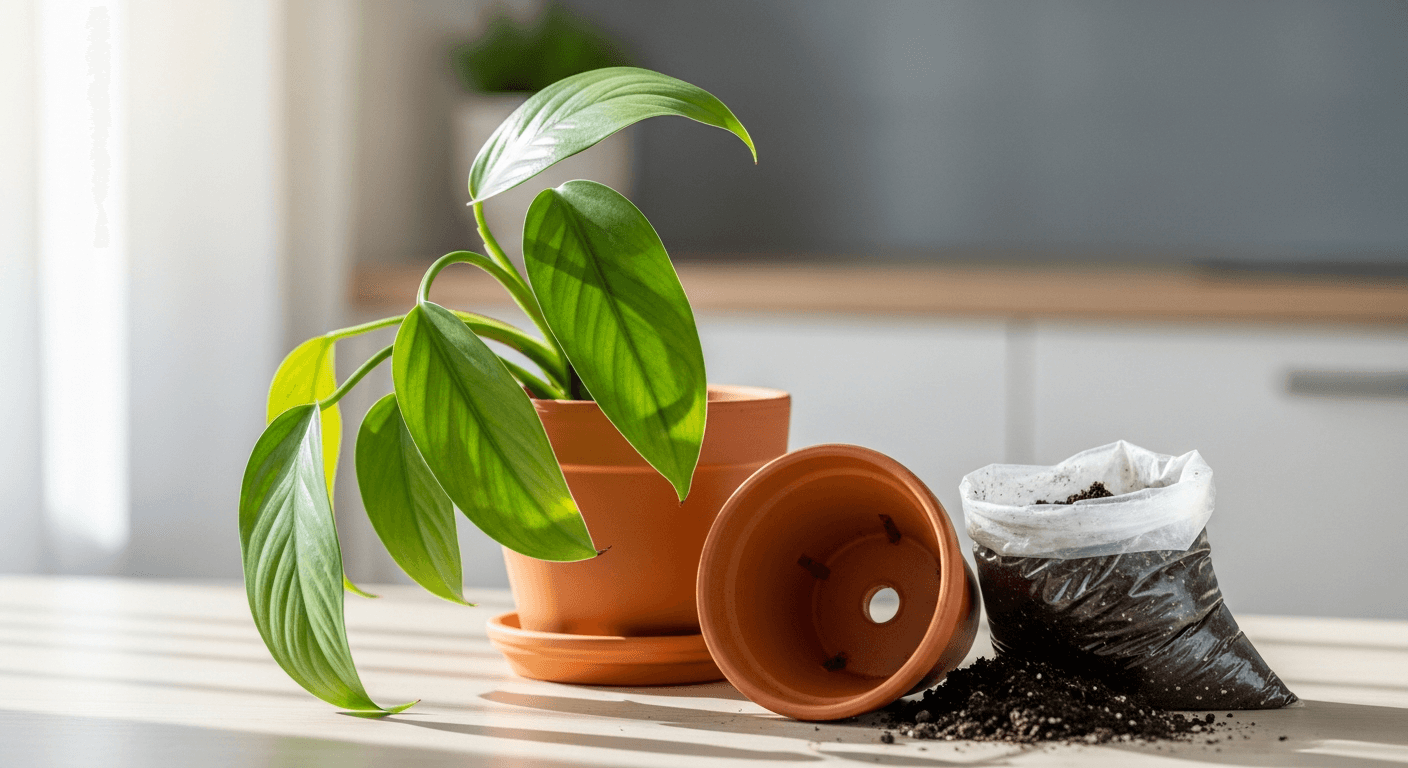
If your plant droops, drops leaves or looks like it's dying right after you moved it to a new pot, it's almost always transplant shock: a temporary reaction to the unavoidable damage done to the fine roots. With indirect light, careful watering and no fertilizer, most plants bounce back within a week or two. Don't panic — this is one of the most common scares in houseplant care and one of the ones that resolves itself best. The hard part, honestly, is resisting the urge to intervene.
What transplant shock is
When you take a plant out of its pot, no matter how careful you are, you damage some of the fine roots — the ones that do the most work absorbing water. On top of that, the plant is suddenly in fresh soil and a different environment. For a few days, its roots can't fully supply the leaves, and the plant protests by drooping.
It's the plant equivalent of moving house: it needs time to settle in. The better your technique, the smaller the scare, so reading how to repot a plant step by step before your next pot change saves you half the problem.
Is your plant looking off and you are not sure why?
Free AI diagnosisTypical symptoms
- Drooping, limp leaves in the first few days.
- Some leaves dropping, especially the older ones.
- Tips or edges drying out slightly.
- A temporary pause in growth.
If the symptoms appear right after repotting, it's almost certainly this and not a disease. If they had been building for a while instead, run through the causes of yellow leaves, which rarely have anything to do with the pot.
How to help it recover
The recipe is simple: stability, shade and patience.
- Gentle shade: put it in indirect light, away from direct sun. With damaged roots, strong sun dehydrates it faster than it can replenish.
- Water well after repotting: a thorough watering settles the soil around the roots and removes air pockets. After that, keep the soil slightly moist, not soggy.
- Don't fertilize yet: damaged roots get burned by fertilizer. Wait 3-4 weeks, until the plant resumes growth.
- Stop moving it: avoid relocating it over and over. It needs stability.
- Keep humidity up: misting the leaves or grouping plants reduces water loss while the roots recover.
What NOT to do
- Don't repot again out of nerves: you'd only worsen the damage.
- Don't overwater thinking it'll "perk it up": with few active roots, water builds up and can cause root rot. If you're unsure how much water it needs right now, our guide to overwatering vs underwatering gives you the clues to stay on the safe side.
- Don't put it in the sun to "give it energy": that's the opposite of what it needs.
- Don't fertilize to force growth.
How to prevent it next time
Before you lift it out
- Repot in spring, when the plant is growing and recovers faster.
- Water the day before repotting: a hydrated plant handles the change better.
While you're repotting
- Keep the root ball intact: handle the roots as little as possible.
- Size up only a little: a pot just an inch or two bigger; a huge jump leaves lots of wet soil with no roots in it. If you're not sure, see how to choose the right pot.
How long recovery takes
It depends on the plant and how much the roots were disturbed. Small, fast-growing plants (pothos, spider plants, tradescantias) usually recover within a few days. Large, woody or slow-growing ones can take several weeks to push out a new leaf.
When a light prune helps
Lightly pruning the oldest or most damaged leaves sometimes helps: it reduces the amount of foliage the still-weakened roots have to support, so the plant focuses its energy on regenerating. If you do it, don't overdo it: remove only what's clearly declining.
When to actually worry
Transplant shock improves on its own within a week or two. If after that the plant keeps declining, leaves yellow en masse or the base of the stem turns soft, there may be a bigger problem, like root rot. In that case, check the roots and trim away any that are soft and dark.
If you're not sure whether what you're seeing is normal stress or something more serious, take a photo and run it through our AI diagnosis: it'll point you in the right direction in seconds.
Patience is the key
Most plants get through repotting with no more drama than a few grumpy days. Give it soft light, careful watering and, above all, time. When you see a new leaf unfurl, you'll know the roots are back at work.
Related articles
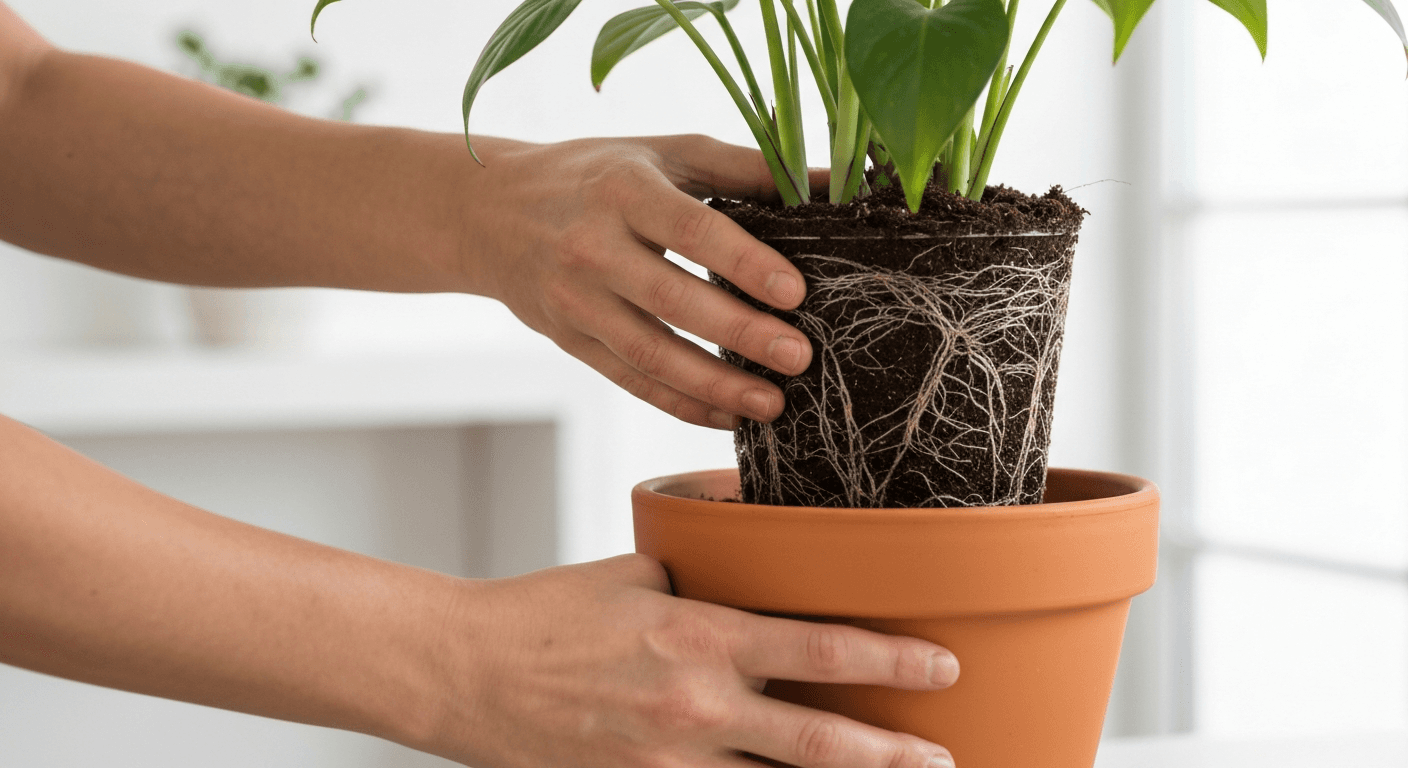
How to Repot a Plant Step by Step (Without Stressing It)
Learn when and how to repot a houseplant: signs it needs a new pot, what size to choose, the step-by-step, and the aftercare to help it bounce back.
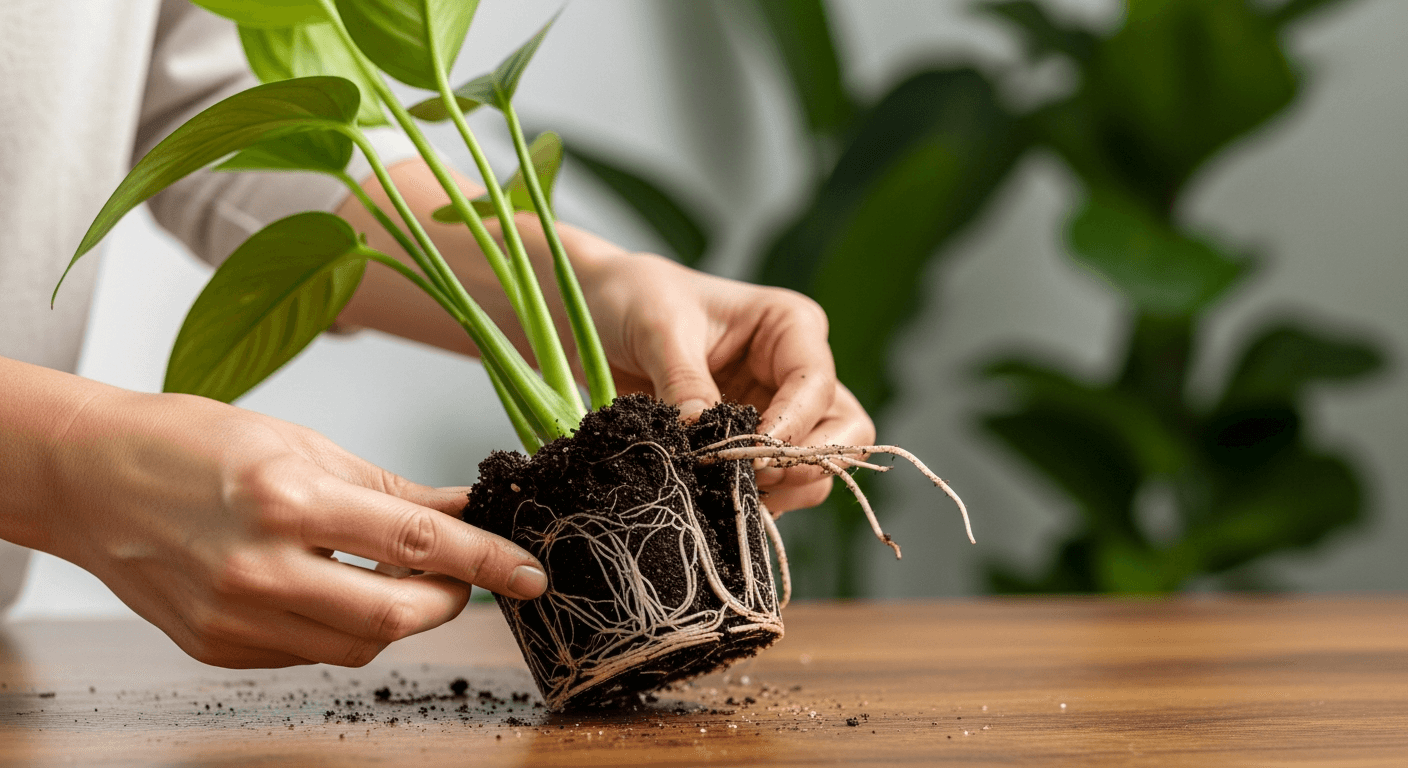
Root Rot: How to Save an Overwatered Plant
Root rot is the #1 cause of dead houseplants. Learn to spot it in time, save the plant step by step, and prevent it from happening again.
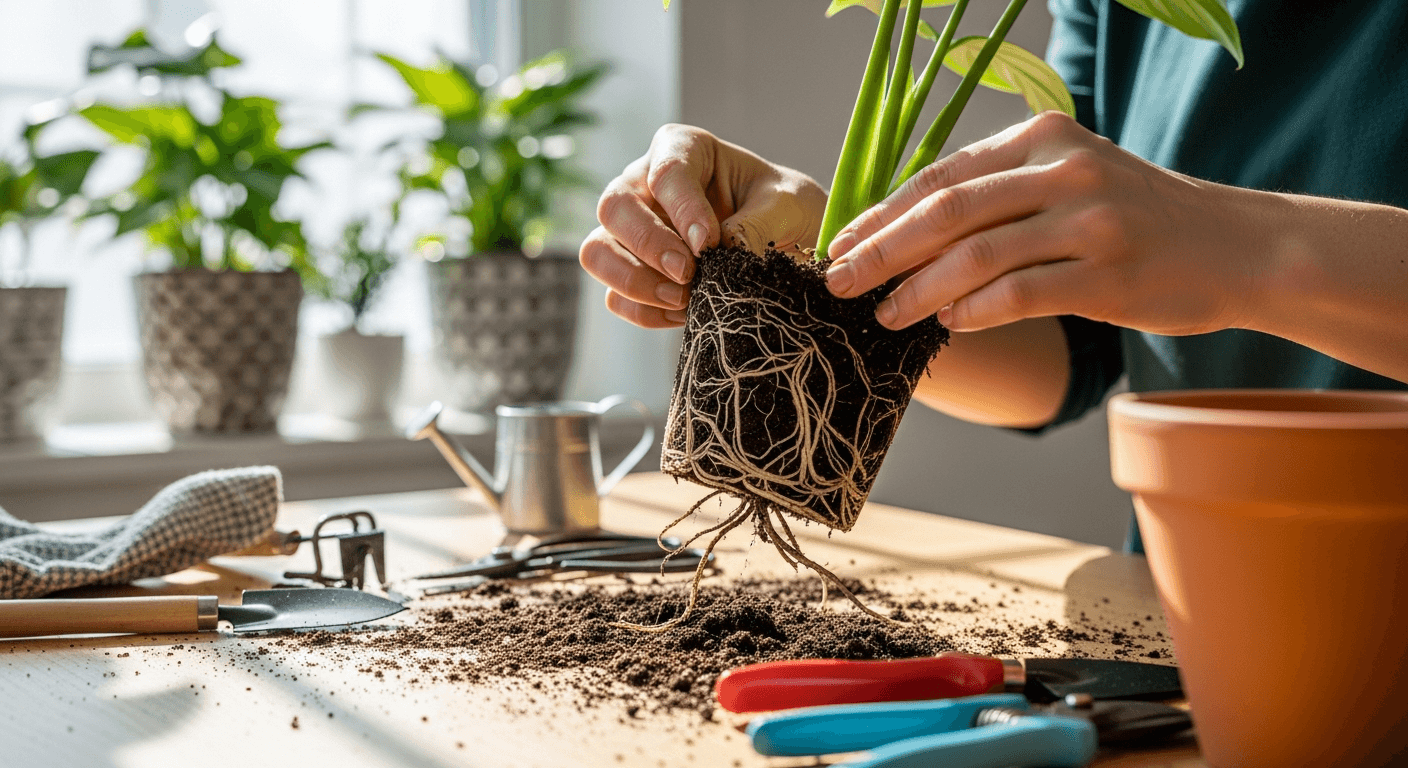
How to Revive a Dying Plant Step by Step
Your plant is dying and you don't know why. A guide to diagnosing and reviving a dying plant: watering, roots, light, pests and when it is simply too late.
Trouble with your plant?
AI diagnosis